

10 Cash – South Xinjiang
China
Context
Years: 1885–1892
Country: China 
Issuer: South Xinjiang
Ruler: Qianlong
Currency:
(1759—1909)
Demonetized: Yes
Material
Diameter: 25 mm
Weight: 4.1 g
Thickness: 1.5 mm
Shape: Round with a square hole
Composition: Copper
Magnetic: No
Technique: Cast
Alignment: Medal alignment
flip
References
Numista: #174480
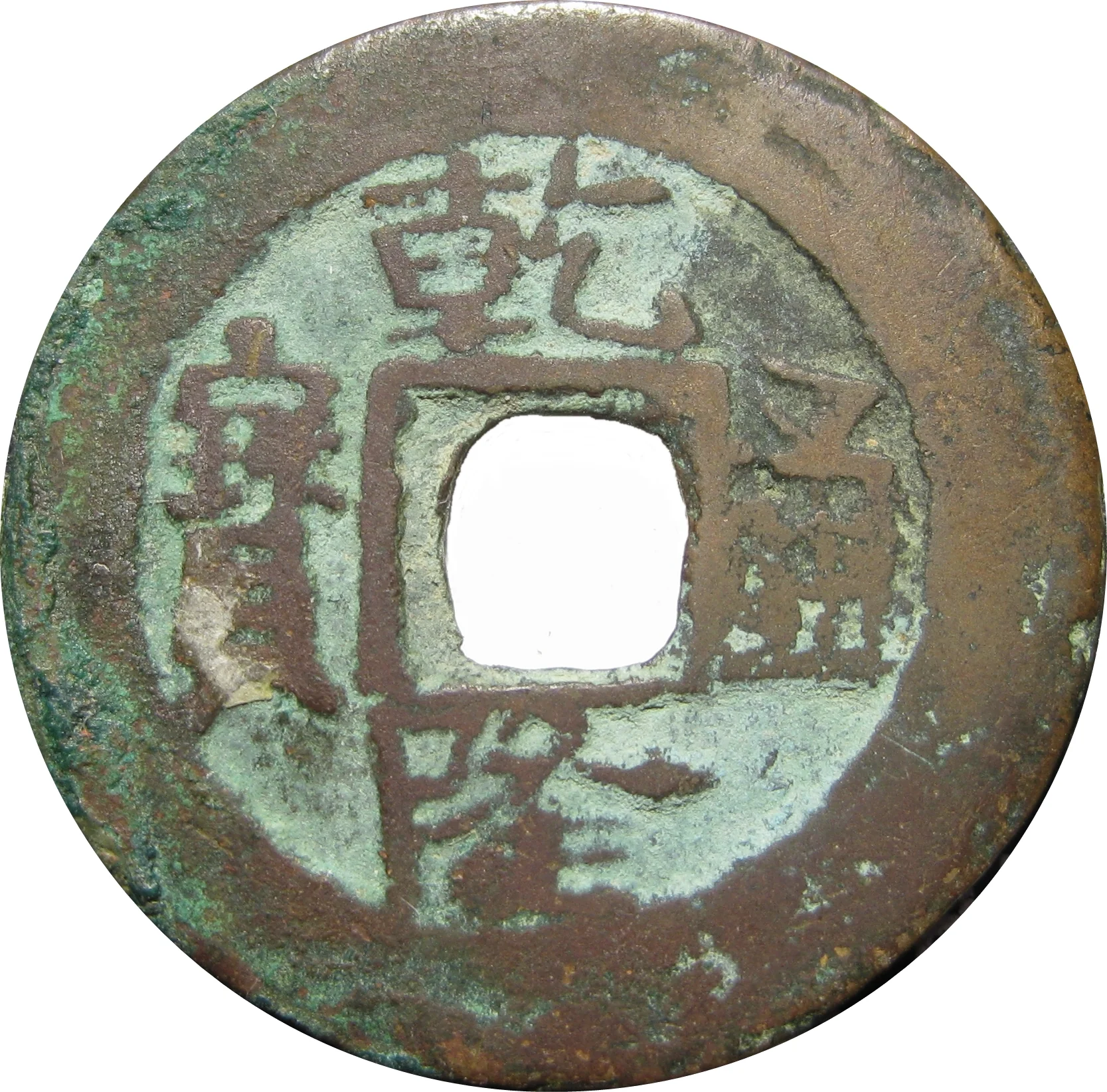
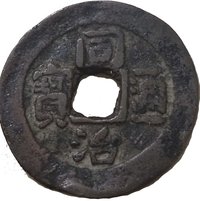
Obverse
Description:
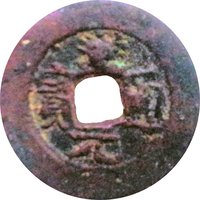
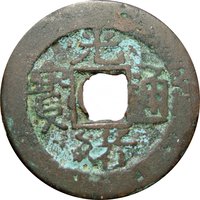
Four Chinese characters read vertically, right to left.
Inscription:
乾
寶 通
隆
寶 通
隆
Translation:
Qianlong
Tongbao
Tongbao
Scripts: Chinese (traditional, regular script)
Language: Chinese
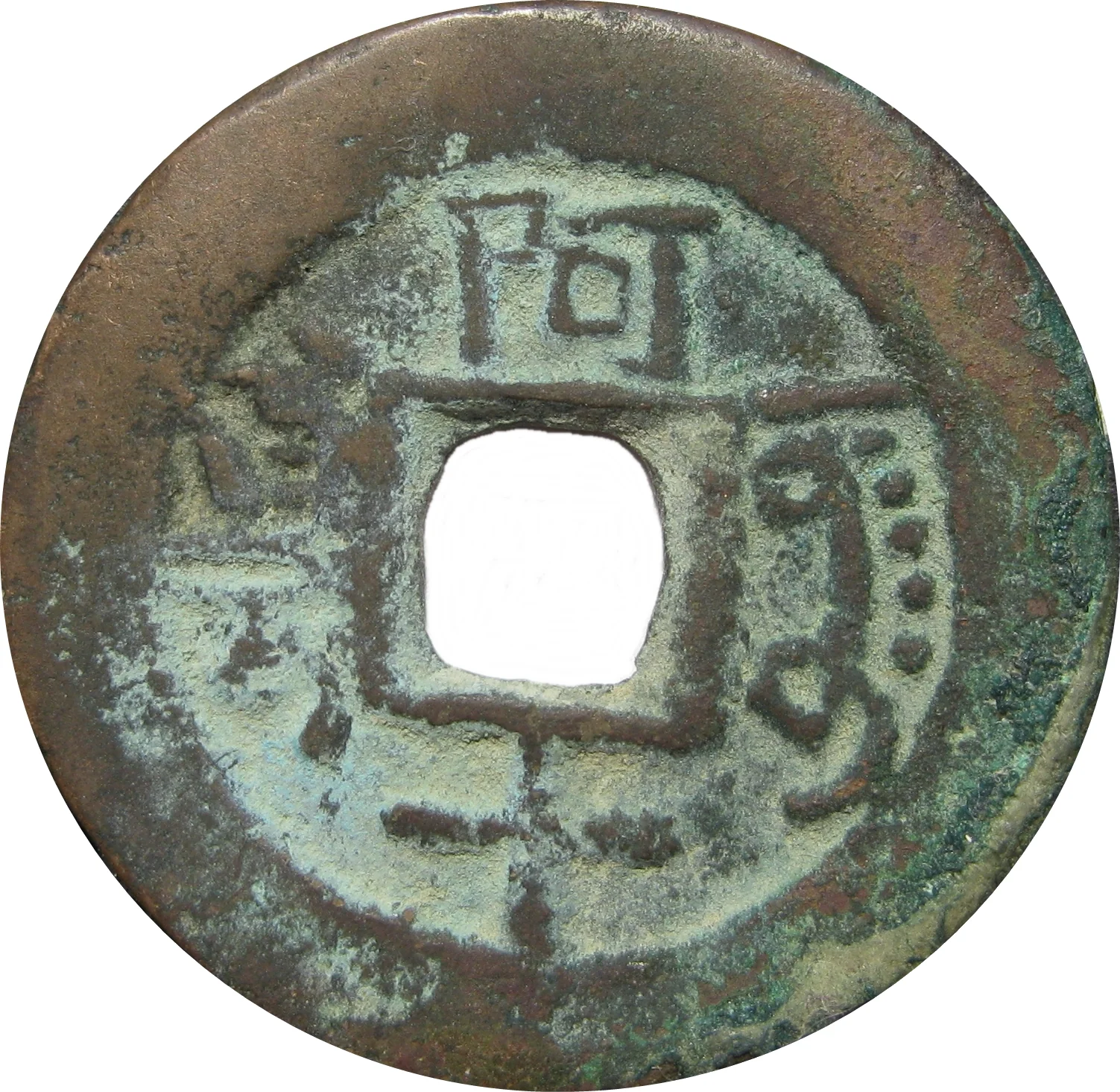
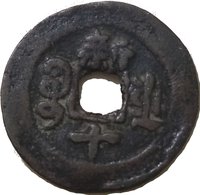
Reverse
Description:
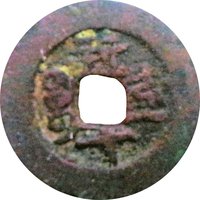
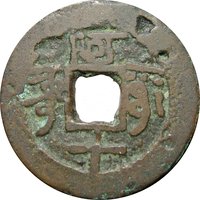
Chinese ideograms top and bottom, Uyghur right, Manchu left.
Inscription:
阿
ᠠᡴᠰᡠ اقسو
十
ᠠᡴᠰᡠ اقسو
十
Translation:
Aksu ten
Edge
Plain
Mints
| Name | Mark |
|---|---|
| Aksu Mint | — |
Mintings
| Year | Mint Mark | Mintage | Quality | Collection |
|---|---|---|---|---|
| — | — | — |
Historical background
In 1885, the currency situation in South Xinjiang (the Tarim Basin region) was characterized by profound complexity and instability, a direct legacy of the region's recent turbulent history. Following the reconquest of the region from the Yakub Beg-led Kokand Khanate by Qing forces in the late 1870s, the monetary system was a fractured mosaic. Multiple currencies circulated simultaneously: the official Qing copper cash coins and silver taels (often in the form of sycee ingots) represented imperial authority, but their supply was inconsistent and they often traded at a premium. More commonly used in everyday bazaar transactions were the pul coins and silver tanga (known locally as yambu) from the former Kokand regime, alongside a persistent inflow of Russian imperial rubles and kopecks from burgeoning trade through the Ili Valley and Kashgar.
This multi-currency environment created a chaotic and exploitative marketplace. Exchange rates between copper, silver, and the various coinages were highly localized and fluctuated daily, manipulated by powerful money changers (sarraf) who dominated the bazaars. The scarcity of official Qing coinage, due to the immense logistical difficulty of minting and transporting sufficient quantities from central China, undermined the economic integration of the region with the rest of the empire. Consequently, taxation and official transactions were hampered, as the government struggled to collect revenues in a stable, uniform currency.
The Qing authorities, under the governance of Xinjiang Province (established in 1884), recognized this monetary chaos as a threat to administrative control and economic recovery. Therefore, 1885 fell within a critical period of attempted currency reform and standardization. Efforts were underway to centralize minting, with plans to increase the production of standardized copper cash coins bearing the reign title Guangxu at provincial mints in Kashgar and other centers. The goal was to gradually suppress the old Kokand coins and establish a unified Qing currency system, thereby strengthening political integration and facilitating trade and taxation. However, these reforms were in their early and challenging stages, meaning that for the ordinary resident of South Xinjiang in 1885, monetary life remained a daily exercise in calculation and uncertainty.
This multi-currency environment created a chaotic and exploitative marketplace. Exchange rates between copper, silver, and the various coinages were highly localized and fluctuated daily, manipulated by powerful money changers (sarraf) who dominated the bazaars. The scarcity of official Qing coinage, due to the immense logistical difficulty of minting and transporting sufficient quantities from central China, undermined the economic integration of the region with the rest of the empire. Consequently, taxation and official transactions were hampered, as the government struggled to collect revenues in a stable, uniform currency.
The Qing authorities, under the governance of Xinjiang Province (established in 1884), recognized this monetary chaos as a threat to administrative control and economic recovery. Therefore, 1885 fell within a critical period of attempted currency reform and standardization. Efforts were underway to centralize minting, with plans to increase the production of standardized copper cash coins bearing the reign title Guangxu at provincial mints in Kashgar and other centers. The goal was to gradually suppress the old Kokand coins and establish a unified Qing currency system, thereby strengthening political integration and facilitating trade and taxation. However, these reforms were in their early and challenging stages, meaning that for the ordinary resident of South Xinjiang in 1885, monetary life remained a daily exercise in calculation and uncertainty.

💎 Extremely Rare