

1 cash – South Xinjiang
Add to wishlist
China
Context
Years: 1800–1828
Country: China
Issuer: South Xinjiang
Ruler: Qianlong
Currency:
(1759—1909)
Demonetized: Yes
Material
Diameter: 25 mm
Weight: 3.6 g
Thickness: 1.1 mm
Shape: Round with a square hole
Composition: Copper
Magnetic: No
Technique: Cast
Alignment: Medal alignment
flip
References
Numista: #174453
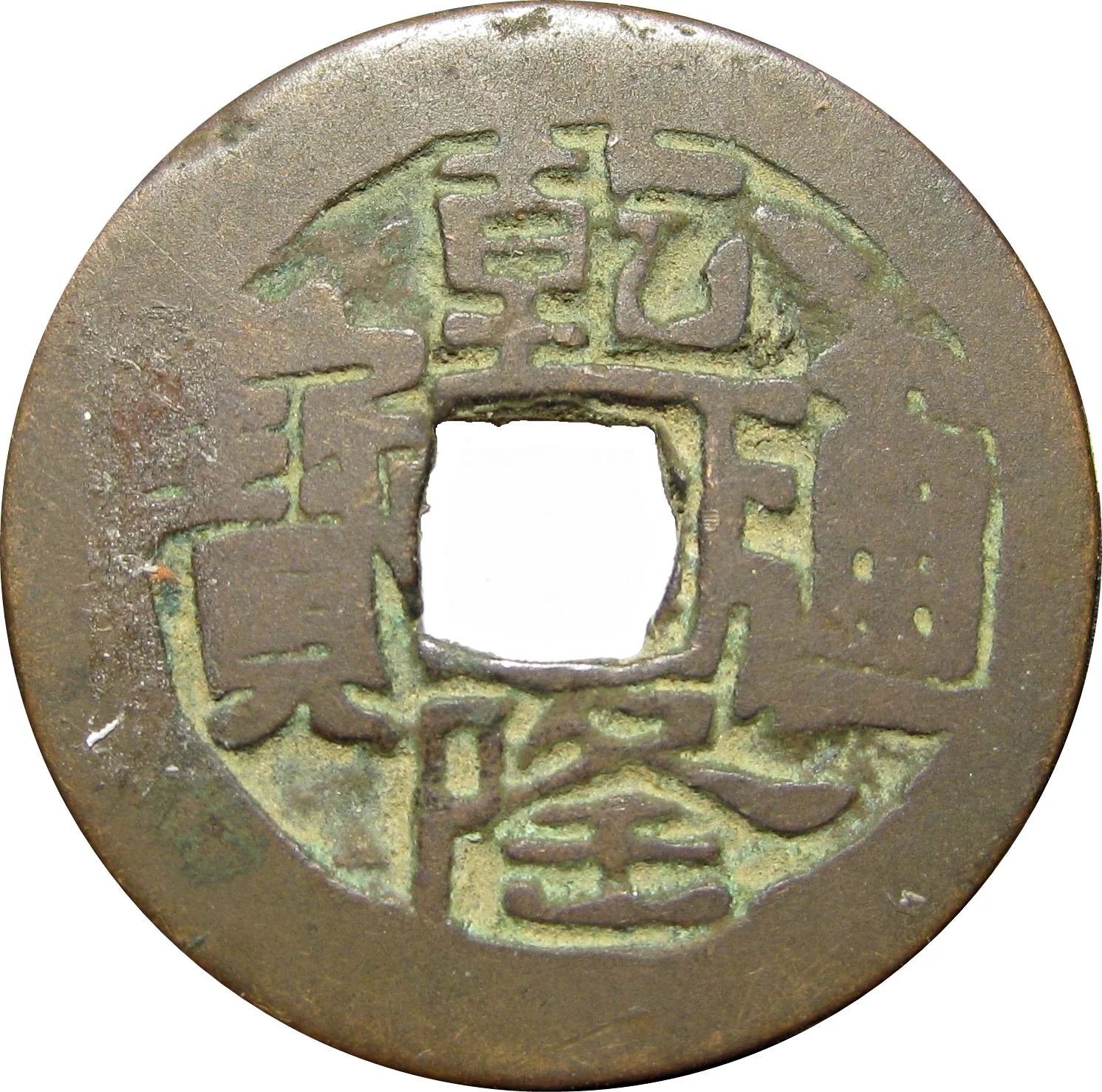
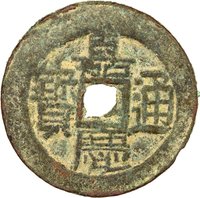
Obverse
Description:
Four Chinese characters read vertically, right to left.
Inscription:
乾
寶 通
隆
寶 通
隆
Translation:
Qianlong
Tongbao
Tongbao
Scripts: Chinese (traditional, regular script)
Language: Chinese
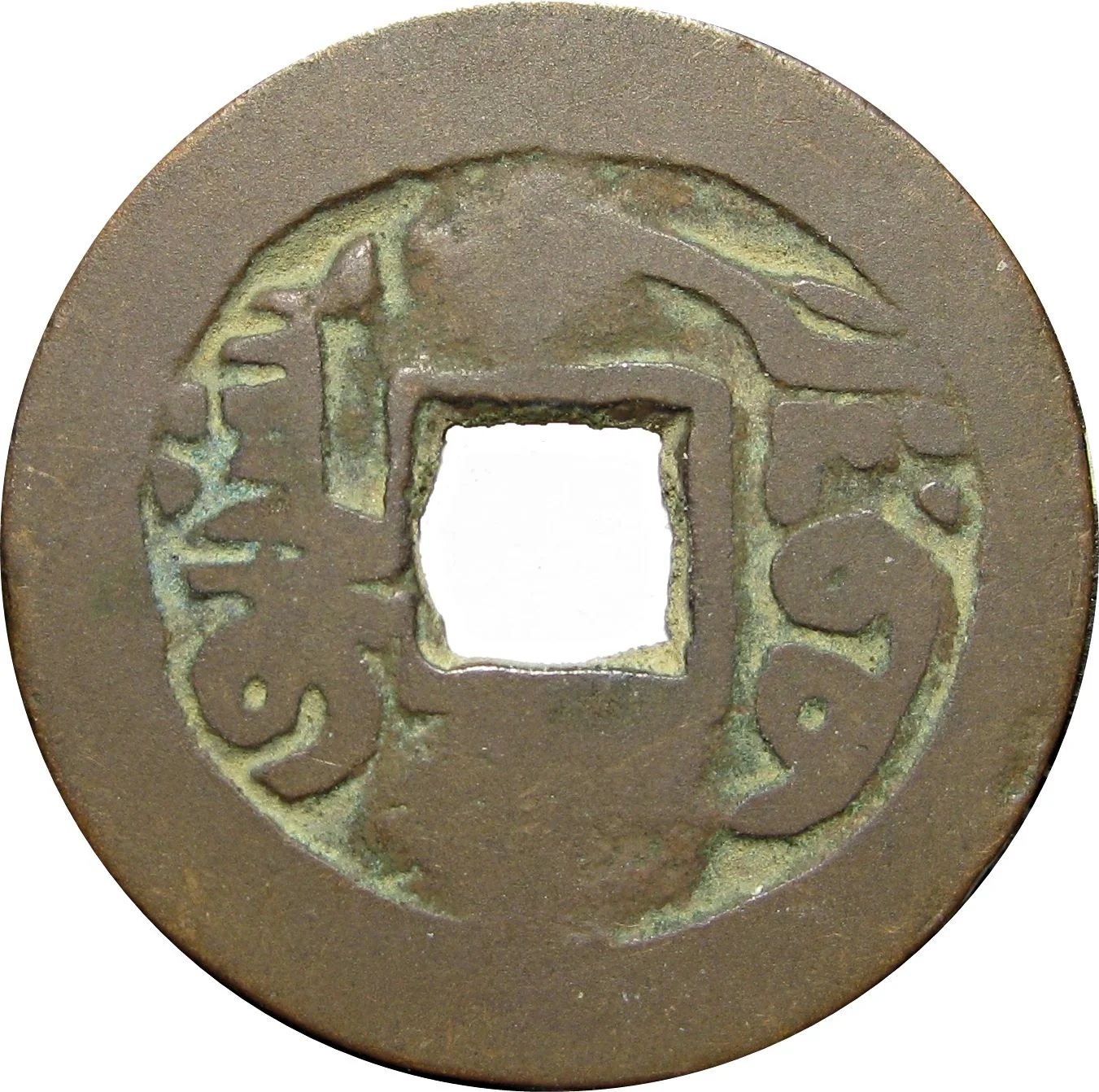
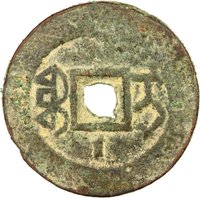
Reverse
Description:
Uyghur on the right, Manchu on the left.
Inscription:
ᠠᡴᠰᡠ اقسو
Translation:
Silver coin
Scripts: Mongolian / Manchu, Old Uyghur
Edge
Plain
Mints
| Name | Mark |
|---|---|
| Aksu Mint | — |
Mintings
| Year | Mint Mark | Mintage | Quality | Collection |
|---|---|---|---|---|
| — | — | — |
Historical background
In 1800, the currency situation in South Xinjiang (the Tarim Basin region, known as Altishahr) was a complex tapestry reflecting its position at the crossroads of empires and trade routes. Officially under the administration of the Qing Dynasty, which had reconquered the region from the Dzungar Khanate in the 1750s, the primary currency was the Qianlong coin (baoqian). These standardized copper-alloy cash coins with a square hole, minted in Chinese mints, were intended to facilitate taxation and integrate the local economy into the imperial system. The Qing authorities established official exchange rates between copper coins and silver taels, the higher-value unit of account.
However, the practical monetary reality was one of hybridity and inconsistency. Older Dzungar-era copper pul coins from the Khojent mint remained in wide circulation alongside the new Qing issues, creating a dual-currency environment. More significantly, the region's deep integration into Central Asian trade along the Silk Road meant that foreign silver coins, particularly the Yarkand tangas and Bukharan tilas, were often preferred for substantial commercial transactions. This created a multi-layered system where small daily purchases used copper cash, while larger trade and long-distance commerce relied on weighed silver, often in the form of these foreign denominations.
This monetary fragmentation posed persistent challenges for Qing administrators and local inhabitants alike. Fluctuations in the copper-to-silver exchange rate and the variable purity of foreign silver caused price instability and complications in tax collection, which was often calculated in silver but collected in copper. The Qing state's limited minting capacity in the region meant it struggled to impose a uniform currency, leading to a de facto monetary environment where market forces and historic trade patterns often outweighed imperial policy. Thus, the currency of South Xinjiang in 1800 was less a unified system and more a pragmatic, circulating mosaic of imperial, residual, and foreign monies.
However, the practical monetary reality was one of hybridity and inconsistency. Older Dzungar-era copper pul coins from the Khojent mint remained in wide circulation alongside the new Qing issues, creating a dual-currency environment. More significantly, the region's deep integration into Central Asian trade along the Silk Road meant that foreign silver coins, particularly the Yarkand tangas and Bukharan tilas, were often preferred for substantial commercial transactions. This created a multi-layered system where small daily purchases used copper cash, while larger trade and long-distance commerce relied on weighed silver, often in the form of these foreign denominations.
This monetary fragmentation posed persistent challenges for Qing administrators and local inhabitants alike. Fluctuations in the copper-to-silver exchange rate and the variable purity of foreign silver caused price instability and complications in tax collection, which was often calculated in silver but collected in copper. The Qing state's limited minting capacity in the region meant it struggled to impose a uniform currency, leading to a de facto monetary environment where market forces and historic trade patterns often outweighed imperial policy. Thus, the currency of South Xinjiang in 1800 was less a unified system and more a pragmatic, circulating mosaic of imperial, residual, and foreign monies.
💎 Extremely Rare