

25 fils – Jordan
Add to wishlist
Jordan
Context
Years: 1978–1991
Issuer: Jordan
Ruler: Hussein bin Talal
Currency:
(since 1949)
Total mintage: 11,025,000
Material
Diameter: 22 mm
Weight: 4.75 g
Thickness: 1.75 mm
Shape: Round
Composition: Copper-nickel
Technique: Milled
Alignment: Medal alignment
flip
References
KM: #
Numista: #1738
Value
Exchange value: 0.025 JOD
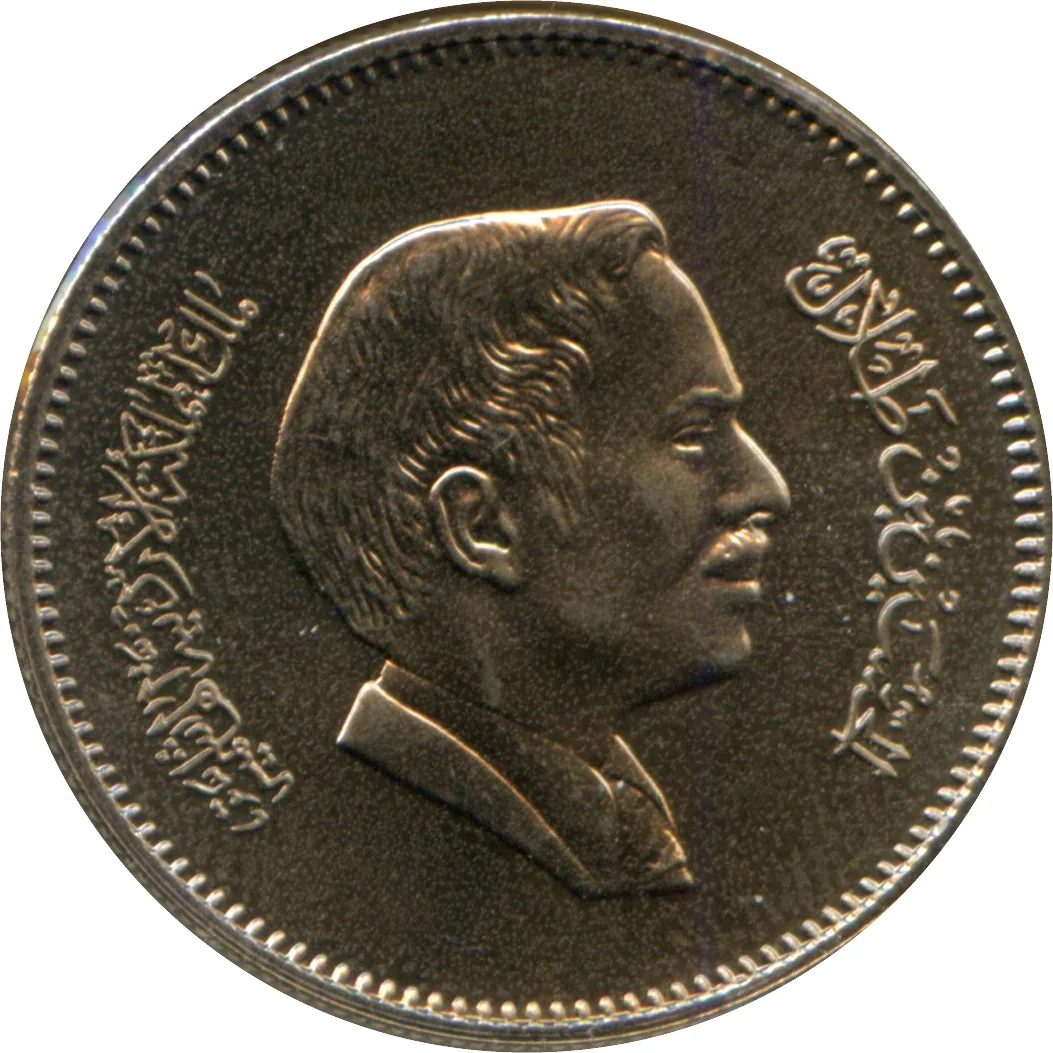
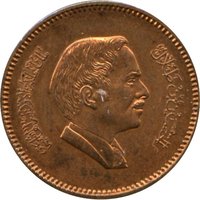
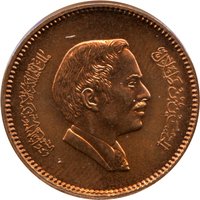
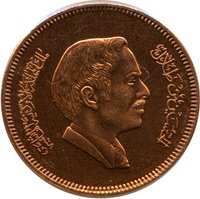
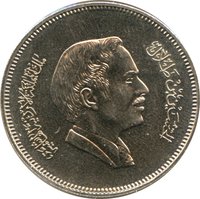
Obverse
Description:
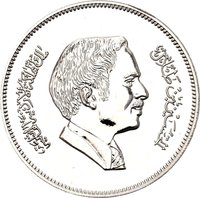
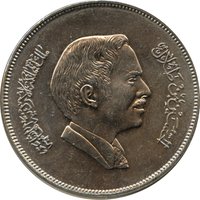
East of King Hussein bin Talal Street
Inscription:
الحسين بن طلال
ملك المملكة الأردنية الهاشمية
ملك المملكة الأردنية الهاشمية
Translation:
Hussein bin Talal
King of the Hashemite Kingdom of Jordan
King of the Hashemite Kingdom of Jordan
Script: Arabic
Language: Arabic
Engraver: Philip Nathan
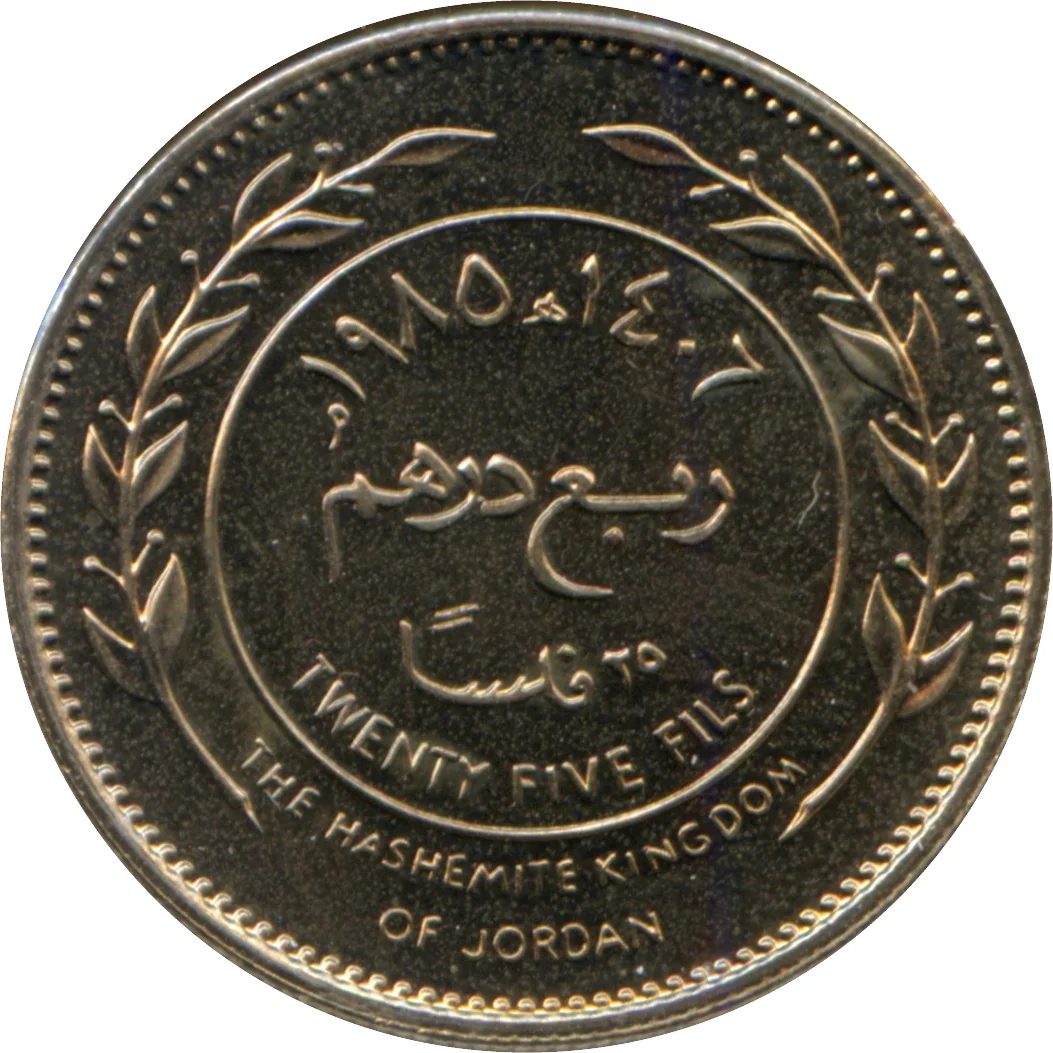
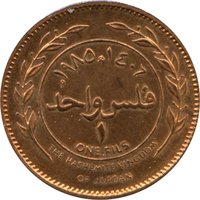
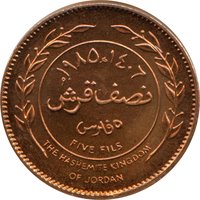
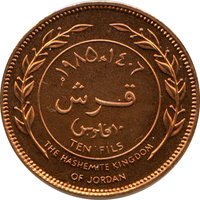
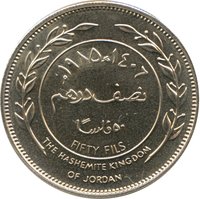
Reverse
Edge
Reeded
Categories
| Person> Monarch |
| Mustache/Beard |
Mints
| Name | Mark |
|---|---|
| Royal Mint | — |
Mintings
| Year | Mint Mark | Mintage | Quality | Collection |
|---|---|---|---|---|
| 1978 | — | 20,000 | Proof | |
| 1981 | — | 2,000,000 | ||
| 1984 | — | 4,000,000 | ||
| 1985 | — | — | ||
| 1985 | — | 5,000 | Proof | |
| 1991 | — | 5,000,000 |
Historical background
In 1978, Jordan's currency, the Jordanian Dinar (JOD), was in a period of notable stability and strength, a direct result of the conservative fiscal and monetary policies established in the preceding decade. Following the loss of the West Bank in 1967 and the 1970-71 civil conflict, King Hussein's government, advised by figures like Central Bank Governor Mohammed Saleh Nabulsi, prioritized monetary discipline. A key pillar of this was the 1974 repeal of the 1964 law that had tied the dinar to both the British pound and the US dollar, officially pegging it solely to the US dollar at a fixed rate of 1 JOD = 3.03 USD. This credible peg, maintained by substantial foreign exchange reserves, became a cornerstone of economic confidence.
This stability was critically underpinned by substantial external financial inflows, which characterized Jordan's economic landscape in the 1970s. The most significant sources were remittances from Jordanian and Palestinian workers employed in the oil-rich Gulf states, as well as direct grants from Arab Gulf allies. Furthermore, Jordan was a major recipient of foreign aid, particularly from the United States. These inflows financed chronic trade and budget deficits without requiring currency devaluation, allowing the Central Bank of Jordan to comfortably defend the dollar peg and maintain a low-inflation environment compared to regional peers.
However, this apparent stability masked underlying structural vulnerabilities. The economy was heavily dependent on these unpredictable external rents rather than productive domestic capacity. While the strong dinar benefited imports and a growing middle class, it also made Jordanian exports less competitive and, combined with a protected industrial sector, did little to encourage broad-based private sector growth or address high unemployment. Consequently, in 1978, the currency situation presented a paradox: a rock-solid and trusted dinar that was a symbol of macroeconomic stability, yet simultaneously a symptom of an economy reliant on volatile external subsidies, storing up challenges for future decades when these regional financial flows would eventually diminish.
This stability was critically underpinned by substantial external financial inflows, which characterized Jordan's economic landscape in the 1970s. The most significant sources were remittances from Jordanian and Palestinian workers employed in the oil-rich Gulf states, as well as direct grants from Arab Gulf allies. Furthermore, Jordan was a major recipient of foreign aid, particularly from the United States. These inflows financed chronic trade and budget deficits without requiring currency devaluation, allowing the Central Bank of Jordan to comfortably defend the dollar peg and maintain a low-inflation environment compared to regional peers.
However, this apparent stability masked underlying structural vulnerabilities. The economy was heavily dependent on these unpredictable external rents rather than productive domestic capacity. While the strong dinar benefited imports and a growing middle class, it also made Jordanian exports less competitive and, combined with a protected industrial sector, did little to encourage broad-based private sector growth or address high unemployment. Consequently, in 1978, the currency situation presented a paradox: a rock-solid and trusted dinar that was a symbol of macroeconomic stability, yet simultaneously a symptom of an economy reliant on volatile external subsidies, storing up challenges for future decades when these regional financial flows would eventually diminish.
Series: 1978 Jordan circulation coins
🌱 Common