

1 Shilling – United Kingdom
United Kingdom
Context
Years: 1889–1892
Issuer: United Kingdom 
Ruler: Victoria
Currency:
(1158—1970)
Demonetized: Yes
Total mintage: 25,990,500
Material
References
KM: #Click to copy to clipboard774
Numista: #10676
Value
Bullion value: $14.88
Obverse
Description:
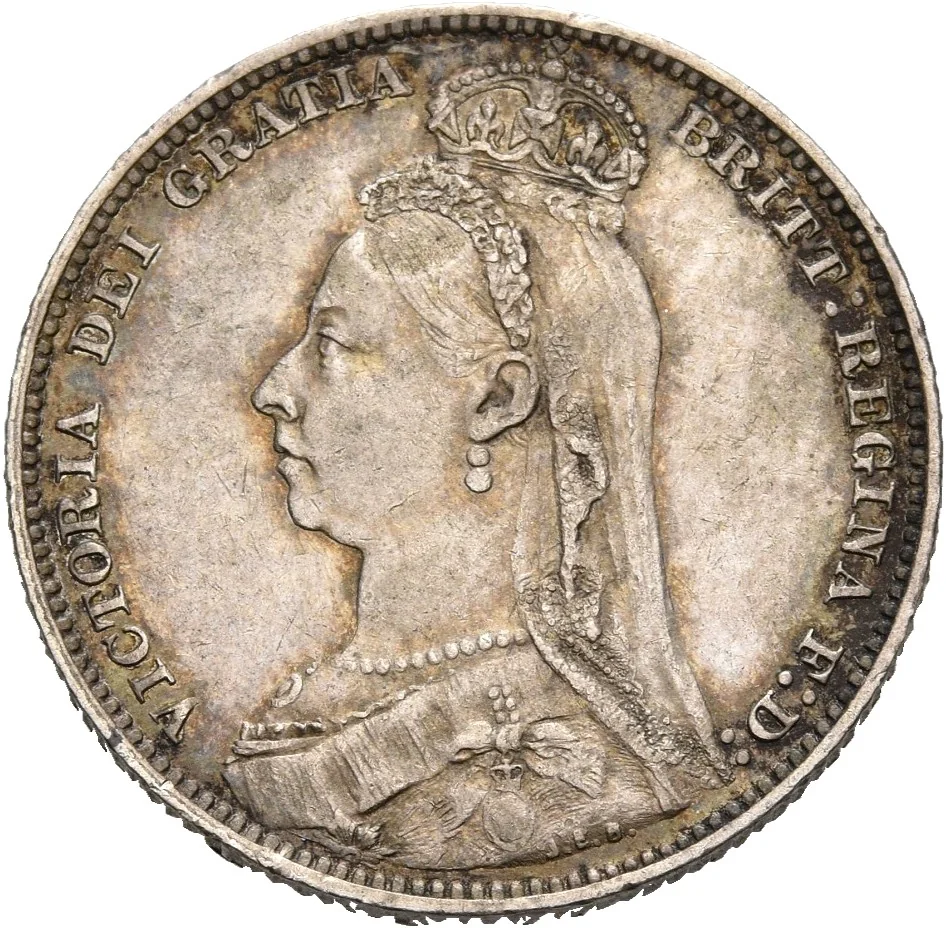
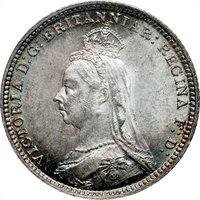
Queen Victoria's Jubilee Head left, crowned, with surrounding legend.
Inscription:
VICTORIA DEI GRATIA BRITT:REGINA F.D:
Translation:
Victoria by the Grace of God, Queen of Britain, Defender of the Faith.
Script: Latin
Language: Latin
Engraver: Joseph Edgar Boehm
Reverse
Edge
Reeded
Mints
| Name | Mark |
|---|---|
| Royal Mint (Tower Hill) | — |
Mintings
| Year | Mint Mark | Mintage | Quality | Collection |
|---|---|---|---|---|
| 1889 | — | 7,039,600 | ||
| 1889 | — | — | Proof | |
| 1890 | — | 8,794,000 | ||
| 1891 | — | 5,565,300 | ||
| 1891 | — | — | Proof | |
| 1892 | — | 4,591,600 |
Historical background
In 1889, the United Kingdom operated under the classical Gold Standard, a system it had effectively pioneered. The pound sterling was legally defined as a specific weight of gold (123.274 grains of standard gold), and Bank of England notes were freely convertible into gold coin upon demand. This system, seen as the bedrock of British financial power and global trade, ensured price stability and fixed exchange rates with other gold-backed currencies, cementing London's position as the world's premier financial centre. The domestic currency in circulation was a mix of gold sovereigns and half-sovereigns, silver and copper token coinage (whose metallic value was less than face value), and Bank of England notes, which were predominantly used for larger transactions.
However, the period was not without its monetary debates and tensions. A prolonged economic depression from the mid-1870s to the mid-1890s, known as the "Long Depression," fuelled discussions about bimetallism. Proponents, including some industrialists and farmers, argued that adopting a standard based on both gold and silver would increase the world's money supply, create inflation, and ease debt burdens. They blamed the pure gold standard for causing deflation and falling agricultural prices. These debates were lively, but the official Gold Standard Act of 1925 was still decades away; the system in 1889 was governed by earlier 19th-century acts and convention, and the pro-gold "monetary orthodoxy" ultimately held firm.
Furthermore, the banking landscape was evolving. While the Bank of England acted as the central guardian of gold reserves, the wider currency in everyday use was increasingly supplied by the growing network of joint-stock commercial banks through their chequeing and deposit systems. The financial system's stability was periodically tested, but the commitment to gold convertibility remained absolute. Thus, 1889 represents a point of confident, if debated, equilibrium within the gold standard regime, a year where its principles were unchallenged in law and policy, even as economic hardships prompted serious questioning from certain sectors of society.
However, the period was not without its monetary debates and tensions. A prolonged economic depression from the mid-1870s to the mid-1890s, known as the "Long Depression," fuelled discussions about bimetallism. Proponents, including some industrialists and farmers, argued that adopting a standard based on both gold and silver would increase the world's money supply, create inflation, and ease debt burdens. They blamed the pure gold standard for causing deflation and falling agricultural prices. These debates were lively, but the official Gold Standard Act of 1925 was still decades away; the system in 1889 was governed by earlier 19th-century acts and convention, and the pro-gold "monetary orthodoxy" ultimately held firm.
Furthermore, the banking landscape was evolving. While the Bank of England acted as the central guardian of gold reserves, the wider currency in everyday use was increasingly supplied by the growing network of joint-stock commercial banks through their chequeing and deposit systems. The financial system's stability was periodically tested, but the commitment to gold convertibility remained absolute. Thus, 1889 represents a point of confident, if debated, equilibrium within the gold standard regime, a year where its principles were unchallenged in law and policy, even as economic hardships prompted serious questioning from certain sectors of society.
🌱 Common