

½ Penny – Fiji
Fiji
Context
Material
Diameter: 21 mm
Weight: 3.24 g
Thickness: 1.57 mm
Shape: Round with a round hole
Composition: Copper-nickel
Technique: Milled
Alignment: Medal alignment
flip
References
KM: #Click to copy to clipboard1
Numista: #17294
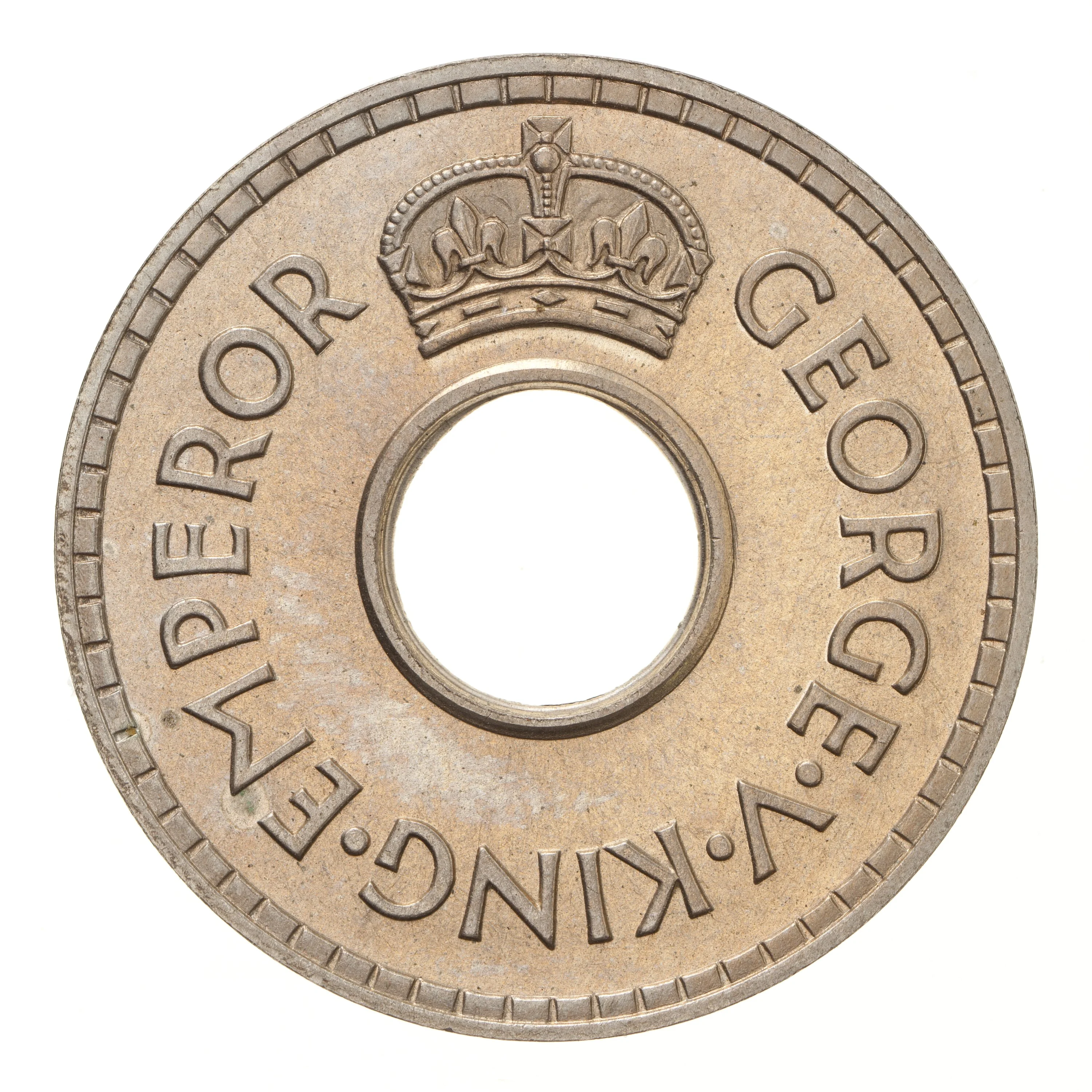
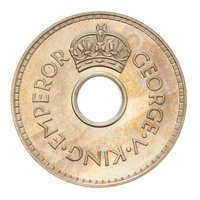
Obverse
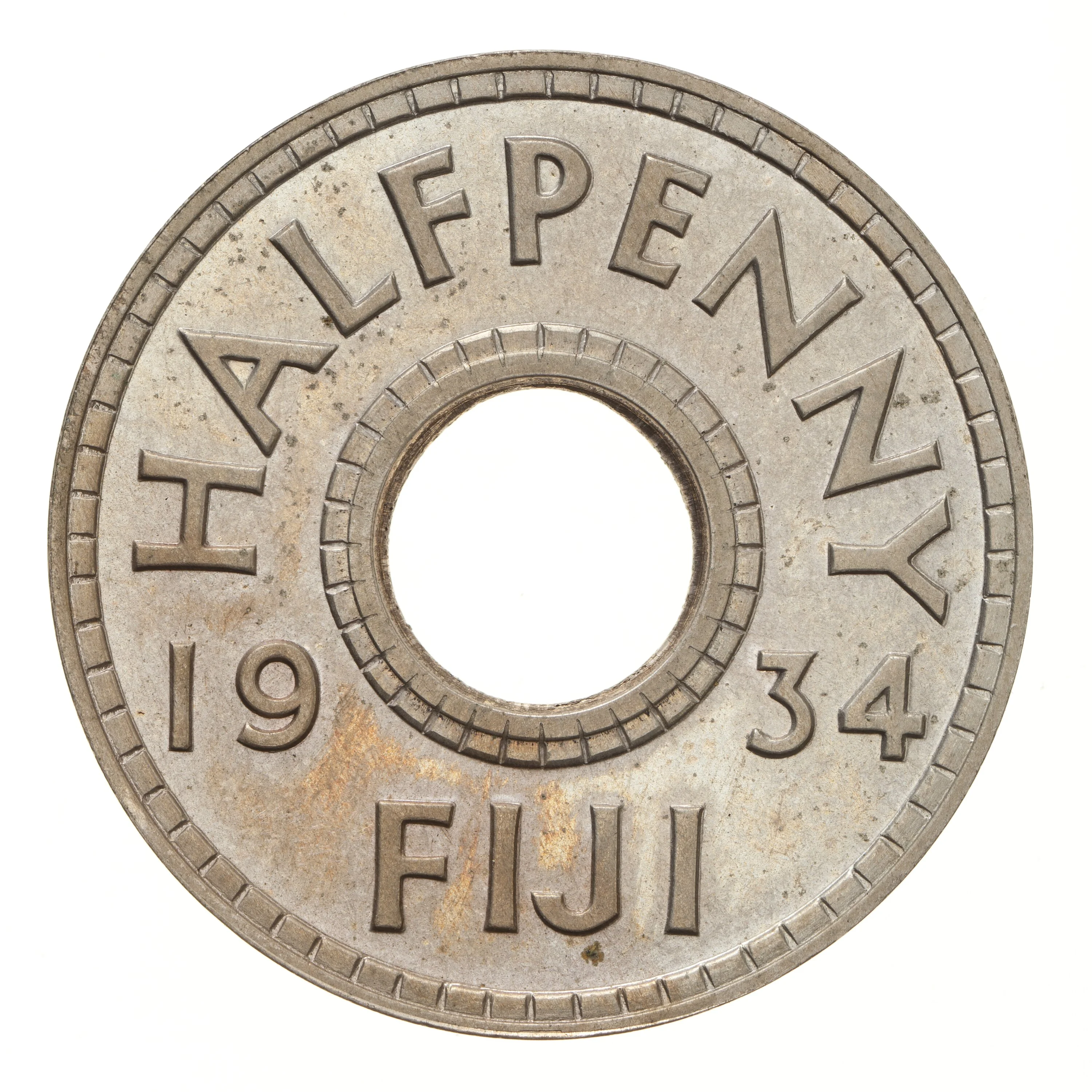
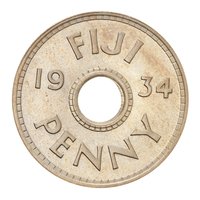
Reverse
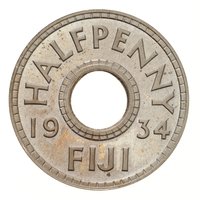
Description:
Date flanking center hole, denomination above.
Inscription:
HALFPENNY
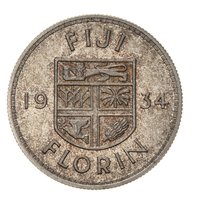
19 34
FIJI
19 34
FIJI
Script: Latin
Edge
Plain
Mints
| Name | Mark |
|---|---|
| Royal Mint (Tower Hill) | — |
Mintings
| Year | Mint Mark | Mintage | Quality | Collection |
|---|---|---|---|---|
| 1934 | — | 96,000 | ||
| 1934 | — | — | Proof |
Historical background
In 1934, Fiji's currency situation was firmly under the control of the British colonial administration, operating within the framework of the sterling area. The official currency was the Fiji pound (F£), which was pegged at par with the British pound sterling (GBP). This meant that banknotes and coins issued in Fiji were directly convertible and held the same value as their British counterparts, ensuring stability in external trade and finance, which were dominated by the sugar and coconut industries. The physical currency in circulation consisted of notes issued by the London-based Colonial Bank, alongside British silver and copper coins, reflecting the colony's economic dependency on the United Kingdom.
The period was marked by the lingering effects of the Great Depression, which had severely impacted Fiji's primary export commodities. While the peg to sterling provided stability, it also meant Fiji imported the monetary policies of Britain, which had abandoned the gold standard in 1931. This move had led to a devaluation of sterling, which, by extension, devalued the Fiji pound. This devaluation provided a modest, indirect boost to Fiji's export competitiveness in the early 1930s, but by 1934, global commodity prices remained depressed. Consequently, the colony faced persistent economic hardship, with low cash incomes for both European planters and indigenous Fijian and Indo-Fijian laborers.
Administratively, 1934 fell within a period of transition toward greater local financial control. The colonial government was preparing to establish a Board of Commissioners of Currency, which would eventually take over note issuance from the Colonial Bank. This move, realized in 1935, was a step toward formalizing a distinct Fiji currency system, though it remained strictly pegged to sterling. Thus, the currency situation in 1934 was one of colonial dependency, characterized by a stable but imported monetary policy struggling to alleviate the pressures of a depressed plantation economy.
The period was marked by the lingering effects of the Great Depression, which had severely impacted Fiji's primary export commodities. While the peg to sterling provided stability, it also meant Fiji imported the monetary policies of Britain, which had abandoned the gold standard in 1931. This move had led to a devaluation of sterling, which, by extension, devalued the Fiji pound. This devaluation provided a modest, indirect boost to Fiji's export competitiveness in the early 1930s, but by 1934, global commodity prices remained depressed. Consequently, the colony faced persistent economic hardship, with low cash incomes for both European planters and indigenous Fijian and Indo-Fijian laborers.
Administratively, 1934 fell within a period of transition toward greater local financial control. The colonial government was preparing to establish a Board of Commissioners of Currency, which would eventually take over note issuance from the Colonial Bank. This move, realized in 1935, was a step toward formalizing a distinct Fiji currency system, though it remained strictly pegged to sterling. Thus, the currency situation in 1934 was one of colonial dependency, characterized by a stable but imported monetary policy struggling to alleviate the pressures of a depressed plantation economy.
Series: 1934 Fiji circulation coins
🌱 Fairly Common