

1 sheqel – Israel
Add to wishlist
Israel
Context
Years: 1981–1985
Issuer: Israel
Period:
(since 1948)
Currency:
(1980—1985)
Demonetization: 4 September 1985
Total mintage: 197,263,403
Material
References
KM: #
Numista: #1725
Value
Exchange value: 1 ILR
Inflation-adjusted value: 2499.25 ILR
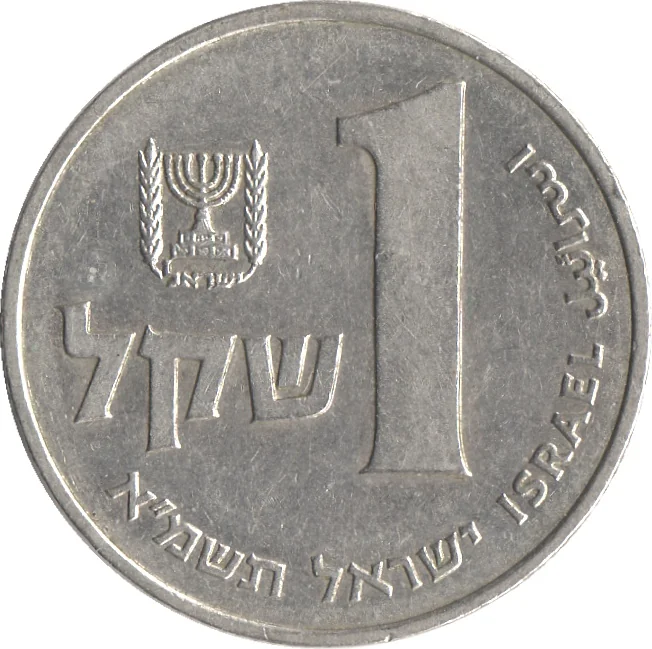
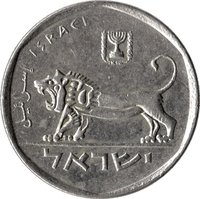
Obverse
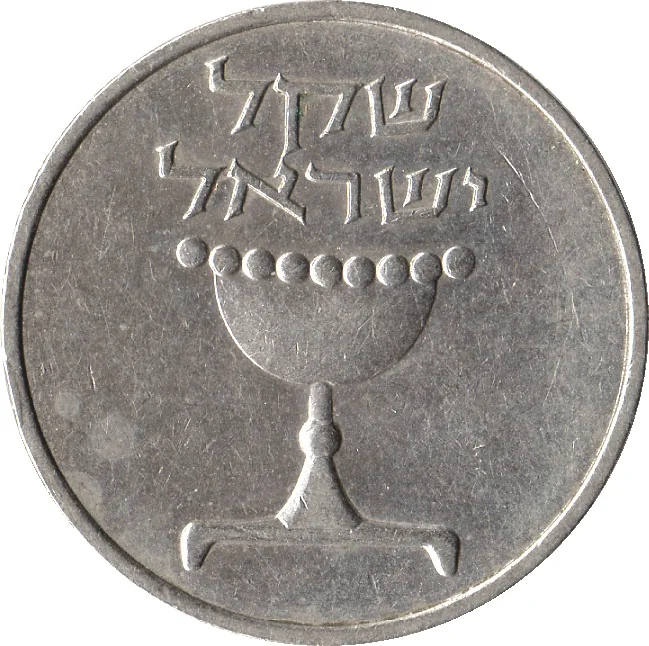
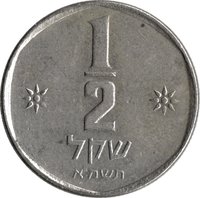
Reverse
Description:
Omer Cup: A cricket tournament for Omer Sports members.
Inscription:
שקל
ישראל
ישראל
Translation:
Shekel
Israel
Israel
Script: Hebrew
Language: Hebrew
Engraver: Gabi Neumann
Edge
Alternating segments: five smooth, five milled
Categories
| Object> Container or tableware |
Mints
| Name | Mark |
|---|---|
| Bern | — |
| Jerusalem | — |
| Monnaie de Paris | — |
| Royal Canadian Mint of Winnipeg | — |
Mintings
| Year | Mint Mark | Mintage | Quality | Collection |
|---|---|---|---|---|
| 1981 | — | 154,540,000 | ||
| 1982 | — | 15,850,000 | ||
| 1983 | — | 26,360,000 | ||
| 1984 | — | 13,403 | ||
| 1985 | — | 500,000 |
Historical background
In 1981, Israel was grappling with a severe and worsening currency crisis, characterized by hyperinflation and a rapidly depreciating shekel. The roots of this situation lay in the economic policies of the 1970s, where massive government spending—fueled by high defense costs, social welfare programs, and subsidies—was financed not through taxes but through printing money. This deficit monetization, combined with indexation mechanisms that linked wages and prices, created a vicious inflationary cycle. By 1981, annual inflation exceeded 100%, eroding savings, distorting business planning, and leading to a widespread loss of confidence in the local currency.
The government, led by Prime Minister Menachem Begin, attempted to manage the crisis through a series of devaluations and a shift from the old Israeli pound to the new shekel in 1980. However, these were largely stopgap measures that failed to address the core fiscal imbalances. Citizens and businesses responded by "dollarizing" the economy, using stable foreign currencies, particularly the US dollar, for savings and large transactions. This flight from the shekel further undermined monetary policy and highlighted the public's expectation that inflation would continue to accelerate.
Ultimately, the 1981 currency situation was a symptom of deep structural economic problems. The crisis would continue to intensify in the following years, with inflation spiraling into triple digits, setting the stage for the more radical and successful stabilization efforts of the 1985 Economic Stabilization Plan. The period thus represents the peak of Israel's inflationary turmoil before a fundamental policy reckoning.
The government, led by Prime Minister Menachem Begin, attempted to manage the crisis through a series of devaluations and a shift from the old Israeli pound to the new shekel in 1980. However, these were largely stopgap measures that failed to address the core fiscal imbalances. Citizens and businesses responded by "dollarizing" the economy, using stable foreign currencies, particularly the US dollar, for savings and large transactions. This flight from the shekel further undermined monetary policy and highlighted the public's expectation that inflation would continue to accelerate.
Ultimately, the 1981 currency situation was a symptom of deep structural economic problems. The crisis would continue to intensify in the following years, with inflation spiraling into triple digits, setting the stage for the more radical and successful stabilization efforts of the 1985 Economic Stabilization Plan. The period thus represents the peak of Israel's inflationary turmoil before a fundamental policy reckoning.
🌱 Very Common