

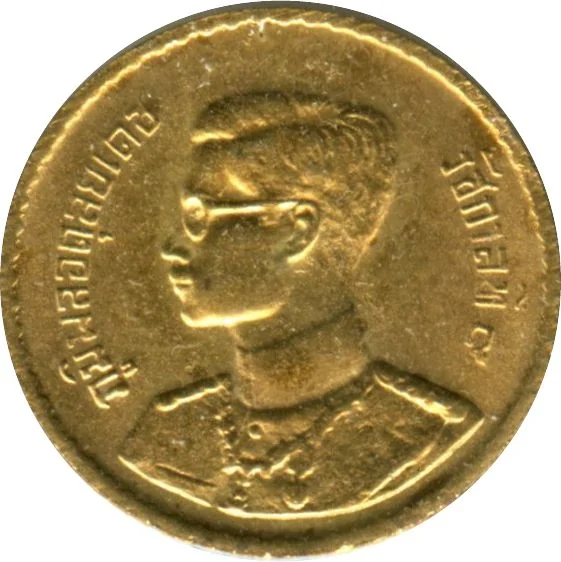
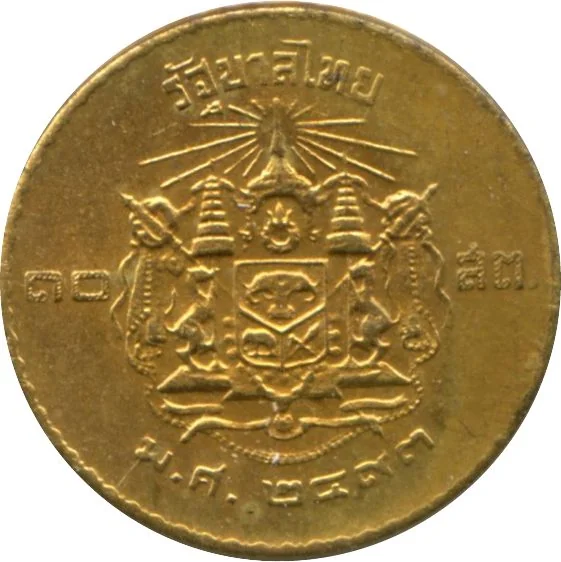
10 Satangs – Thailand
Thailand
Context
Year: 1950
Thai Year: 2493
Issuer: Thailand 
Ruler: Bhumibol Adulyadej
Currency:
(since 1897)
Demonetized: Yes
Total mintage: 4,060,000
Material
Diameter: 17.5 mm
Weight: 1.75 g
Shape: Round
Composition: Aluminium bronze
Magnetic: No
Technique: Milled
Alignment: Coin alignment
flip
References
Y: #Click to copy to clipboard73a
Numista: #17198
Value
Exchange value: 0.10 THB = $0.00
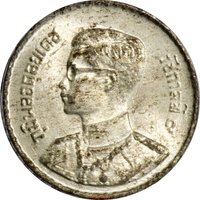
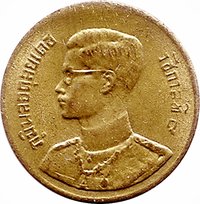
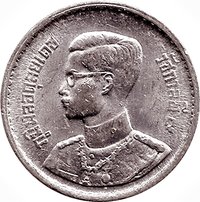
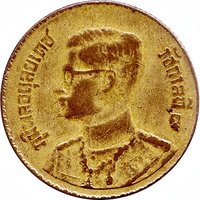
Obverse
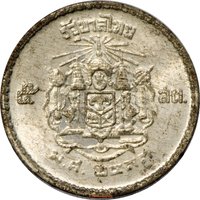
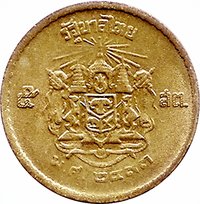
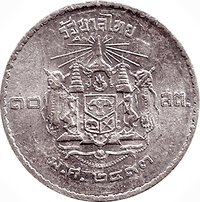
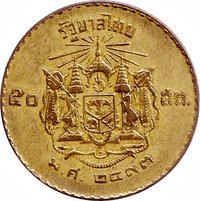
Reverse
Edge
Plain
Mintings
| Year | Mint Mark | Mintage | Quality | Collection |
|---|---|---|---|---|
| 1950 | — | 4,060,000 |
Historical background
In 1950, Thailand's currency system was in a period of stabilization and transition following the economic disruptions of World War II. The official currency was the baht, which was pegged to a fixed exchange rate under the Bretton Woods system, effectively linking it to the US dollar at a rate of approximately 20-21 baht to one dollar. This peg provided crucial monetary stability and predictability for international trade, which was vital for a developing economy heavily reliant on agricultural exports like rice, rubber, and tin. The management of the currency fell under the authority of the Bank of Thailand, which had been established just a decade earlier in 1942.
However, this formal stability existed alongside a complex and influential dual-market system. Alongside the official exchange rate, a vibrant and tolerated free market for foreign exchange operated in Bangkok, primarily dealing with the US dollar and Chinese yuan. This market, driven by remittances, trade financing, and at times capital flight, often saw the baht trade at a significantly weaker value than the official rate. This disparity reflected underlying pressures, including trade deficits and the economic influence of the sizeable overseas Chinese business community, whose transactions frequently bypassed official channels.
The currency situation of 1950 thus reflected Thailand’s post-war economic trajectory: outwardly stable under a new international monetary order, yet internally shaped by pragmatic accommodations to market forces and the realities of a regionalized trade network. This setup facilitated the country's gradual economic recovery and integration into the global economy, while also embedding a structural tension between official policy and parallel market dynamics that would periodically challenge financial authorities in the decades to come.
However, this formal stability existed alongside a complex and influential dual-market system. Alongside the official exchange rate, a vibrant and tolerated free market for foreign exchange operated in Bangkok, primarily dealing with the US dollar and Chinese yuan. This market, driven by remittances, trade financing, and at times capital flight, often saw the baht trade at a significantly weaker value than the official rate. This disparity reflected underlying pressures, including trade deficits and the economic influence of the sizeable overseas Chinese business community, whose transactions frequently bypassed official channels.
The currency situation of 1950 thus reflected Thailand’s post-war economic trajectory: outwardly stable under a new international monetary order, yet internally shaped by pragmatic accommodations to market forces and the realities of a regionalized trade network. This setup facilitated the country's gradual economic recovery and integration into the global economy, while also embedding a structural tension between official policy and parallel market dynamics that would periodically challenge financial authorities in the decades to come.
Series: 1950 Thailand circulation coins
🌱 Fairly Common