

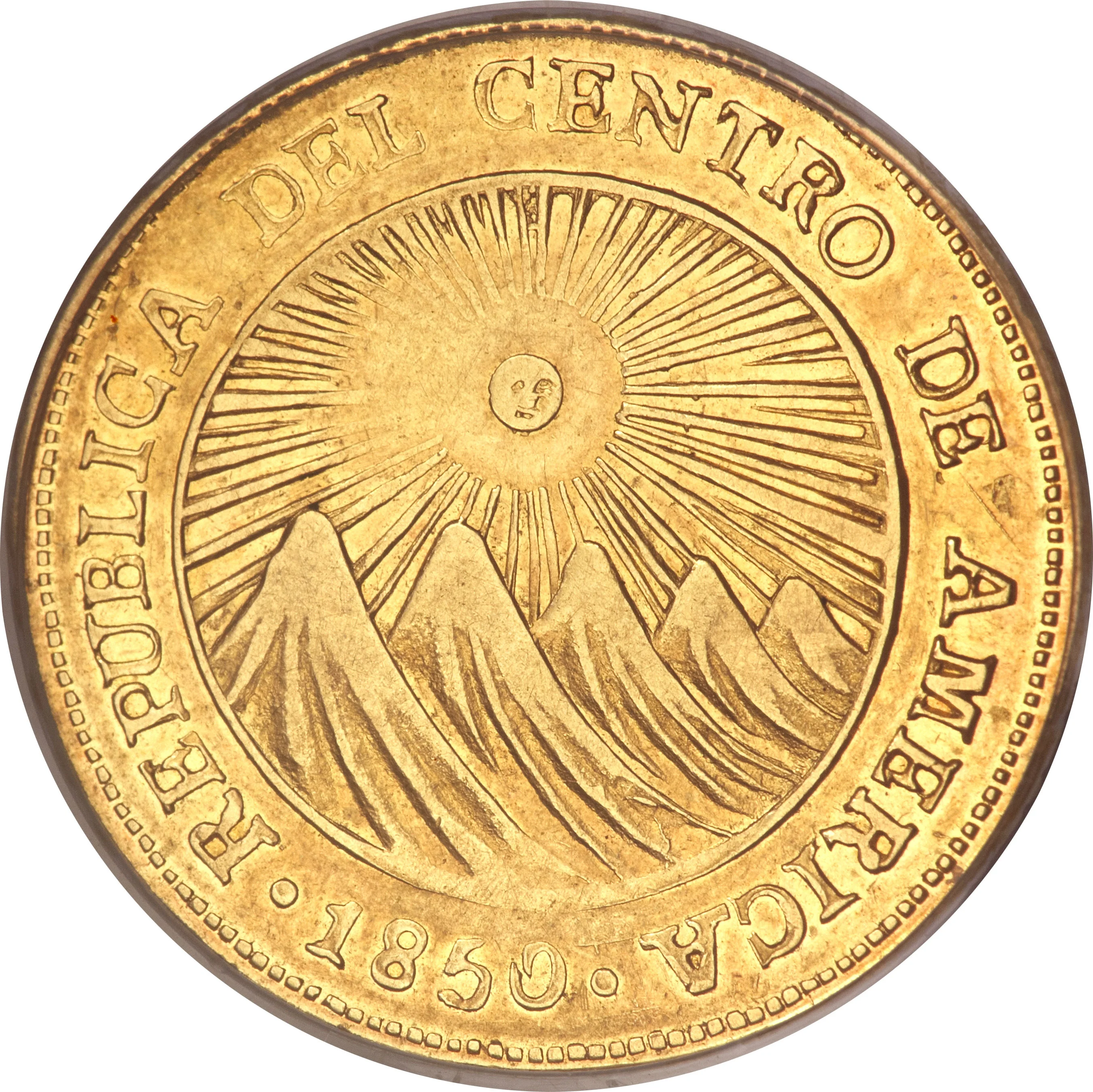
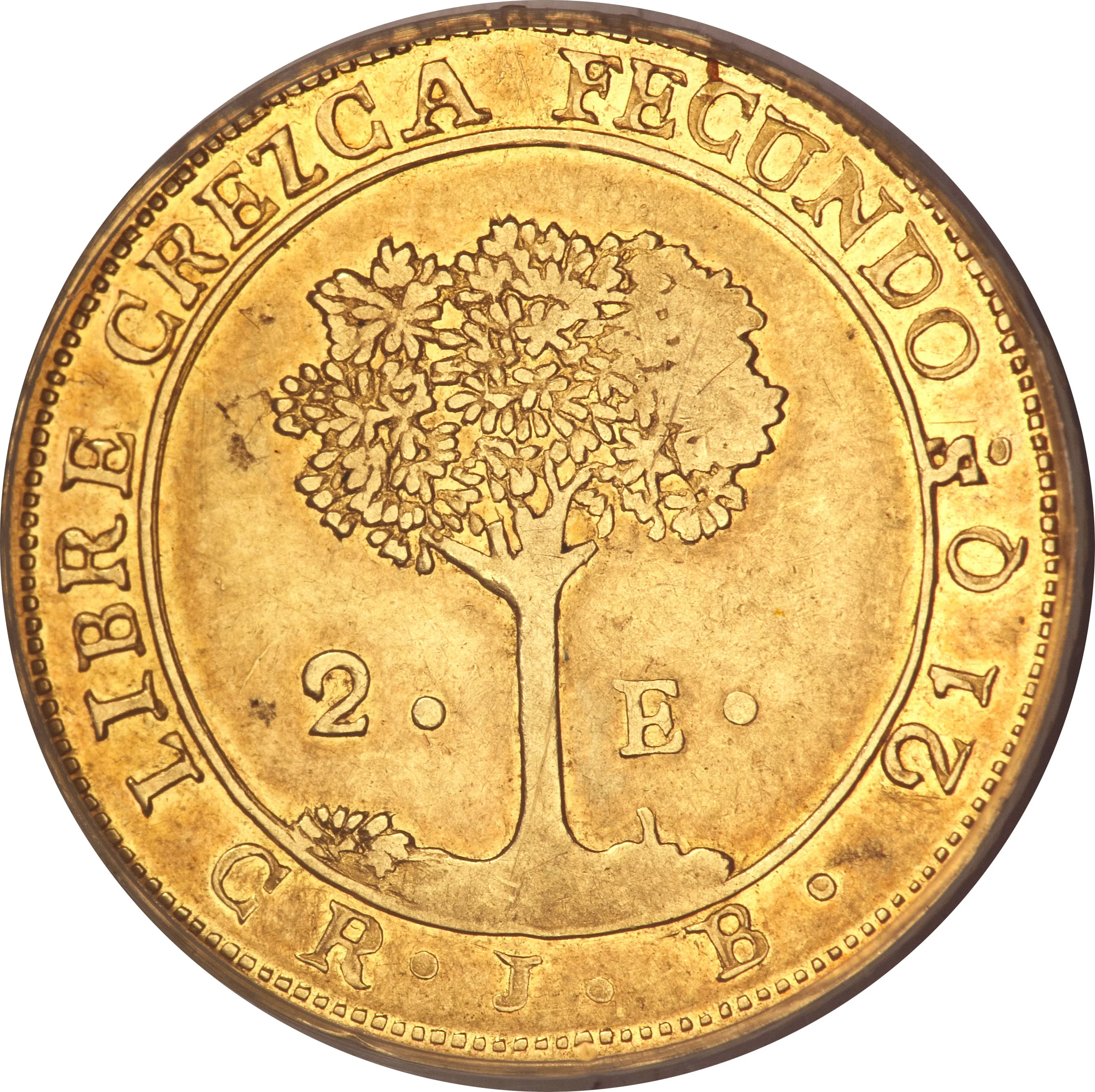
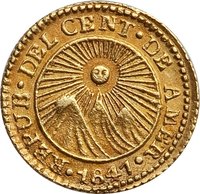
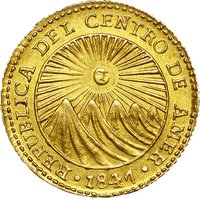
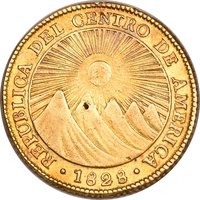
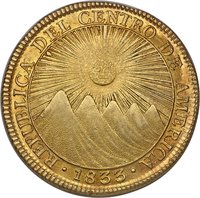
Obverse
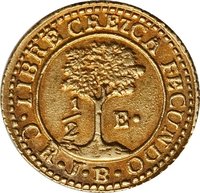
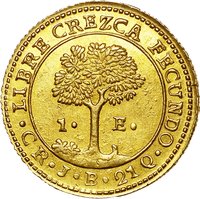
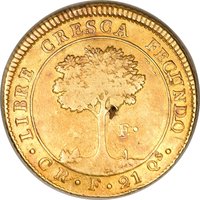
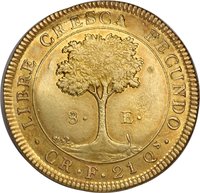
Reverse
Edge
Reeded
Mints
| Name | Mark |
|---|---|
| Casa Nacional de Moneda de Costa Rica | CR |
Historical background
In 1828, the currency situation within the Federal Republic of Central America was characterized by profound instability and fragmentation, a direct reflection of the fragile political union itself. The federation, comprising Guatemala, El Salvador, Honduras, Nicaragua, and Costa Rica, lacked a unified monetary authority or a standardized national currency. Consequently, a chaotic mix of coins circulated, primarily consisting of old Spanish colonial silver reales and gold escudos, alongside coins from other nations like Mexico, Peru, and even counterstamped Spanish pieces. This monetary bazaar created significant challenges for inter-regional trade and federal administration, as the value and weight of coins could vary, leading to confusion and facilitating fraud.
The federal government, based in Guatemala City, recognized this critical problem and made attempts at reform. In 1824, it had authorized the minting of a federal coinage, and by 1828, silver pesos and reales bearing the federation's seal (a triangle and volcanoes) were being produced, primarily at the Guatemala Mint. However, these issues were insufficient in volume to displace the older, heterogeneous coins in widespread circulation. More critically, the chronic financial weakness of the federal government, plagued by empty coffers and reliant on loans from the provincial governments, prevented it from enforcing a monetary monopoly or implementing a comprehensive recoinage program.
Therefore, the currency landscape in 1828 was one of transition and disorder. While the symbolic federal coinage represented an aspiration for economic unity, the practical reality was a decentralized and inefficient system. The persistence of diverse and often suspect foreign and colonial coins undermined efforts to build a stable national economy. This monetary disarray both mirrored and exacerbated the political tensions between the federalist center and the particularist interests of the individual states, contributing to the economic difficulties that would ultimately lead to the federation's dissolution in the 1840s.
The federal government, based in Guatemala City, recognized this critical problem and made attempts at reform. In 1824, it had authorized the minting of a federal coinage, and by 1828, silver pesos and reales bearing the federation's seal (a triangle and volcanoes) were being produced, primarily at the Guatemala Mint. However, these issues were insufficient in volume to displace the older, heterogeneous coins in widespread circulation. More critically, the chronic financial weakness of the federal government, plagued by empty coffers and reliant on loans from the provincial governments, prevented it from enforcing a monetary monopoly or implementing a comprehensive recoinage program.
Therefore, the currency landscape in 1828 was one of transition and disorder. While the symbolic federal coinage represented an aspiration for economic unity, the practical reality was a decentralized and inefficient system. The persistence of diverse and often suspect foreign and colonial coins undermined efforts to build a stable national economy. This monetary disarray both mirrored and exacerbated the political tensions between the federalist center and the particularist interests of the individual states, contributing to the economic difficulties that would ultimately lead to the federation's dissolution in the 1840s.
✨ Legendary