

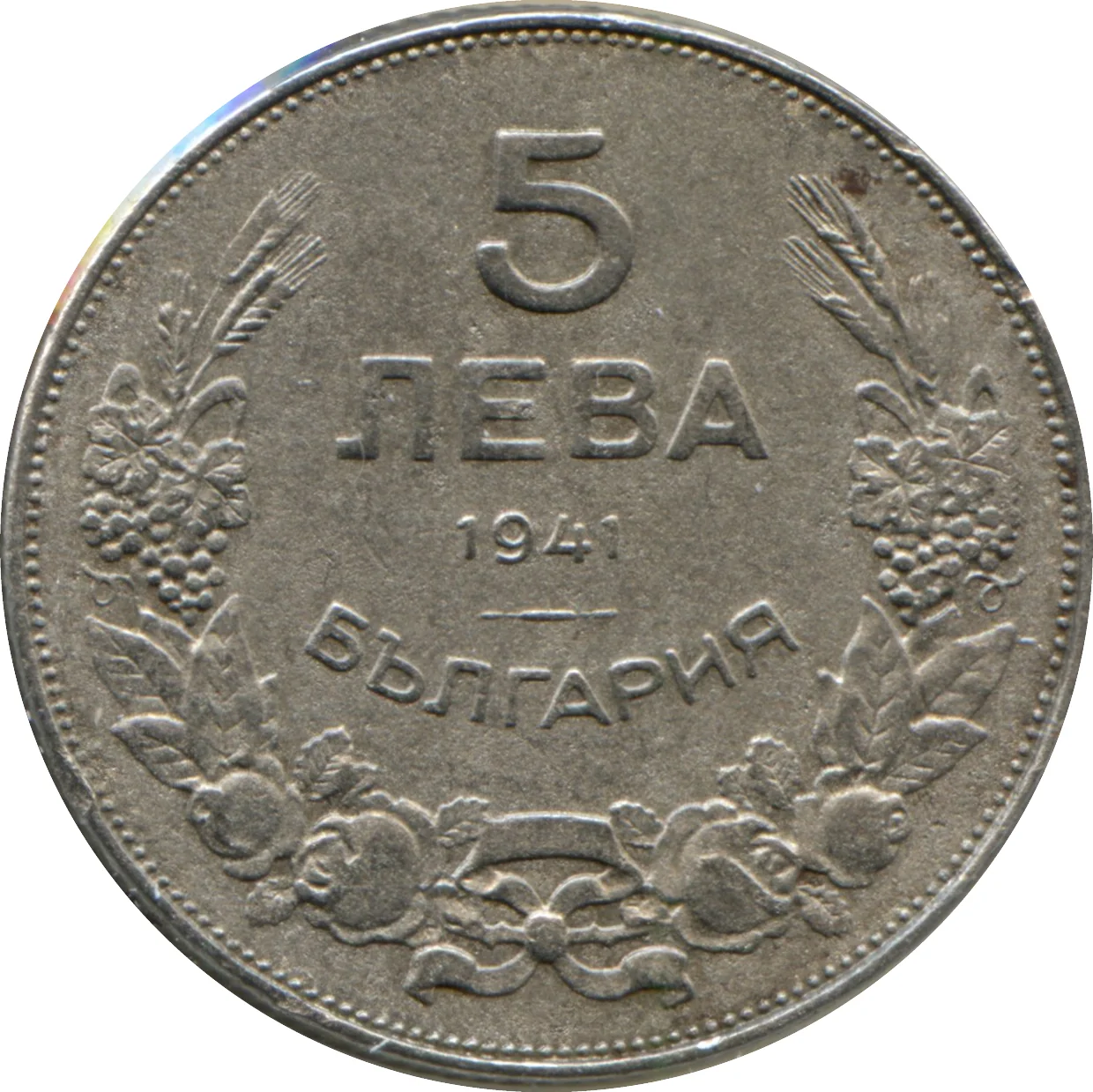
5 leva – Bulgaria
Add to wishlist
Bulgaria
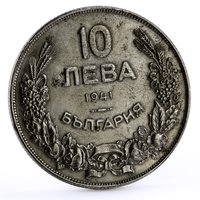
Obverse
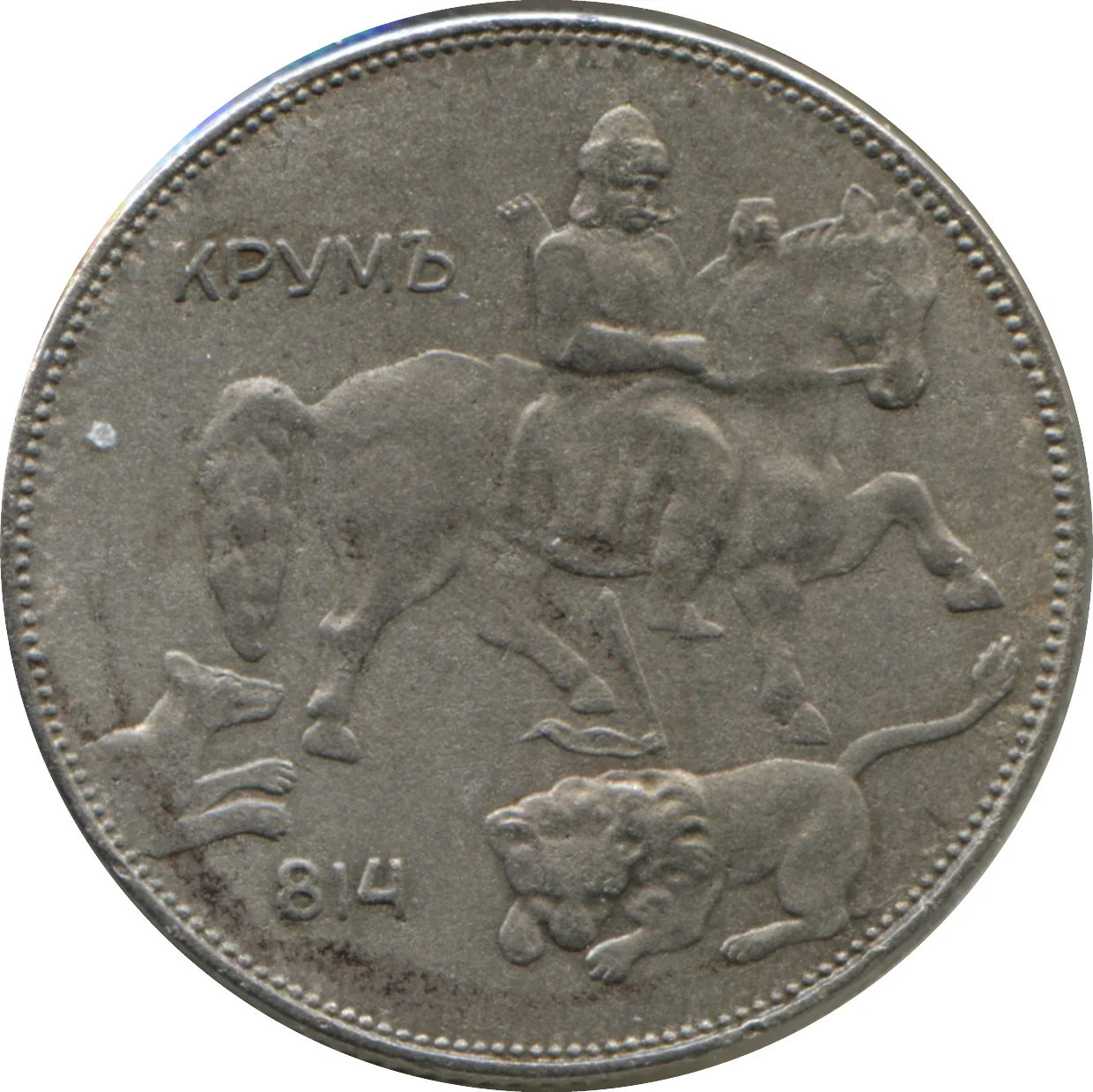
Reverse
Description:
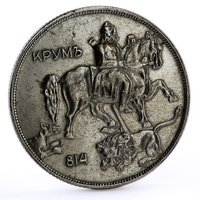
Khan Krum of Bulgaria (803–814) hunts a lion on horseback with a dog.
Inscription:
КРУМЪ
814
814
Translation:
Krum
814
814
Script: Cyrillic
Language: Old Church Slavonic
Edge
Reeded
Mints
| Name | Mark |
|---|---|
| Münze Österreich | — |
Mintings
| Year | Mint Mark | Mintage | Quality | Collection |
|---|---|---|---|---|
| 1941 | — | 15,000,000 |
Historical background
In 1941, Bulgaria found itself in a complex and shifting currency situation, deeply entangled with its wartime political alliances. Although officially joining the Axis powers in March 1941 and allowing German troops transit for the invasions of Yugoslavia and Greece, Bulgaria avoided direct military involvement against the Soviet Union. Its economy and currency were therefore pulled into the German sphere of influence. The official national currency remained the Bulgarian Lev (BGN), managed by the Bulgarian National Bank, but its stability and value became increasingly subject to German demands and the pressures of a wartime economy.
The core of the currency situation was the implementation of a clearing agreement with Nazi Germany. This system avoided direct currency exchange; instead, Bulgarian exports (primarily agricultural goods and raw materials crucial to the German war effort) were credited to a clearing account in Berlin, while Bulgarian imports of German machinery and manufactured goods were debited from it. By 1941, this system was already creating a significant imbalance, with Bulgaria accumulating large "blocked marks" credits in Germany that could not be freely converted or used, effectively meaning Bulgaria was providing resources on credit. Domestically, this led to inflationary pressures as the government printed more currency to pay local producers for goods sent to Germany.
Furthermore, Bulgaria's territorial expansions in 1941 into Yugoslav Macedonia and Greek Thrace under Axis sponsorship introduced additional monetary complications. The Bulgarian Lev was forcibly introduced as the sole legal tender in these occupied areas, a move designed to solidify Bulgarian administrative control and facilitate the extraction of resources. This abrupt currency imposition, replacing the Yugoslav dinar and Greek drachma, was disruptive to the local economies and served as a tool of economic assimilation and exploitation, further straining the Bulgarian central bank's management of money supply and contributing to underlying inflationary trends that would worsen as the war progressed.
The core of the currency situation was the implementation of a clearing agreement with Nazi Germany. This system avoided direct currency exchange; instead, Bulgarian exports (primarily agricultural goods and raw materials crucial to the German war effort) were credited to a clearing account in Berlin, while Bulgarian imports of German machinery and manufactured goods were debited from it. By 1941, this system was already creating a significant imbalance, with Bulgaria accumulating large "blocked marks" credits in Germany that could not be freely converted or used, effectively meaning Bulgaria was providing resources on credit. Domestically, this led to inflationary pressures as the government printed more currency to pay local producers for goods sent to Germany.
Furthermore, Bulgaria's territorial expansions in 1941 into Yugoslav Macedonia and Greek Thrace under Axis sponsorship introduced additional monetary complications. The Bulgarian Lev was forcibly introduced as the sole legal tender in these occupied areas, a move designed to solidify Bulgarian administrative control and facilitate the extraction of resources. This abrupt currency imposition, replacing the Yugoslav dinar and Greek drachma, was disruptive to the local economies and served as a tool of economic assimilation and exploitation, further straining the Bulgarian central bank's management of money supply and contributing to underlying inflationary trends that would worsen as the war progressed.
🌱 Common