

25 centimes – Morocco
Add to wishlist
Morocco
Context
Material
Diameter: 24 mm
Weight: 5.2 g
Thickness: 1.33 mm
Shape: Round with a round hole
Composition: Copper-nickel
Technique: Milled
Alignment: Medal alignment
flip
References
Y: #
Numista: #1708
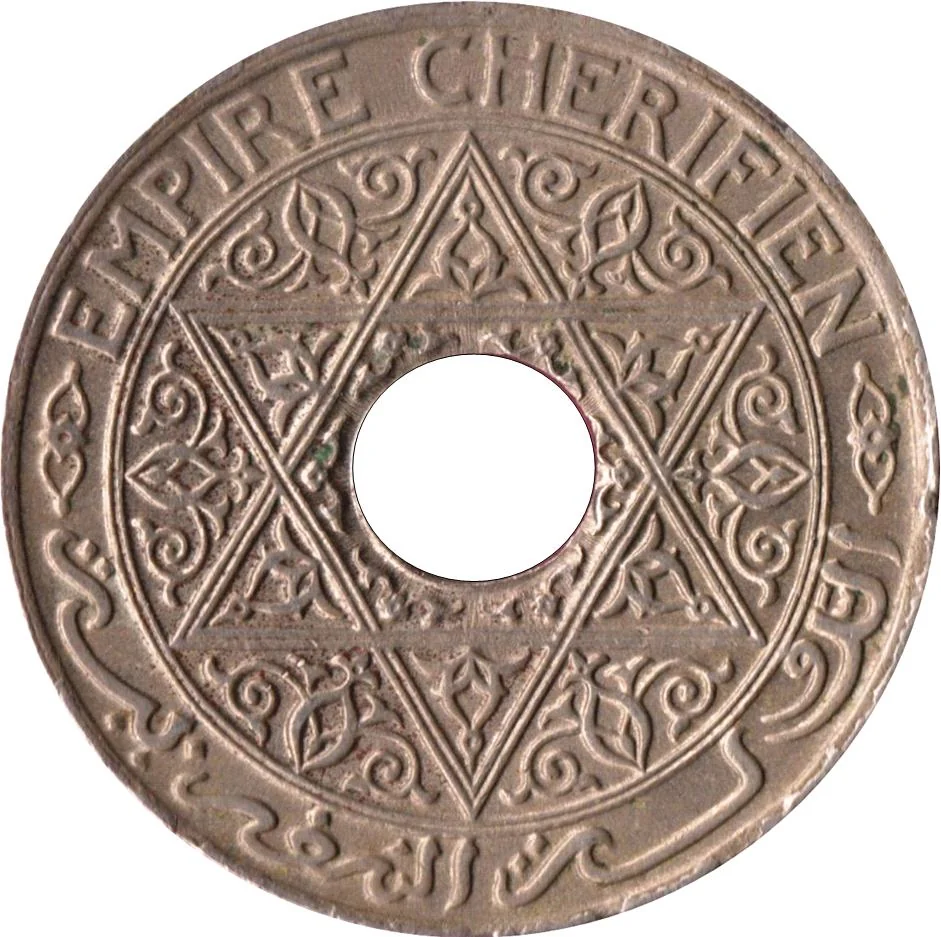
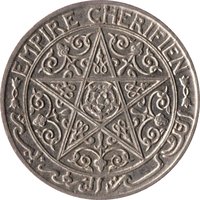
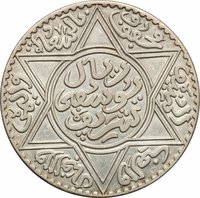
Obverse
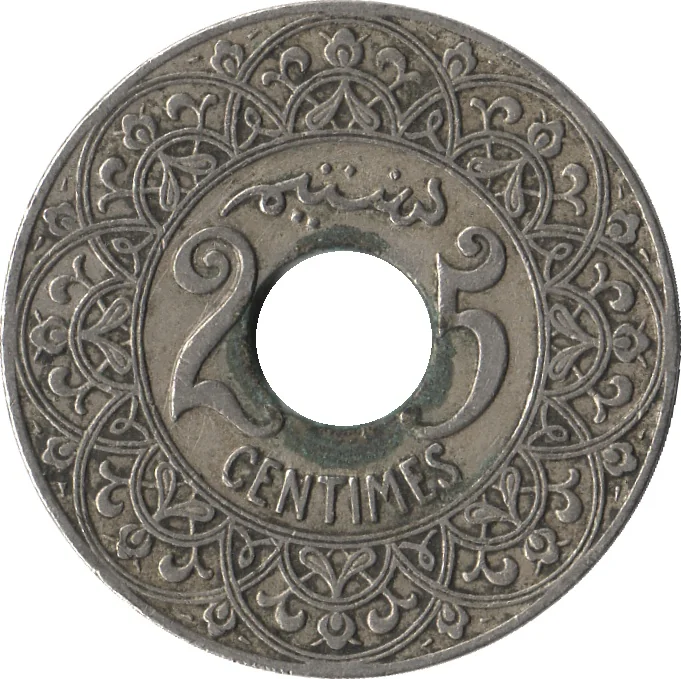
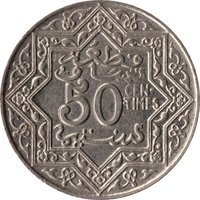
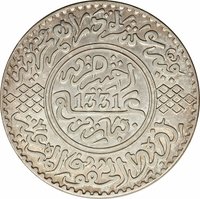
Reverse
Edge
Plain
Mints
| Name | Mark |
|---|---|
| Monnaie de Paris | — |
| Société Française de Monnayage | — |
Mintings
| Year | Mint Mark | Mintage | Quality | Collection |
|---|---|---|---|---|
| 1921 | — | 11,018,109 | ||
| 1924 | — | 2,002,008 |
Historical background
In 1921, Morocco's currency situation reflected its complex political status as a protectorate divided between French and Spanish zones of influence, with the city of Tangier holding a special international status. The monetary landscape was fragmented and chaotic, with a multitude of coins in circulation. These included older Moroccan silver dirhams and riyals, Spanish pesetas and duros, French francs, British sovereigns, and various other foreign currencies, all valued by weight and metal content rather than a fixed exchange. This system created significant uncertainty for trade and daily transactions, as merchants and the public had to constantly negotiate exchange rates.
The French protectorate administration, established in 1912, was actively working to impose monetary order and economic integration. Their primary tool was the Bank of the State of Morocco, established in 1907 under international oversight but increasingly under French control. The Bank issued paper banknotes, the Moroccan franc, which was pegged at par with the French franc. The goal was to gradually replace the heterogeneous coinage with a unified, paper-based currency tied to the French economy, thereby facilitating colonial administration and the extraction of resources. However, in 1921, this process was still incomplete, especially in rural and interior regions where traditional silver coinage remained trusted.
Meanwhile, in the northern Spanish protectorate zone, the Spanish peseta was the official currency, further complicating cross-zone commerce. The year 1921 was also one of intense military and political upheaval, most notably with the Rif Republic's stunning victory over Spanish forces at the Battle of Annual in July. This rebellion, led by Abd el-Krim, directly challenged colonial authority and disrupted economic activity. In this context, the currency fragmentation was more than an economic nuisance; it was a symptom of the contested sovereignty and instability that characterized Morocco during this colonial period.
The French protectorate administration, established in 1912, was actively working to impose monetary order and economic integration. Their primary tool was the Bank of the State of Morocco, established in 1907 under international oversight but increasingly under French control. The Bank issued paper banknotes, the Moroccan franc, which was pegged at par with the French franc. The goal was to gradually replace the heterogeneous coinage with a unified, paper-based currency tied to the French economy, thereby facilitating colonial administration and the extraction of resources. However, in 1921, this process was still incomplete, especially in rural and interior regions where traditional silver coinage remained trusted.
Meanwhile, in the northern Spanish protectorate zone, the Spanish peseta was the official currency, further complicating cross-zone commerce. The year 1921 was also one of intense military and political upheaval, most notably with the Rif Republic's stunning victory over Spanish forces at the Battle of Annual in July. This rebellion, led by Abd el-Krim, directly challenged colonial authority and disrupted economic activity. In this context, the currency fragmentation was more than an economic nuisance; it was a symptom of the contested sovereignty and instability that characterized Morocco during this colonial period.
Series: 1921 Morocco circulation coins
🌱 Very Common