

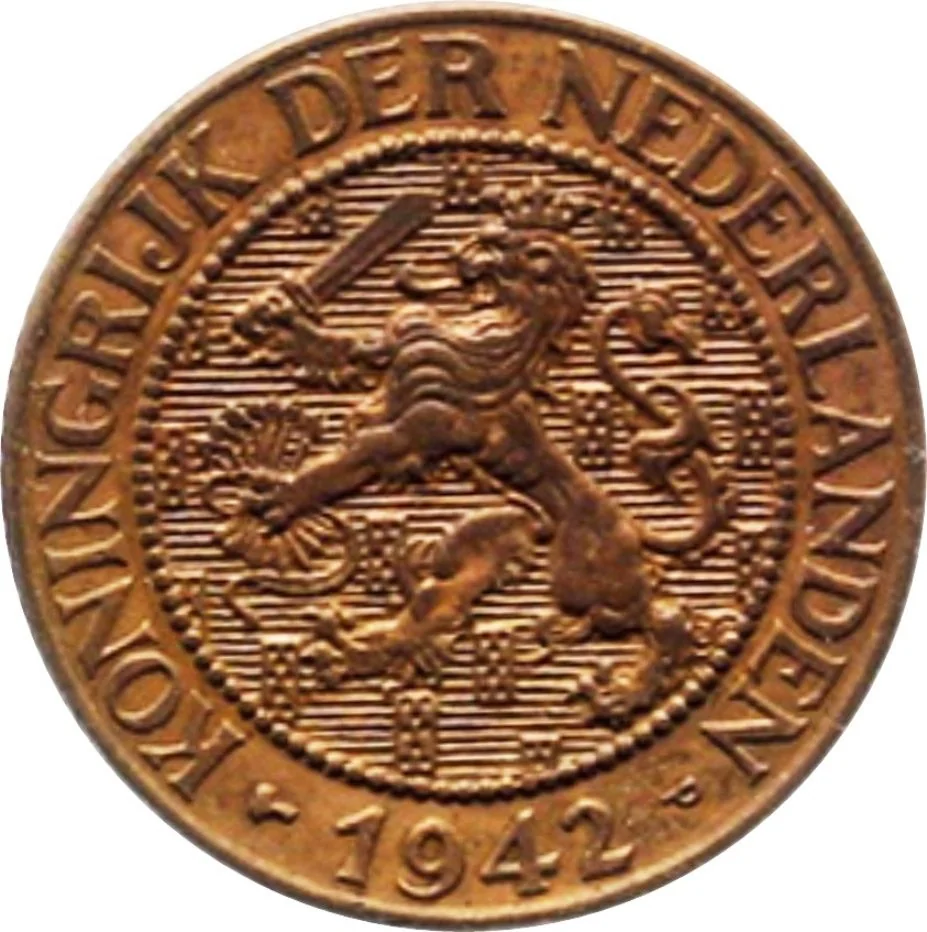
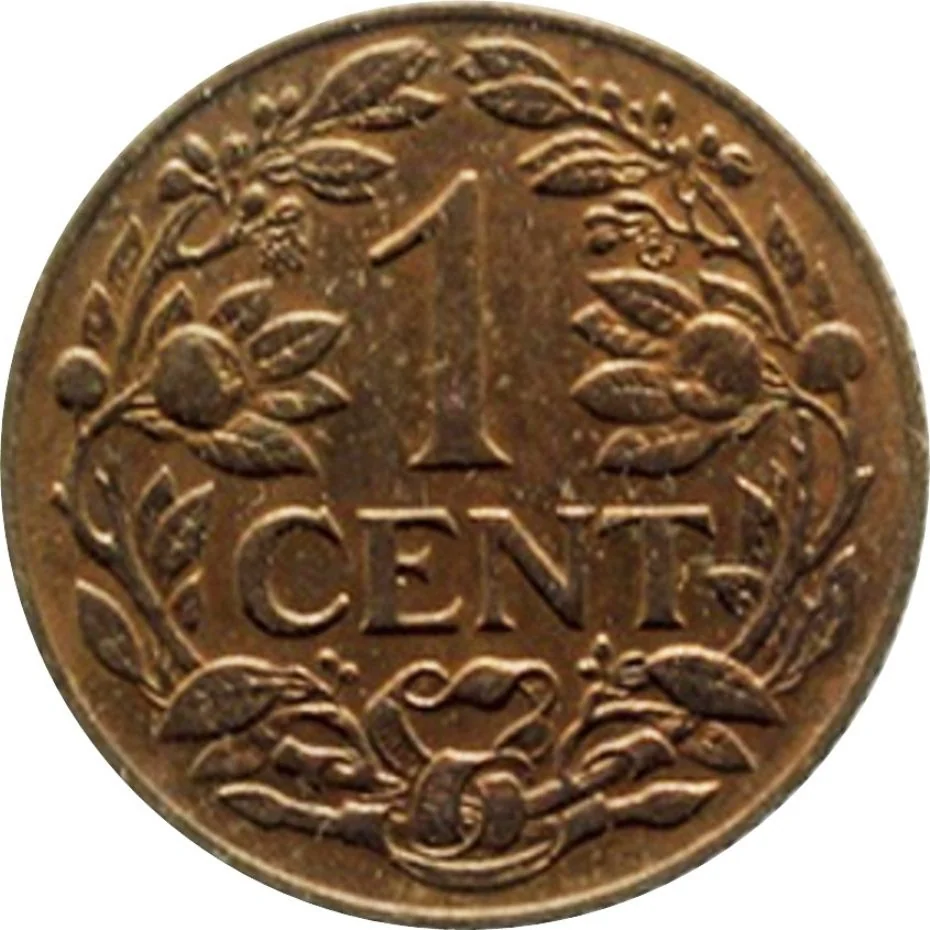
1 cent – Suriname
Add to wishlist
Suriname
Context
Year: 1942
Issuer: Suriname
Ruler: Wilhelmina
Currency:
(1826—2003)
Demonetized: Yes
Total mintage: 2,000,000
Material
References
Numista: #170767
Value
Exchange value: 0.01 SRD
Obverse
Reverse
Edge
Reeded
Categories
| Symbols> Coat of Arms |
| Symbol> Wreath |
Mints
| Name | Mark |
|---|---|
| United States Mint of Philadelphia | P |
Mintings
| Year | Mint Mark | Mintage | Quality | Collection |
|---|---|---|---|---|
| 1942 | P | 2,000,000 |
Historical background
In 1942, Suriname, then a Dutch colony, found its currency situation deeply entangled with the geopolitical upheaval of World War II. Following the German occupation of the Netherlands in May 1940, the legitimate Dutch government fled into exile in London, creating a crisis of monetary authority. The colonial administration in Paramaribo, loyal to the exiled government, faced a critical problem: the metallic coinage in circulation was in severe shortage, and shipments of new coins from the occupied homeland were impossible. This scarcity threatened daily commerce and the functioning of the local economy.
To address this acute shortage, the local government took an extraordinary and pragmatic step: it authorized the issuance of emergency paper money. These were not formal banknotes but provisional "coin notes" (muntbiljetten), printed in simple designs on cardstock by the colony's own Landsrukkerij (Government Printing Office). Denominations were small, filling the vital role of the missing 1, 2½, and 5-cent coins, and were made legal tender by decree. This local solution was a direct response to the blockade and isolation of war, ensuring that basic economic transactions could continue.
The currency situation was further defined by Suriname's strategic importance to the Allied cause, particularly due to its bauxite mines crucial for aluminum production. The presence of over 2,000 American troops, who arrived in late 1941 to protect these resources, introduced U.S. dollars into the local economy but did not displace the emergency issues. Thus, in 1942, Suriname's monetary system operated on a dual track: improvised local paper coinage for small change, existing alongside the pre-war guilder system and an influx of foreign currency, all underpinned by the authority of a government-in-exile and the immediate needs of a wartime economy.
To address this acute shortage, the local government took an extraordinary and pragmatic step: it authorized the issuance of emergency paper money. These were not formal banknotes but provisional "coin notes" (muntbiljetten), printed in simple designs on cardstock by the colony's own Landsrukkerij (Government Printing Office). Denominations were small, filling the vital role of the missing 1, 2½, and 5-cent coins, and were made legal tender by decree. This local solution was a direct response to the blockade and isolation of war, ensuring that basic economic transactions could continue.
The currency situation was further defined by Suriname's strategic importance to the Allied cause, particularly due to its bauxite mines crucial for aluminum production. The presence of over 2,000 American troops, who arrived in late 1941 to protect these resources, introduced U.S. dollars into the local economy but did not displace the emergency issues. Thus, in 1942, Suriname's monetary system operated on a dual track: improvised local paper coinage for small change, existing alongside the pre-war guilder system and an influx of foreign currency, all underpinned by the authority of a government-in-exile and the immediate needs of a wartime economy.
⭐ Somewhat Rare