

3 pence – Southern Rhodesia
Add to wishlist
Zimbabwe
Context
Years: 1944–1946
Country: Zimbabwe
Issuer: Southern Rhodesia
Ruler: George VI
Currency:
(1932—1955)
Demonetization: 1 June 1965
Total mintage: 4,800,000
Material
References
KM: #
Numista: #17069
Value
Bullion value: $1.76
Obverse
Description:
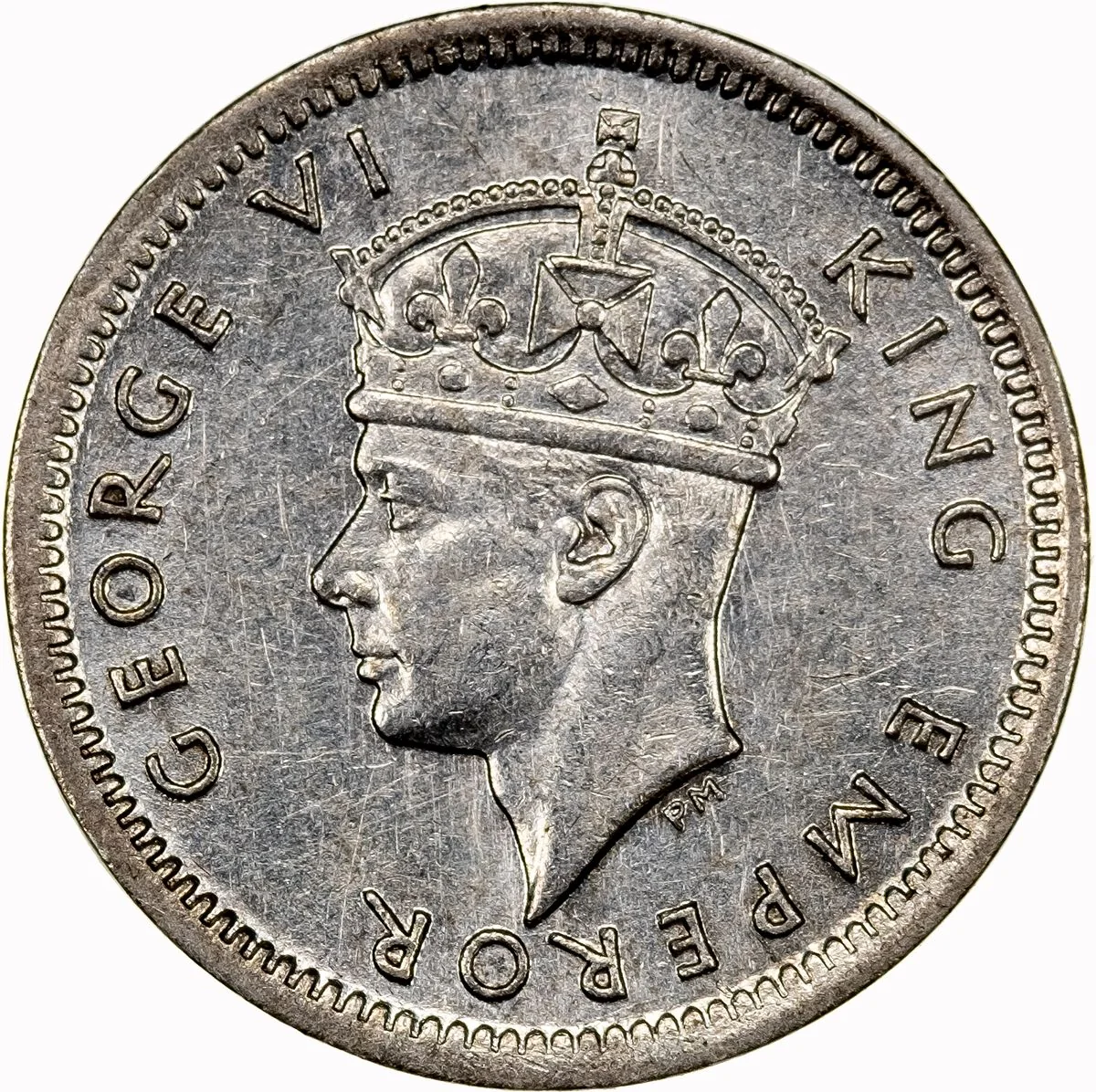
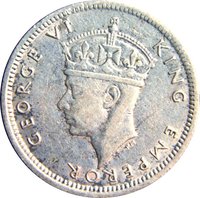
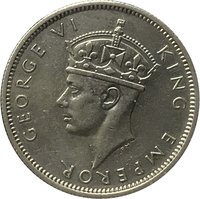
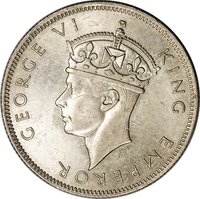
Portrait of George VI, King of the United Kingdom (1936–1952).
Inscription:
GEORGE VI KING EMPEROR
PM
PM
Translation:
GEORGE VI KING EMPEROR
PM
PM
Script: Latin
Language: English
Engraver: Percy Metcalfe
Reverse
Description:
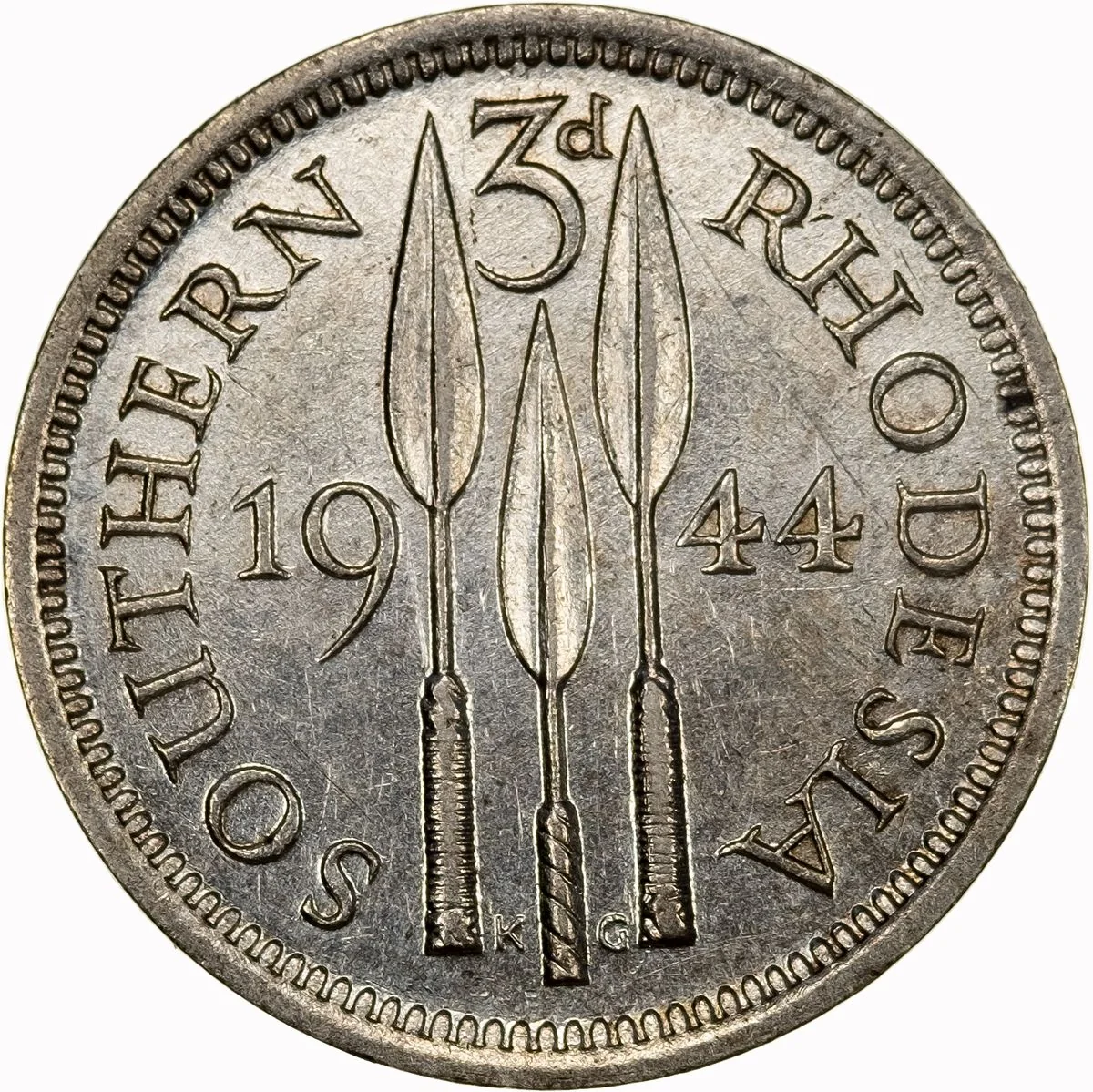
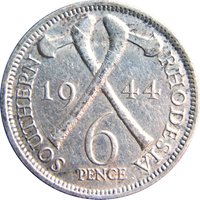
Date split by three spears, denomination above, name encircling.
Inscription:
SOUTHERN 3d RHODESIA
1944
KG
1944
KG
Script: Latin
Engraver: George Kruger Gray
Edge
Plain
Mints
| Name | Mark |
|---|---|
| Royal Mint (Tower Hill) | — |
Mintings
| Year | Mint Mark | Mintage | Quality | Collection |
|---|---|---|---|---|
| 1944 | — | 1,600,000 | ||
| 1945 | — | 800,000 | ||
| 1945 | — | — | Proof | |
| 1946 | — | — | Proof | |
| 1946 | — | 2,400,000 |
Historical background
In 1944, Southern Rhodesia’s currency was fully integrated into the sterling area and operated under the Southern Rhodesia Currency Board, established in 1938. This board issued the Southern Rhodesian pound (£SR), which was pegged at par with and fully convertible to the British pound sterling. The colony’s money supply was backed by sterling reserves held in London, ensuring monetary stability but limiting local control over monetary policy, as the currency in circulation directly reflected the territory's balance of payments with the rest of the sterling bloc.
The wartime economy significantly influenced the currency situation. As a key supplier of raw materials like tobacco, chrome, and asbestos to the Allied war effort, Southern Rhodesia accumulated substantial sterling balances in London. However, strict exchange controls, enacted across the sterling area at the outbreak of war, remained in force to conserve hard currency and prevent capital flight. These controls regulated all foreign transactions and meant that, despite healthy reserves, access to foreign exchange for imports was tightly managed, prioritizing essential war-related goods.
This period represented a high point of economic confidence and alignment with Britain. The currency board system provided low inflation and credibility, fostering investment and immigration. Nonetheless, the structure also meant Southern Rhodesia’s monetary fate was tied to Britain’s, with no independent mechanism to address local economic fluctuations. The accumulated sterling reserves would later fuel post-war development and ambitious infrastructure projects, setting the stage for the colony's mid-century economic expansion while reinforcing its dependent financial relationship with the United Kingdom.
The wartime economy significantly influenced the currency situation. As a key supplier of raw materials like tobacco, chrome, and asbestos to the Allied war effort, Southern Rhodesia accumulated substantial sterling balances in London. However, strict exchange controls, enacted across the sterling area at the outbreak of war, remained in force to conserve hard currency and prevent capital flight. These controls regulated all foreign transactions and meant that, despite healthy reserves, access to foreign exchange for imports was tightly managed, prioritizing essential war-related goods.
This period represented a high point of economic confidence and alignment with Britain. The currency board system provided low inflation and credibility, fostering investment and immigration. Nonetheless, the structure also meant Southern Rhodesia’s monetary fate was tied to Britain’s, with no independent mechanism to address local economic fluctuations. The accumulated sterling reserves would later fuel post-war development and ambitious infrastructure projects, setting the stage for the colony's mid-century economic expansion while reinforcing its dependent financial relationship with the United Kingdom.
🌟 Uncommon