

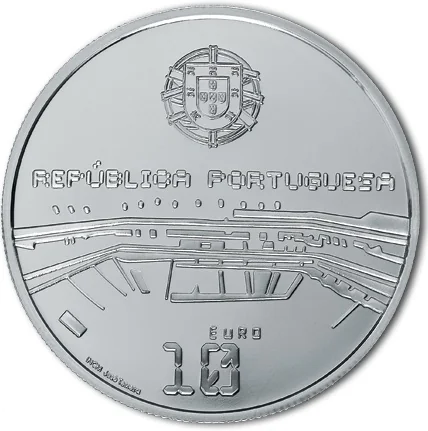
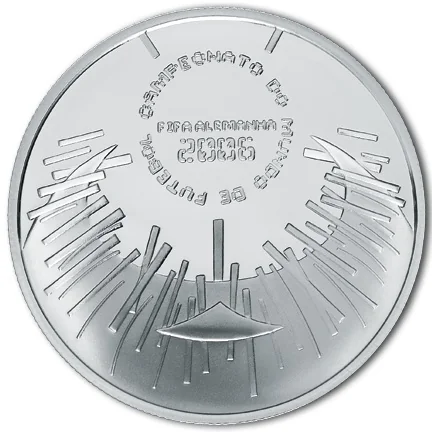
10 Euro – Portugal
Non-circulating coins
Commemoration: FIFA World Cup 2006 in Germany
Series: FIFA World Cup Germany 2006
Portugal
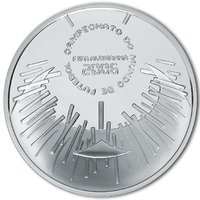
Obverse
Description:
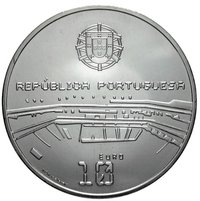
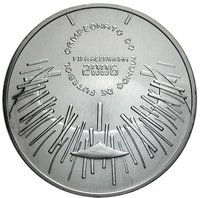
Portuguese coat of arms stylized as a stadium.
Inscription:
REPÚBLICA PORTUGUESA
EURO
10
INCM José Teixeira
EURO
10
INCM José Teixeira
Translation:
Portuguese Republic
Euro
10
Portuguese Mint José Teixeira
Euro
10
Portuguese Mint José Teixeira
Script: Latin
Language: Portuguese
Engraver: José Teixeira
Reverse
Edge
Fine grooves.
Categories
| Sport> Football> FIFA World Cup |
Mints
| Name | Mark |
|---|---|
| Imprensa Nacional - Casa da Moeda | INCM |
Mintings
| Year | Mint Mark | Mintage | Quality | Collection |
|---|---|---|---|---|
| 2006 | INCM | 14,176 | Proof |
Historical background
In 2006, Portugal was a full member of the Eurozone, having adopted the euro as its official currency in 1999 (for electronic transactions) and seeing the introduction of euro banknotes and coins in 2002. The national currency, the Portuguese escudo, was a thing of the past, completely replaced by the new common European currency. This transition was largely considered a success, providing macroeconomic stability, eliminating exchange rate risk with major trading partners, and symbolizing Portugal's deep integration into the European project.
However, by 2006, the initial benefits of euro membership were being overshadowed by growing economic challenges. Portugal was experiencing a period of prolonged economic stagnation and low growth, later recognized as part of the "lost decade." The country faced significant structural issues, including low productivity, strong competition from newer EU members, and declining competitiveness. Crucially, the loss of the escudo meant Portugal could no longer use traditional monetary policy tools, like devaluation or independent interest rate setting, to stimulate its economy. Interest rates were set by the European Central Bank (ECB) for the entire Eurozone, and by 2006, rates were rising to combat inflation in stronger economies like Germany, which further constrained Portugal's struggling economy.
Consequently, the currency situation in 2006 was one of stability on the surface but underlying strain. The euro provided a stable monetary environment, but it also locked Portugal into a high-exchange-rate regime that exacerbated its competitive weaknesses. With fiscal policy as the only major domestic economic lever, the government ran persistent budget deficits, leading to a rising public debt burden. This set the stage for the severe sovereign debt crisis that would engulf Portugal just a few years later, forcing it to request a financial bailout in 2011. Thus, 2006 represented a calm before the storm, where the constraints of the single currency were becoming apparent within an increasingly fragile national economy.
However, by 2006, the initial benefits of euro membership were being overshadowed by growing economic challenges. Portugal was experiencing a period of prolonged economic stagnation and low growth, later recognized as part of the "lost decade." The country faced significant structural issues, including low productivity, strong competition from newer EU members, and declining competitiveness. Crucially, the loss of the escudo meant Portugal could no longer use traditional monetary policy tools, like devaluation or independent interest rate setting, to stimulate its economy. Interest rates were set by the European Central Bank (ECB) for the entire Eurozone, and by 2006, rates were rising to combat inflation in stronger economies like Germany, which further constrained Portugal's struggling economy.
Consequently, the currency situation in 2006 was one of stability on the surface but underlying strain. The euro provided a stable monetary environment, but it also locked Portugal into a high-exchange-rate regime that exacerbated its competitive weaknesses. With fiscal policy as the only major domestic economic lever, the government ran persistent budget deficits, leading to a rising public debt burden. This set the stage for the severe sovereign debt crisis that would engulf Portugal just a few years later, forcing it to request a financial bailout in 2011. Thus, 2006 represented a calm before the storm, where the constraints of the single currency were becoming apparent within an increasingly fragile national economy.
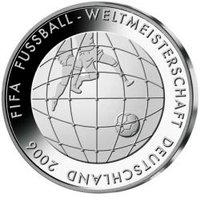
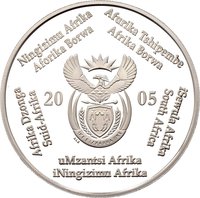
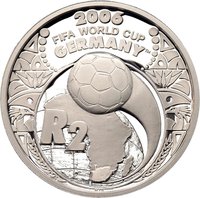
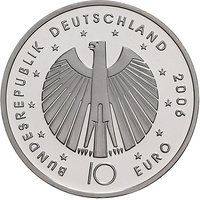
Series: FIFA World Cup Germany 2006
💎 Very Rare