

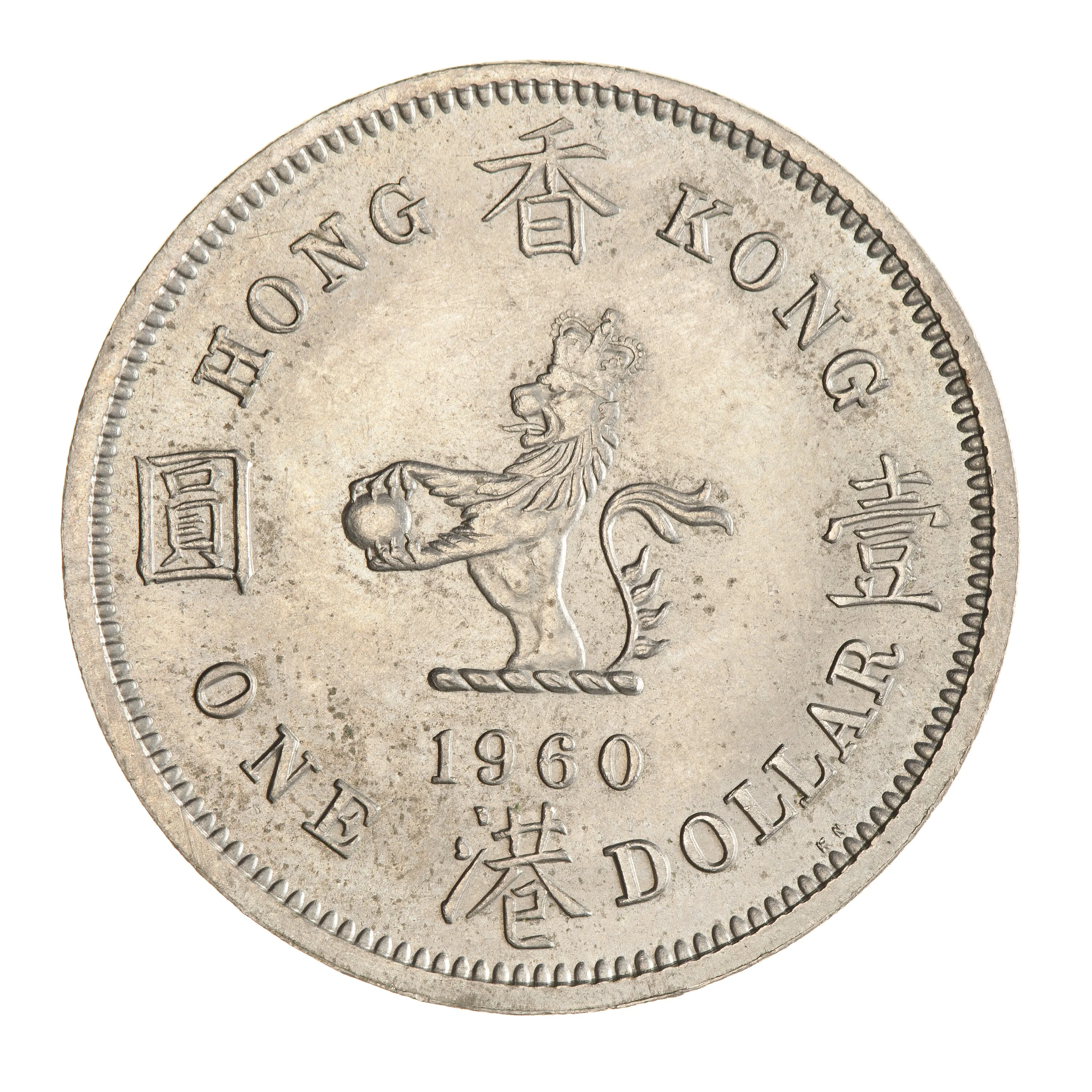
1 Dollar – Hong Kong
China
Context
Years: 1960–1970
Country: China 
Issuer: Hong Kong 
Ruler: Elizabeth II
Currency:
(since 1863)
Demonetization: 1 January 1978
Total mintage: 95,000,000
Material
References
KM: #Click to copy to clipboard31
Numista: #1066
Value
Exchange value: 1 HKD = $0.13
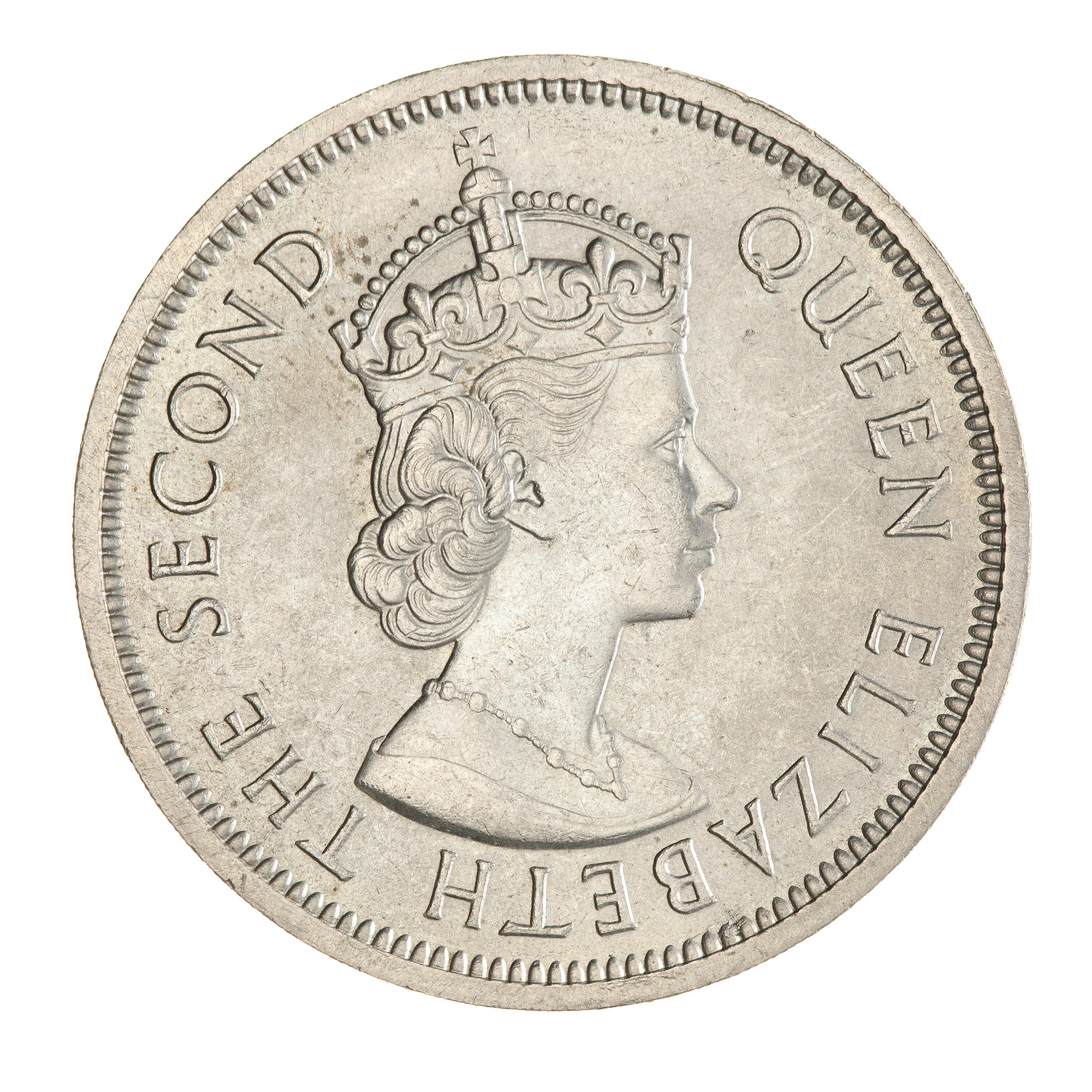
Obverse
Description:
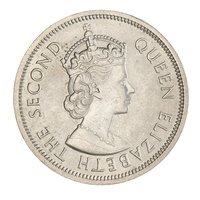
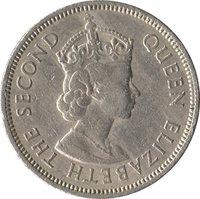
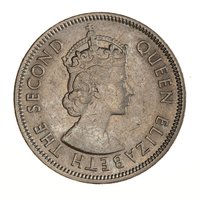
Queen Elizabeth II's crowned bust facing right.
Inscription:
QUEEN ELIZABETH THE SECOND
Script: Latin
Engraver: Cecil Thomas
Reverse
Edge
Security edge
Mints
| Name | Mark |
|---|---|
| Heaton and Sons / The Mint Birmingham | H |
| Kings Norton Metal Company | KN |
Mintings
Historical background
In 1960, Hong Kong operated under a colonial currency board system that pegged the Hong Kong dollar (HKD) to the British pound sterling (GBP) at a fixed rate of HKD $16 = £1. This arrangement, established in 1935, provided monetary stability by requiring the full backing of Hong Kong dollar notes with sterling reserves held by the government and the note-issuing banks. The system was highly orthodox, with the money supply directly tied to the balance of payments, ensuring low inflation and fostering confidence in the territory's currency for both local and international trade.
The economy was in a period of transformative industrialisation, with textiles and manufacturing driving rapid growth. The sterling peg facilitated this by providing a predictable exchange rate for exporters, most of whom traded within the Sterling Area—a bloc of countries that conducted commerce in pounds and held reserves in London. This linkage integrated Hong Kong's financial system deeply with Britain's, making the colony's monetary policy effectively an extension of the Bank of England's. The primary note-issuing banks were the Hongkong and Shanghai Banking Corporation (HSBC) and the Chartered Bank, which issued their own distinct banknotes under strict government supervision.
However, this stability was not without underlying tensions. The system left Hong Kong vulnerable to sterling's own weaknesses and to decisions made in London, over which it had no control. Furthermore, the fixed link to a single reserve currency limited independent policy tools to address local economic fluctuations. While these vulnerabilities would not manifest in a major crisis until the 1967 sterling devaluation, the 1960 currency regime represented a period of imposed stability, crucial for post-war recovery but inherently dependent on the economic fortunes and management of the United Kingdom.
The economy was in a period of transformative industrialisation, with textiles and manufacturing driving rapid growth. The sterling peg facilitated this by providing a predictable exchange rate for exporters, most of whom traded within the Sterling Area—a bloc of countries that conducted commerce in pounds and held reserves in London. This linkage integrated Hong Kong's financial system deeply with Britain's, making the colony's monetary policy effectively an extension of the Bank of England's. The primary note-issuing banks were the Hongkong and Shanghai Banking Corporation (HSBC) and the Chartered Bank, which issued their own distinct banknotes under strict government supervision.
However, this stability was not without underlying tensions. The system left Hong Kong vulnerable to sterling's own weaknesses and to decisions made in London, over which it had no control. Furthermore, the fixed link to a single reserve currency limited independent policy tools to address local economic fluctuations. While these vulnerabilities would not manifest in a major crisis until the 1967 sterling devaluation, the 1960 currency regime represented a period of imposed stability, crucial for post-war recovery but inherently dependent on the economic fortunes and management of the United Kingdom.
🌱 Very Common