

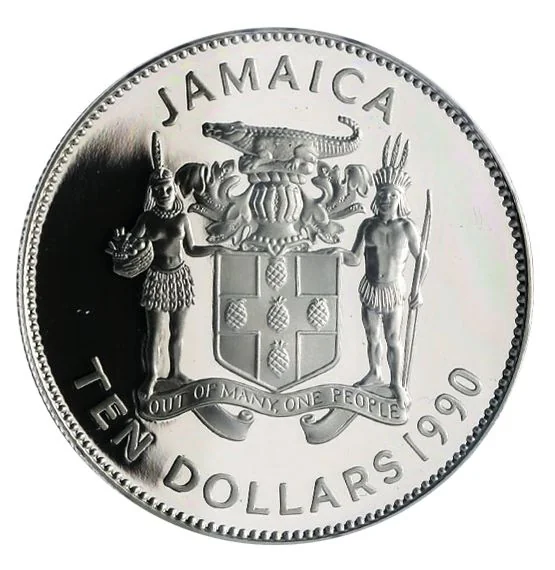
10 Dollars – Jamaica
Non-circulating coins
Commemoration: Columbus's arrival in the New World
Series: Columbus in the New World
Jamaica
Context
Material
References
KM: #Click to copy to clipboard144
Numista: #169156
Value
Exchange value: 10 JMD
Obverse
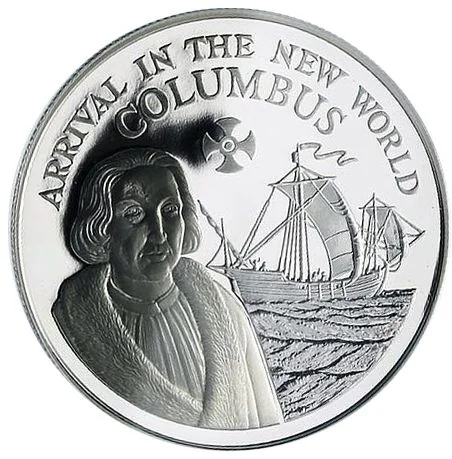
Reverse
Description:
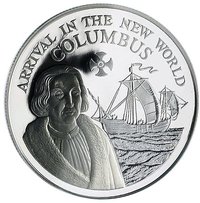
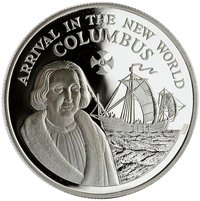
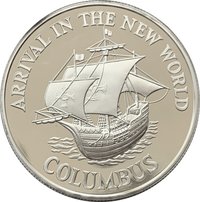
Columbus bust left, sailing ship right.
Inscription:
ARRIVAL IN THE NEW WORLD
COLUMBUS
COLUMBUS
Script: Latin
Edge
Reeded
Categories
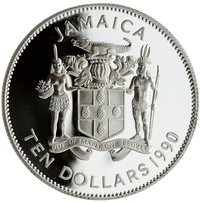
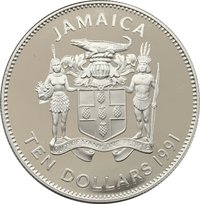
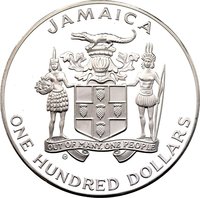
| Symbols> Coat of Arms |
| Person> Explorer |
| Geography> Sea |
| Transportation> Watercraft |
Mintings
| Year | Mint Mark | Mintage | Quality | Collection |
|---|---|---|---|---|
| 1990 | — | — | ||
| 1990 | — | — | Proof |
Historical background
In 1990, Jamaica's currency situation was characterized by a managed float within a dual-exchange rate system, a legacy of the economic turbulence and structural adjustment of the preceding decades. The country operated with a fixed official rate for essential imports and government transactions, alongside a more depreciated parallel "bank" or floating rate for most other transactions. This complex system was maintained under the guidance of the International Monetary Fund (IMF), following agreements that provided critical financial support but required strict austerity measures and liberalization of the foreign exchange market.
The core challenge was a severe shortage of foreign currency, particularly US dollars, which constrained imports, fueled inflation, and created a thriving black market where the Jamaican dollar traded at a significant premium. Economic growth was stagnant, and the high cost of servicing the nation's substantial external debt consumed a large portion of export earnings. Consequently, businesses faced difficulties accessing foreign exchange for raw materials and machinery, leading to shortages and inefficiencies that hampered productivity and competitiveness.
By the end of 1990, pressures mounted for a more unified and market-determined exchange rate. The dual-rate system was seen as unsustainable, distorting prices and encouraging rent-seeking behavior. This set the stage for a decisive move in 1991, when the government, under Prime Minister Michael Manley, unified the exchange rates and allowed for a significant devaluation, fully transitioning to a floating exchange rate system. The 1990 period, therefore, represents the final chapter of a controlled regime, immediately preceding a pivotal and painful step towards full currency liberalization in an ongoing struggle for macroeconomic stability.
The core challenge was a severe shortage of foreign currency, particularly US dollars, which constrained imports, fueled inflation, and created a thriving black market where the Jamaican dollar traded at a significant premium. Economic growth was stagnant, and the high cost of servicing the nation's substantial external debt consumed a large portion of export earnings. Consequently, businesses faced difficulties accessing foreign exchange for raw materials and machinery, leading to shortages and inefficiencies that hampered productivity and competitiveness.
By the end of 1990, pressures mounted for a more unified and market-determined exchange rate. The dual-rate system was seen as unsustainable, distorting prices and encouraging rent-seeking behavior. This set the stage for a decisive move in 1991, when the government, under Prime Minister Michael Manley, unified the exchange rates and allowed for a significant devaluation, fully transitioning to a floating exchange rate system. The 1990 period, therefore, represents the final chapter of a controlled regime, immediately preceding a pivotal and painful step towards full currency liberalization in an ongoing struggle for macroeconomic stability.
✨ Legendary