

10 Cents – Singapore
Singapore
Context

Material
Diameter: 18.5 mm
Weight: 2.6 g
Thickness: 1.38 mm
Shape: Round
Composition: Copper-nickel
Technique: Milled
Alignment: Medal alignment
flip
References
KM: #Click to copy to clipboard100
Numista: #1674
Value
Exchange value: 0.10 SGD = $0.08
Obverse
Description:
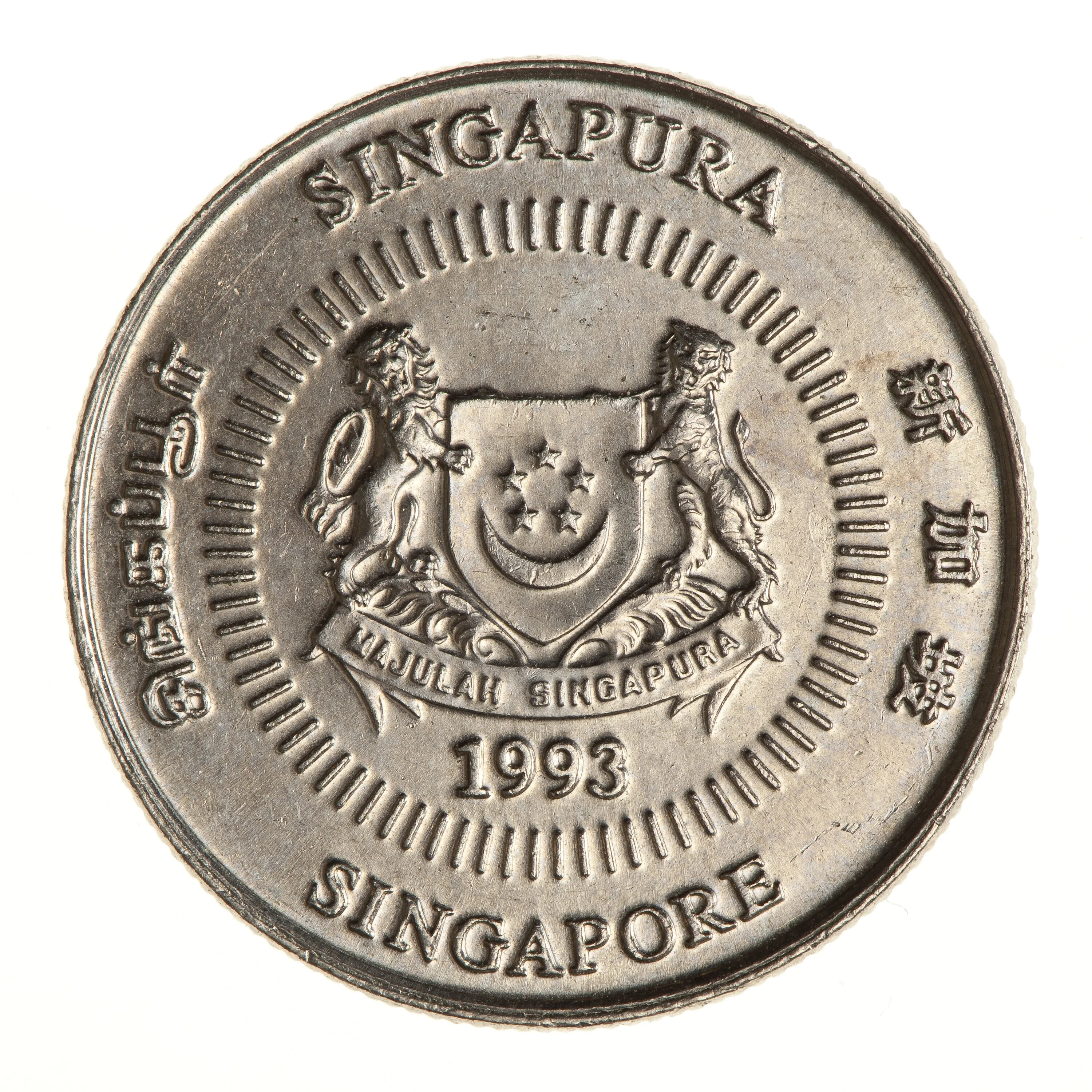
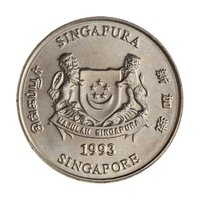
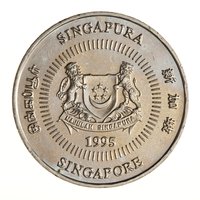
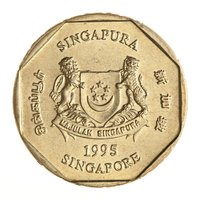
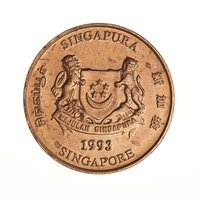
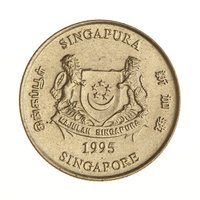
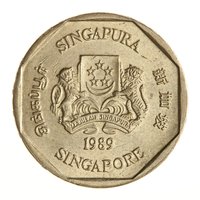
Singapore's arms with the date below and "Singapore" in its four official languages.
Inscription:
SINGAPURA
சிங்கப்பூர் 新加坡
MAJULAH SINGAPURA
2003
SINGAPORE
சிங்கப்பூர் 新加坡
MAJULAH SINGAPURA
2003
SINGAPORE
Translation:
SINGAPORE
SINGAPORE SINGAPORE
ONWARD SINGAPORE
2003
SINGAPORE
SINGAPORE SINGAPORE
ONWARD SINGAPORE
2003
SINGAPORE
Engraver: Christopher Ironside
Reverse
Description:
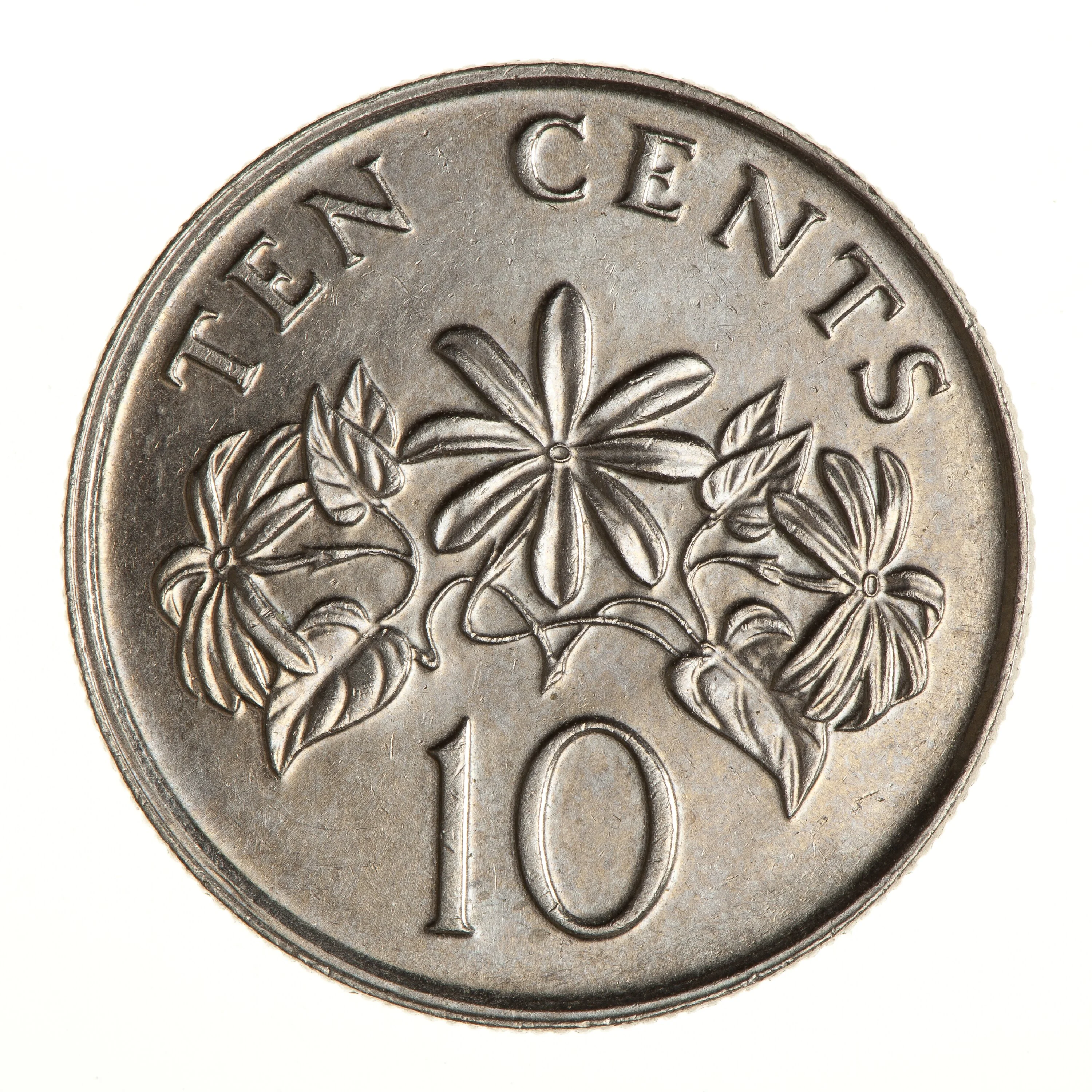
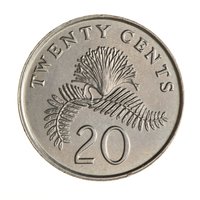
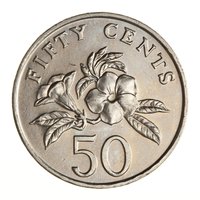
Jasminum multiflorum, also called downy, winter, or star jasmine.
Inscription:
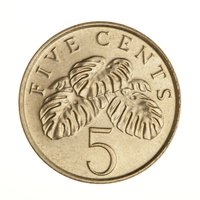
TEN CENTS
10
10
Script: Latin
Engraver: Christopher Ironside
Edge
Reeded
Mints
| Name | Mark |
|---|---|
| Singapore Mint | — |
Mintings
| Year | Mint Mark | Mintage | Quality | Collection |
|---|---|---|---|---|
| 1992 | — | — | ||
| 1993 | — | 89,855,000 | ||
| 1994 | — | — | ||
| 1995 | — | — | ||
| 1996 | — | — | ||
| 1997 | — | — | ||
| 1998 | — | 89,840,000 | ||
| 1999 | — | 97,350,000 | ||
| 2000 | — | 80,370,000 | ||
| 2001 | — | 70,600,000 | ||
| 2002 | — | 61,670,000 | ||
| 2003 | — | 58,990,000 | ||
| 2004 | — | 59,670,000 | ||
| 2005 | — | 49,960,000 | ||
| 2006 | — | — | ||
| 2007 | — | — | ||
| 2008 | — | — | ||
| 2009 | — | — | ||
| 2010 | — | — | ||
| 2011 | — | — | ||
| 2012 | — | — | ||
| 2013 | — | — |
Historical background
In 1992, Singapore's currency situation was characterized by a robust and carefully managed system under the purview of the Monetary Authority of Singapore (MAS). Unlike most central banks, the MAS did not (and still does not) use interest rates as its primary policy tool. Instead, it operated a unique exchange rate-centered monetary policy, focusing on managing the Singapore dollar (SGD) against a secret trade-weighted basket of currencies of its major trading partners. This policy, established in the early 1980s, aimed explicitly at ensuring price stability as the foundation for sustainable economic growth, making the SGD a key anti-inflationary instrument.
The economy in 1992 was in a phase of strong recovery and expansion, following a brief recession in 1985. This growth context put the MAS's exchange rate policy to work, as it sought to allow for a gradual and controlled appreciation of the SGD. This moderate appreciation helped to curb imported inflation—a critical concern for a nation heavily reliant on imports—without severely hampering the competitiveness of its exports. The SGD was, and remains, fully convertible and was increasingly recognized as one of the most stable currencies in the region, fostering its use in international trade and investment.
Furthermore, the currency landscape was indirectly shaped by Singapore's position as a burgeoning global financial hub. The stability and credibility of the SGD were paramount in attracting foreign capital and banking operations. Domestically, the currency was secure and widely trusted, with the MAS maintaining substantial foreign reserves to back its value. Thus, in 1992, the Singapore dollar was not merely a medium of exchange but a central pillar of national economic strategy, managed with discipline to navigate between global inflationary pressures and the demands of a vibrant, export-oriented economy.
The economy in 1992 was in a phase of strong recovery and expansion, following a brief recession in 1985. This growth context put the MAS's exchange rate policy to work, as it sought to allow for a gradual and controlled appreciation of the SGD. This moderate appreciation helped to curb imported inflation—a critical concern for a nation heavily reliant on imports—without severely hampering the competitiveness of its exports. The SGD was, and remains, fully convertible and was increasingly recognized as one of the most stable currencies in the region, fostering its use in international trade and investment.
Furthermore, the currency landscape was indirectly shaped by Singapore's position as a burgeoning global financial hub. The stability and credibility of the SGD were paramount in attracting foreign capital and banking operations. Domestically, the currency was secure and widely trusted, with the MAS maintaining substantial foreign reserves to back its value. Thus, in 1992, the Singapore dollar was not merely a medium of exchange but a central pillar of national economic strategy, managed with discipline to navigate between global inflationary pressures and the demands of a vibrant, export-oriented economy.
Series: 1992 Singapore circulation coins
🌱 Very Common