

50 Pesos – Cuba
Cuba
Context
Year: 1989
Issuer: Cuba 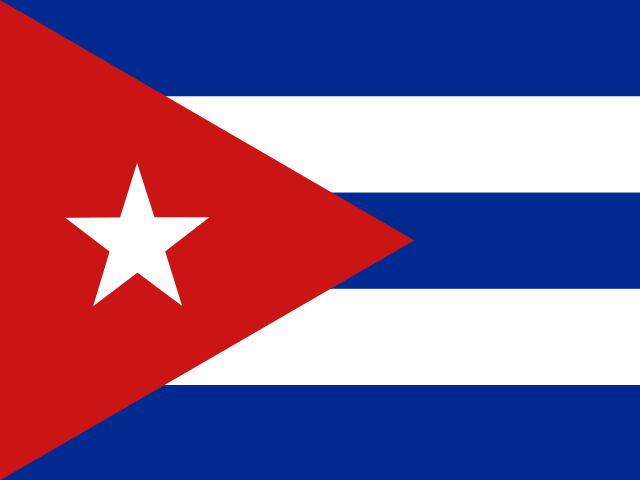
Period:
(since 1959)
Currency:
(since 1914)
Demonetization: 1989
Total mintage: 12
Material
Diameter: 26 mm
Weight: 15.55 g
Gold weight: 15.53 g
Shape: Round
Composition: 99.9% Gold
Standard: Silver half ounce
Magnetic: No
Technique: Milled
Alignment: Coin alignment
flip
References
KM: #Click to copy to clipboardP24
Numista: #167196
Value
Exchange value: 50 CUP
Bullion value: $2596.51
Obverse
Description:
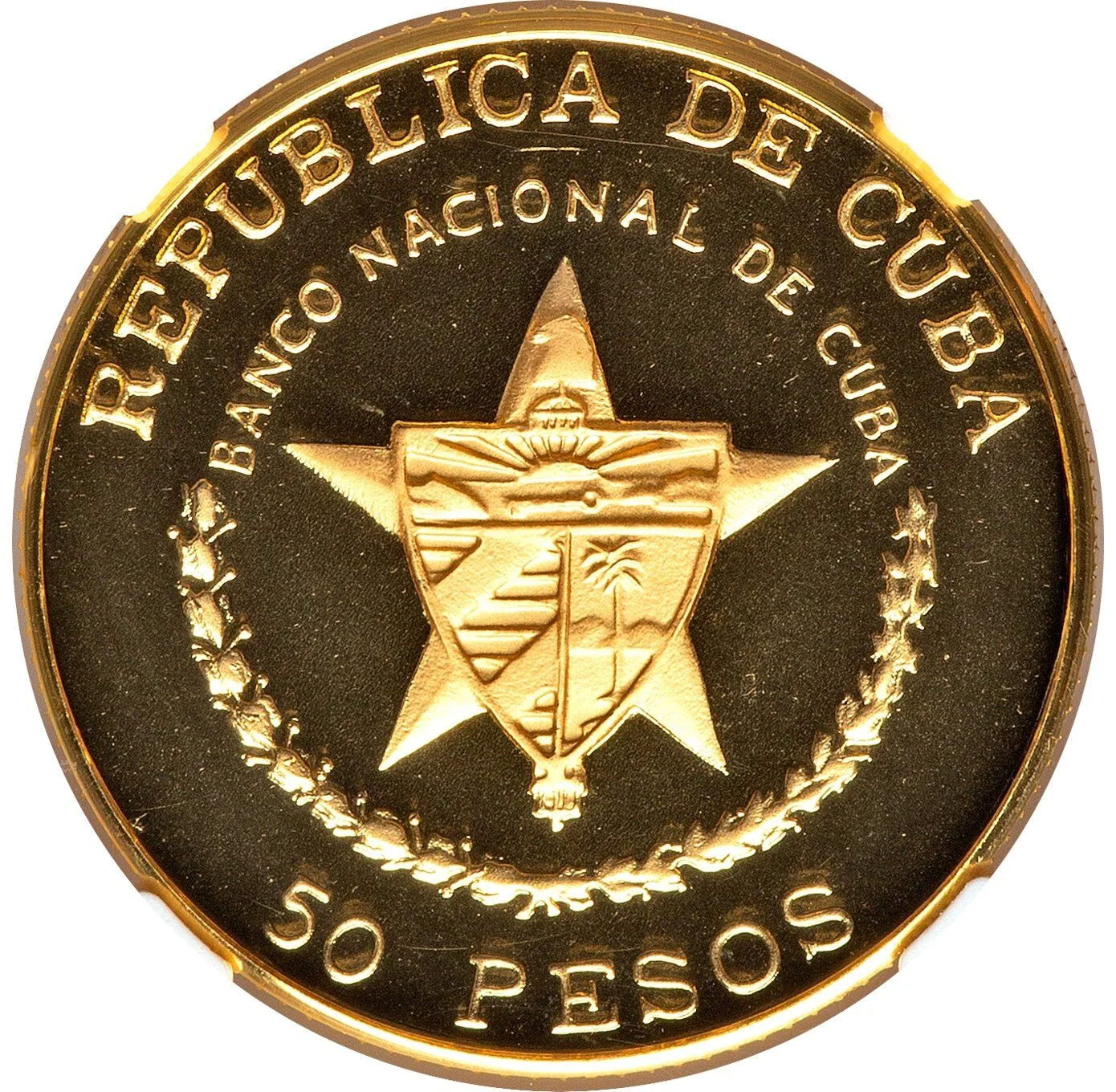
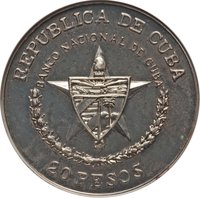
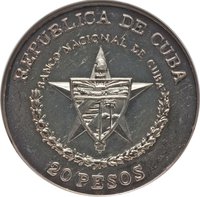
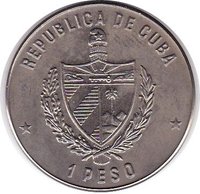
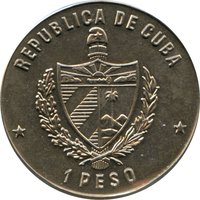
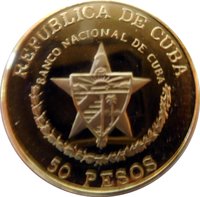
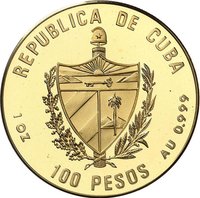
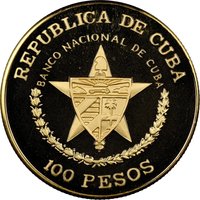
Coat of arms with country name above and face value below. Design matches KM# 313.
Inscription:
REPUBLICA DE CUBA
BANCO NACIONAL DE CUBA
50 PESOS
BANCO NACIONAL DE CUBA
50 PESOS
Translation:
REPUBLIC OF CUBA
NATIONAL BANK OF CUBA
50 PESOS
NATIONAL BANK OF CUBA
50 PESOS
Language: Spanish
Reverse
Description:
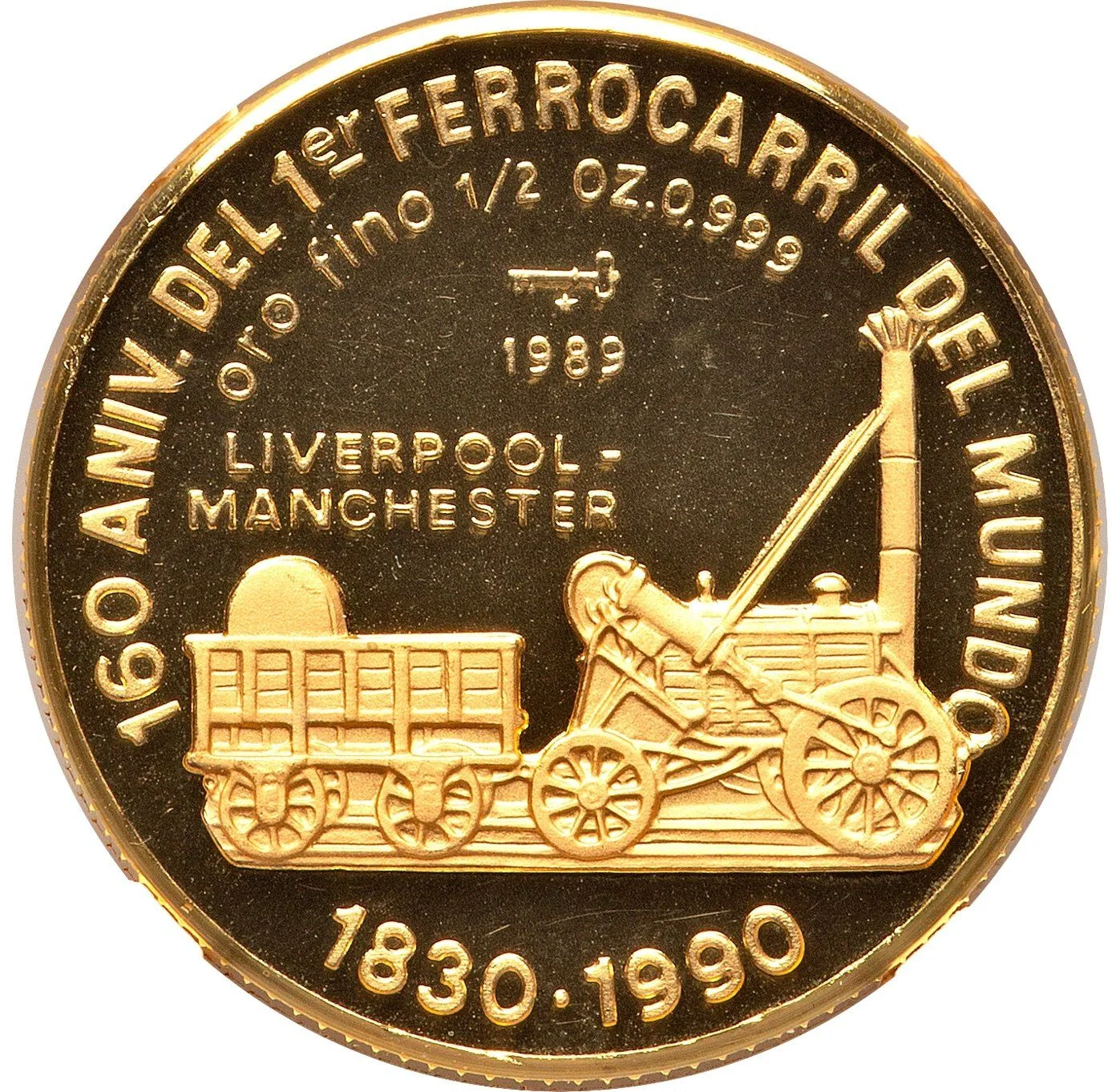
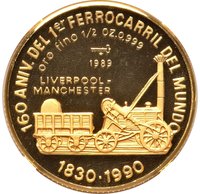
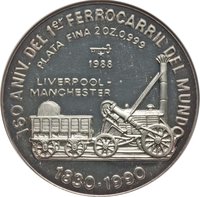
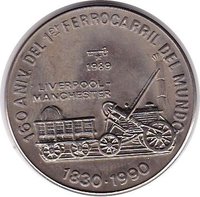
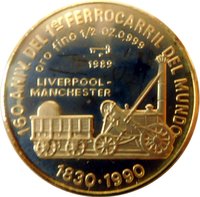
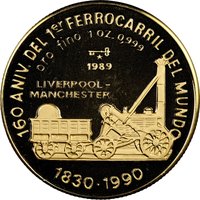
Image of the world’s first inter-urban train (Liverpool-Manchester line). Design matches KM# 313, with the event name curved above, mintmark and date centered, the route overlaid on the train, and anniversary dates below.
Inscription:
160 ANIV. DEL 1er FERROCARRIL DEL MUNDO
ORO FINO 1/2 OZ. 0.999
1989
LIVERPOOL-
MANCHESTER
1830-1990
ORO FINO 1/2 OZ. 0.999
1989
LIVERPOOL-
MANCHESTER
1830-1990
Translation:
160th ANNIVERSARY OF THE WORLD'S 1st RAILWAY
PURE GOLD 1/2 OZ. 0.999
1989
LIVERPOOL-
MANCHESTER
1830-1990
PURE GOLD 1/2 OZ. 0.999
1989
LIVERPOOL-
MANCHESTER
1830-1990
Designer: Jorge Fornés Ramos
Edge
Reeded
Categories
| Symbols> Coat of Arms |
| Transportation> Train |
Mints
| Name | Mark |
|---|---|
| Empresa Cubana de Acuñaciones | — |
Mintings
| Year | Mint Mark | Mintage | Quality | Collection |
|---|---|---|---|---|
| 1989 | — | 12 | Proof |
Historical background
In 1989, Cuba's currency situation was defined by a stable but isolated national peso (CUP), operating within a Soviet-subsidized command economy. The country had a dual monetary system in theory, with the convertible peso used in diplomatic circles, but in practice, the vast majority of domestic transactions were conducted with the non-convertible national peso. Its value was artificially maintained by massive economic support from the Soviet Union and the Council for Mutual Economic Assistance (COMECON), which provided favorable trade terms, subsidized oil, and a guaranteed market for Cuban sugar. This insulation meant the Cuban peso did not reflect market realities, and citizens faced a rationing system (libreta) for basic goods rather than open market scarcity.
However, this apparent stability was a fragile facade, entirely dependent on external patronage. The Cuban economy was structured around this relationship, with over 85% of its trade conducted with the socialist bloc. The national peso's purchasing power was largely symbolic, as the state-set prices and ration quotas bore little relation to production costs or true supply. While this system provided a baseline of economic security, it also led to suppressed productivity, widespread inefficiencies, and a growing informal black market where goods were exchanged or sold at higher, real-world values, hinting at underlying pressures.
The year 1989 marked the precipice of a catastrophic monetary crisis. As political reforms swept Eastern Europe, Cuba's economic lifeline began to sever. The dissolution of the Soviet Union and the collapse of COMECON trade agreements, which became fully apparent in the subsequent years, were already unfolding. The impending loss of billions in annual subsidies and preferential trade meant the artificial foundation of the Cuban peso was about to vanish, setting the stage for the severe economic depression and monetary upheaval of the 1990s Special Period. The currency situation of 1989 was, therefore, one of deceptive calm before an inevitable storm.
However, this apparent stability was a fragile facade, entirely dependent on external patronage. The Cuban economy was structured around this relationship, with over 85% of its trade conducted with the socialist bloc. The national peso's purchasing power was largely symbolic, as the state-set prices and ration quotas bore little relation to production costs or true supply. While this system provided a baseline of economic security, it also led to suppressed productivity, widespread inefficiencies, and a growing informal black market where goods were exchanged or sold at higher, real-world values, hinting at underlying pressures.
The year 1989 marked the precipice of a catastrophic monetary crisis. As political reforms swept Eastern Europe, Cuba's economic lifeline began to sever. The dissolution of the Soviet Union and the collapse of COMECON trade agreements, which became fully apparent in the subsequent years, were already unfolding. The impending loss of billions in annual subsidies and preferential trade meant the artificial foundation of the Cuban peso was about to vanish, setting the stage for the severe economic depression and monetary upheaval of the 1990s Special Period. The currency situation of 1989 was, therefore, one of deceptive calm before an inevitable storm.
Series: Railroads of the World
✨ Legendary