

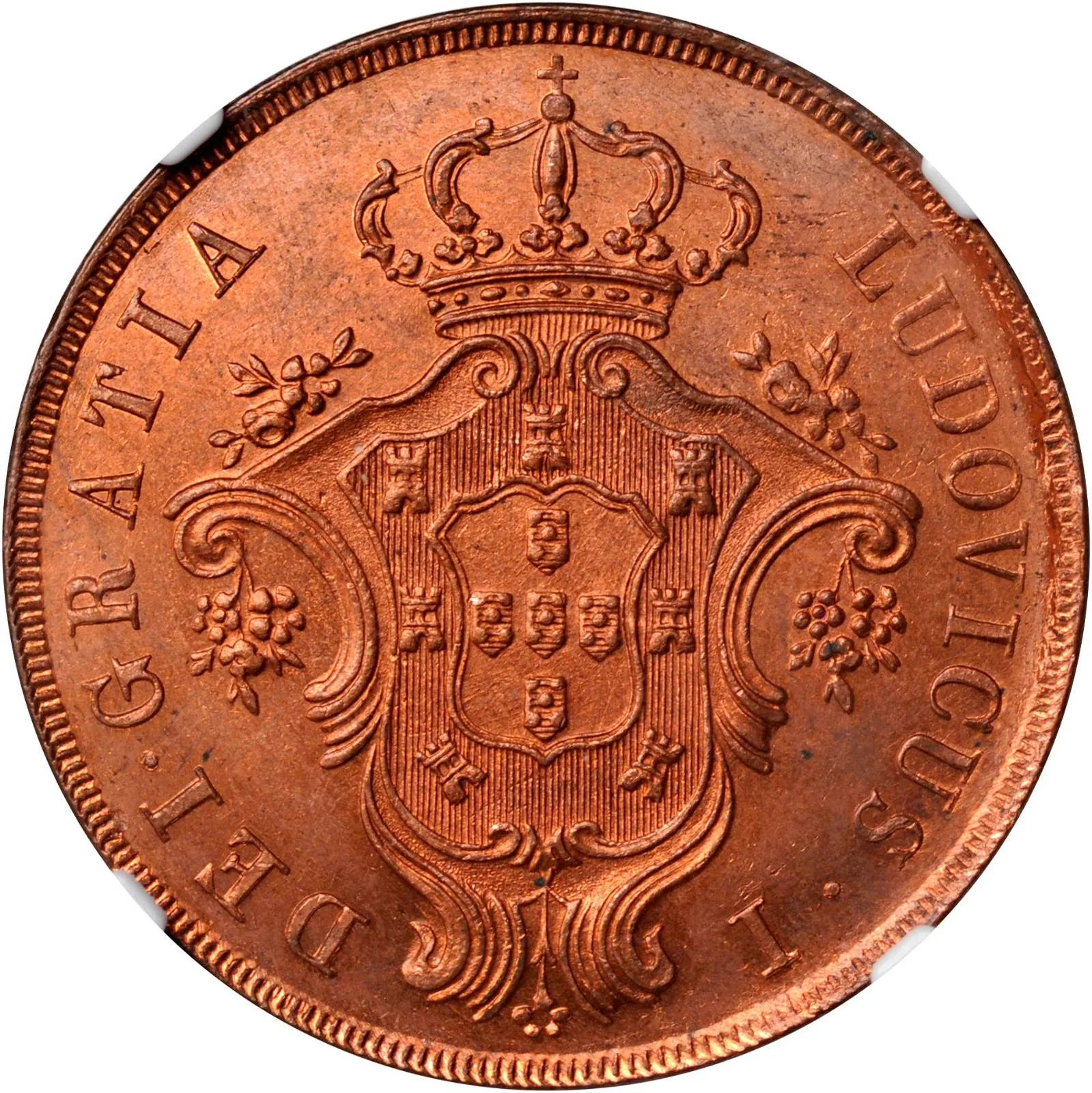
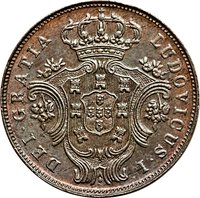
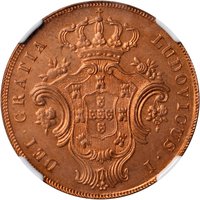
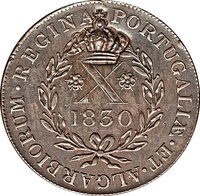
Obverse
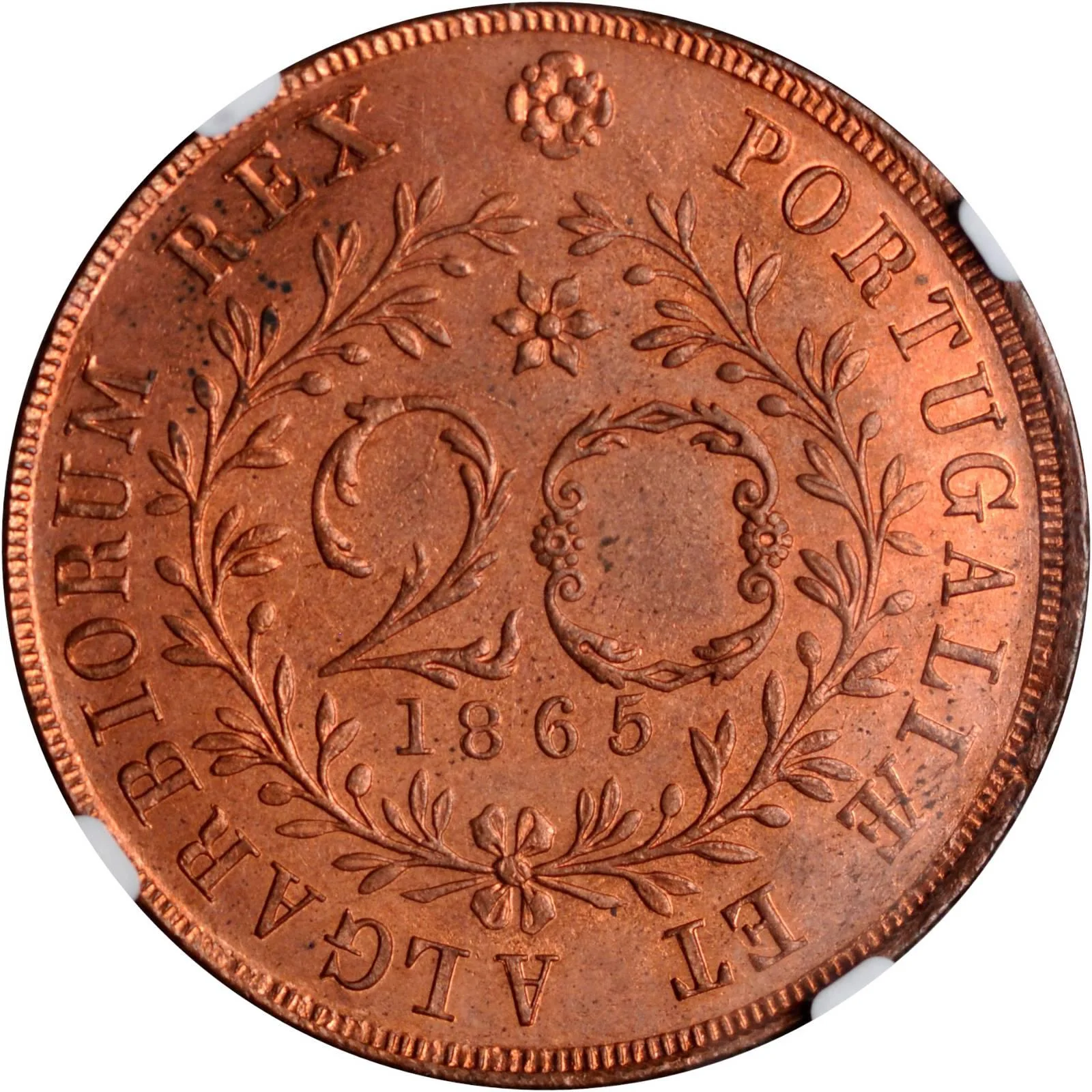
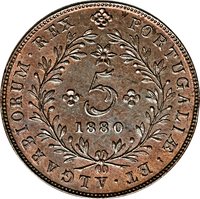
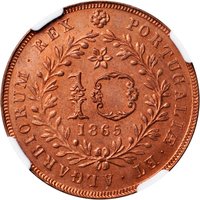
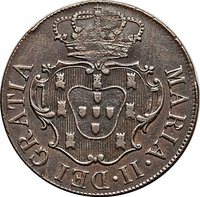
Reverse
Edge
Plain
Categories
| Symbol> Crown |
| Symbols> Coat of Arms |
Mintings
| Year | Mint Mark | Mintage | Quality | Collection |
|---|---|---|---|---|
| 1865 | — | 178,000 | ||
| 1866 | — | 150,000 |
Historical background
In 1865, the Azores, as an integral part of the Kingdom of Portugal, operated under the Portuguese monetary system. The official currency was the Portuguese real (plural: réis), a system that was often complex due to the proliferation of low-value copper coins and higher-value gold and silver coins. However, the islands experienced a chronic shortage of official specie (coinage), a common problem in remote Atlantic territories. This scarcity was exacerbated by the Azores' trade patterns, where imports often exceeded exports, causing coins to flow out to pay for goods from mainland Portugal, Brazil, and other trading partners.
To facilitate everyday transactions, a practical and widely accepted system of commodity money and credit was essential. Particularly in rural and local markets, goods like wheat, corn, and even livestock could serve as de facto mediums of exchange or measures of value. Furthermore, local merchants and landowners issued private tokens and scrip, which circulated within limited communities or for specific types of trade. This informal supplementation was necessary to keep the local economy functioning, though it created a fragmented monetary environment.
The year 1865 fell within a period of relative monetary stability before a major reform. Portugal was still operating under the real system, but economic pressures would lead to the significant currency reform of 1868, which introduced the milréis as the central accounting unit. While this change was decreed from Lisbon, its implementation in the Azores would have been gradual. Therefore, in 1865, an Azorean would have navigated an economy using a mix of scarce official Portuguese coins, various private credit notes, and commodity exchanges, all while the broader national system was on the cusp of modernization.
To facilitate everyday transactions, a practical and widely accepted system of commodity money and credit was essential. Particularly in rural and local markets, goods like wheat, corn, and even livestock could serve as de facto mediums of exchange or measures of value. Furthermore, local merchants and landowners issued private tokens and scrip, which circulated within limited communities or for specific types of trade. This informal supplementation was necessary to keep the local economy functioning, though it created a fragmented monetary environment.
The year 1865 fell within a period of relative monetary stability before a major reform. Portugal was still operating under the real system, but economic pressures would lead to the significant currency reform of 1868, which introduced the milréis as the central accounting unit. While this change was decreed from Lisbon, its implementation in the Azores would have been gradual. Therefore, in 1865, an Azorean would have navigated an economy using a mix of scarce official Portuguese coins, various private credit notes, and commodity exchanges, all while the broader national system was on the cusp of modernization.
🌱 Fairly Common