

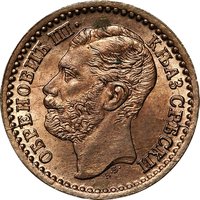
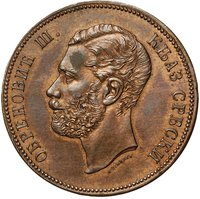
Obverse
Description:
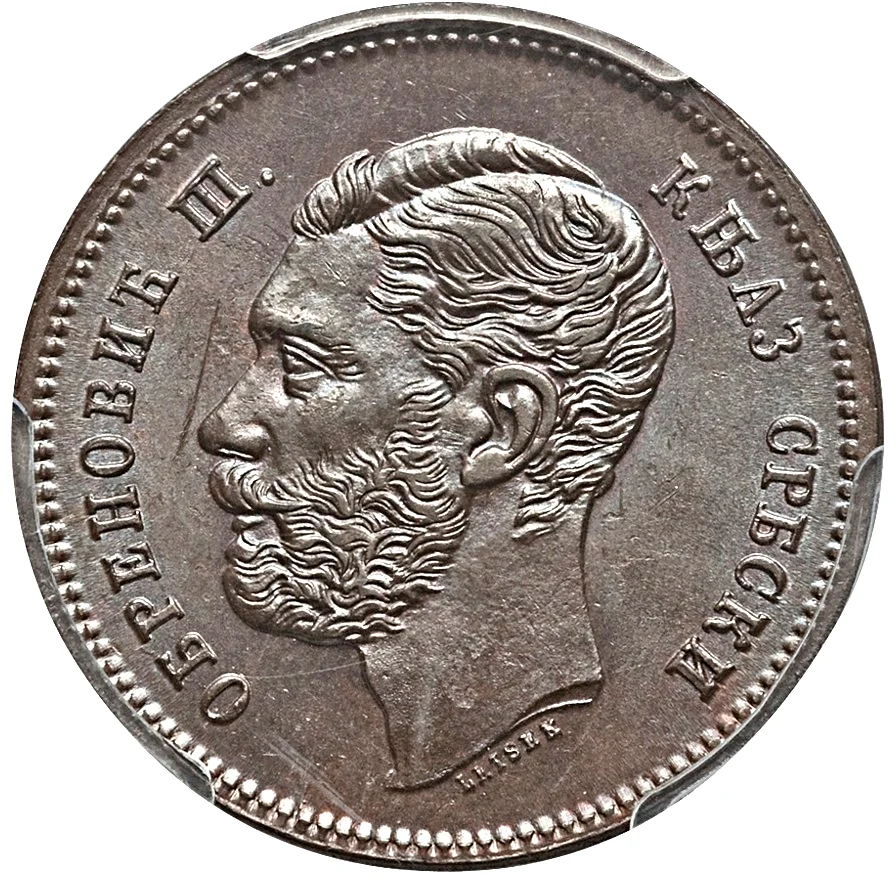
Obrenović III, left profile
Inscription:
ОБРЕНОВИЋ III.
КЊАЗ СРБСКИ
КЊАЗ СРБСКИ
Translation:
PRINCE OF SERBIA
Script: Cyrillic
Language: Serbian
Engraver: Joseph F. Leisek
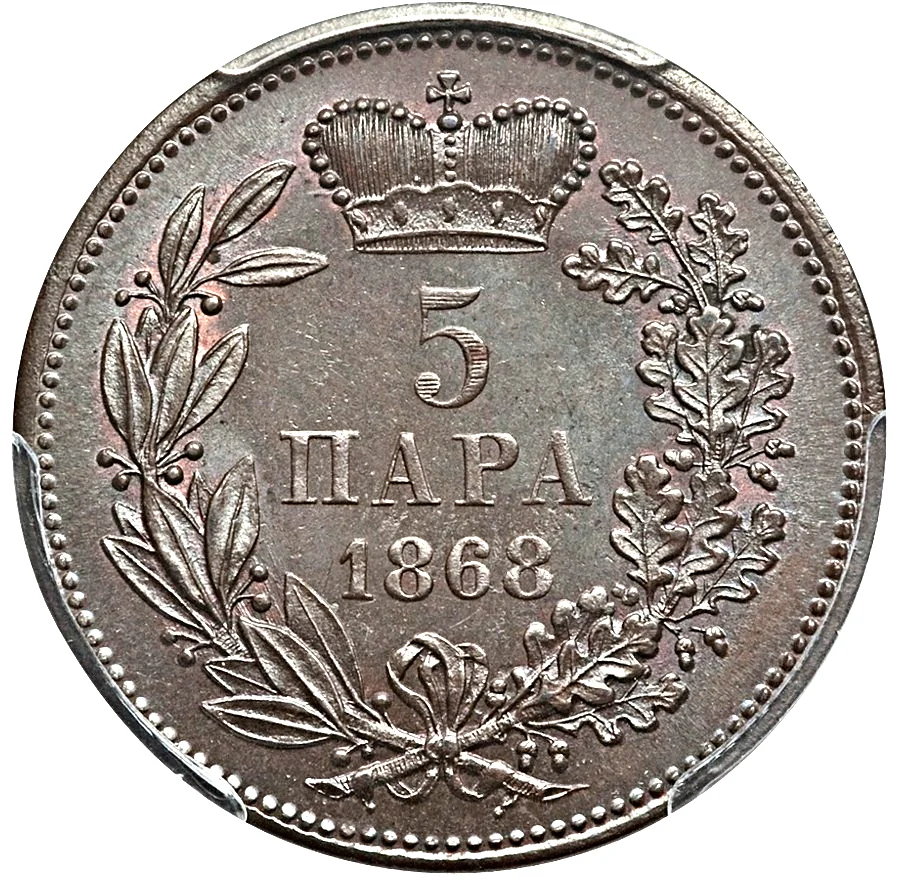
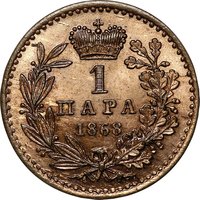
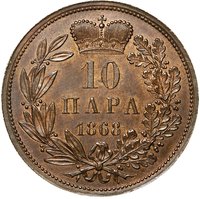
Reverse
Edge
Plain
Mintings
| Year | Mint Mark | Mintage | Quality | Collection |
|---|---|---|---|---|
| 1868 | — | — | ||
| 1868 | — | — | Proof |
Historical background
In 1868, Serbia operated under a complex and transitional monetary system as it navigated increasing autonomy within the Ottoman Empire. The official currency was the Ottoman kuruş (piaster), a reflection of lingering suzerainty, but in practice, a multitude of foreign coins circulated widely. Austrian silver thalers (Maria Theresa thalers), Hungarian and Austrian ducats, Russian rubles, and French francs were all used in commerce, creating a chaotic environment for trade and state finance. This proliferation of foreign specie, particularly Austrian currency due to strong economic ties, undermined the Ottoman monetary standard and highlighted Serbia's lack of a unified national currency.
The need for a stable, sovereign monetary system was a pressing issue for the Serbian government under Prince Mihailo Obrenović and, following his assassination in 1868, the regency ruling for the young Prince Milan. Economic modernization and the expansion of state administration required reliable fiscal control. While plans for a national currency were under discussion, tangible progress was still ahead; the first modern Serbian dinar, pegged to the French franc, would not be introduced until 1873. Therefore, 1868 represents a year of mounting pressure for reform rather than decisive change.
Consequently, the currency situation of 1868 was characterized by practical reliance on a foreign-dominated bimetallic system (gold and silver coins) and the persistent use of Ottoman denominations for accounting. This monetary fragmentation posed significant challenges, complicating tax collection, state budgeting, and commercial contracts. It stood as a clear economic symbol of Serbia's transitional political status—formally still under Ottoman authority but practically building the independent institutions of a nation-state, with a unified national currency being a key unresolved objective.
The need for a stable, sovereign monetary system was a pressing issue for the Serbian government under Prince Mihailo Obrenović and, following his assassination in 1868, the regency ruling for the young Prince Milan. Economic modernization and the expansion of state administration required reliable fiscal control. While plans for a national currency were under discussion, tangible progress was still ahead; the first modern Serbian dinar, pegged to the French franc, would not be introduced until 1873. Therefore, 1868 represents a year of mounting pressure for reform rather than decisive change.
Consequently, the currency situation of 1868 was characterized by practical reliance on a foreign-dominated bimetallic system (gold and silver coins) and the persistent use of Ottoman denominations for accounting. This monetary fragmentation posed significant challenges, complicating tax collection, state budgeting, and commercial contracts. It stood as a clear economic symbol of Serbia's transitional political status—formally still under Ottoman authority but practically building the independent institutions of a nation-state, with a unified national currency being a key unresolved objective.
🌟 Uncommon