

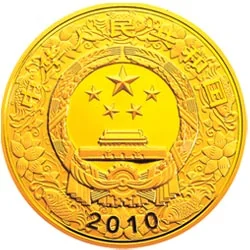
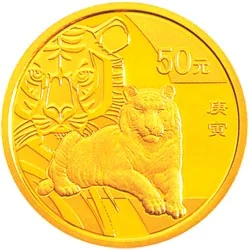
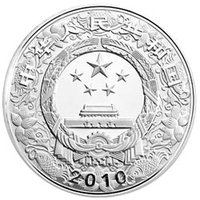
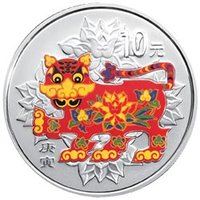
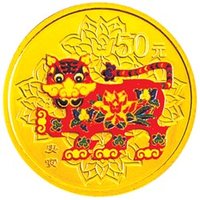
50 yuan – People's Republic of China
Add to wishlist
China
Context
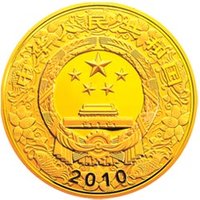
Year: 2010
Country: China
Issuer: People's Republic of China
Period:
(since 1949)
Currency:
(since 1955)
Total mintage: 80,000
Material
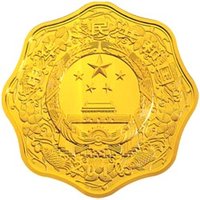
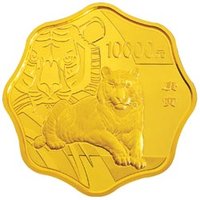
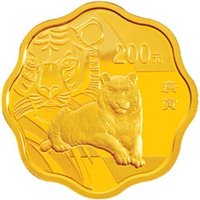
Diameter: 18 mm
Weight: 3.11 g
Gold Weight:: 3.11 g
Shape: Round
Composition: 99.9% Gold
Standard: Gold tenth ounce
Magnetic: No
Technique: Milled
Alignment: Medal alignment
flip
References
KM: #
Numista: #164451
Value
Exchange value: 50 CNY
Bullion value: $479.55
Inflation-adjusted value: 67.97 CNY
Mintings
| Year | Mint Mark | Mintage | Quality | Collection |
|---|---|---|---|---|
| 2010 | — | 80,000 | Proof |
Historical background
In 2010, the People's Republic of China's currency, the renminbi (RMB), was at the center of significant international economic and political debate. The primary focus was on its exchange rate, which was tightly managed by the People's Bank of China (PBOC) against a basket of currencies, though it was effectively pegged to the U.S. dollar in the aftermath of the 2008 global financial crisis. This policy, which kept the RMB undervalued in the view of many trading partners, particularly the United States and the European Union, was criticized as providing an unfair advantage to Chinese exports. Domestically, the currency regime supported economic stability and export-led growth, a cornerstone of China's recovery strategy, but it also contributed to large and growing foreign exchange reserves, which exceeded $2.8 trillion by year's end.
Facing mounting external pressure, Chinese authorities initiated a pivotal policy shift in June 2010, announcing a return to a "managed float" with reference to a currency basket and promising greater flexibility. This move ended the strict dollar peg established during the crisis, allowing for a gradual and controlled appreciation of the RMB. The decision was a carefully calibrated compromise, aimed at alleviating international tensions—especially ahead of high-level forums like the G-20—while maintaining strict control over the pace of appreciation to avoid shocking export industries. Throughout the second half of the year, the RMB appreciated modestly, by approximately 3% against the dollar, signaling a move toward internationalization but on China's own terms.
Internally, the currency policy was intertwined with broader macroeconomic challenges, including rising inflation and asset price bubbles, fueled in part by the massive stimulus package of 2008-2009. The controlled appreciation was also a tool for the PBOC to manage domestic liquidity and import prices. Furthermore, 2010 saw concrete steps in the long-term strategy of internationalizing the RMB, with pilot programs for cross-border trade settlement in RMB expanding significantly. This laid the groundwork for the currency's future global role, even as the capital account remained largely closed, reflecting the government's overarching priority of financial stability and controlled reform over rapid liberalization.
Facing mounting external pressure, Chinese authorities initiated a pivotal policy shift in June 2010, announcing a return to a "managed float" with reference to a currency basket and promising greater flexibility. This move ended the strict dollar peg established during the crisis, allowing for a gradual and controlled appreciation of the RMB. The decision was a carefully calibrated compromise, aimed at alleviating international tensions—especially ahead of high-level forums like the G-20—while maintaining strict control over the pace of appreciation to avoid shocking export industries. Throughout the second half of the year, the RMB appreciated modestly, by approximately 3% against the dollar, signaling a move toward internationalization but on China's own terms.
Internally, the currency policy was intertwined with broader macroeconomic challenges, including rising inflation and asset price bubbles, fueled in part by the massive stimulus package of 2008-2009. The controlled appreciation was also a tool for the PBOC to manage domestic liquidity and import prices. Furthermore, 2010 saw concrete steps in the long-term strategy of internationalizing the RMB, with pilot programs for cross-border trade settlement in RMB expanding significantly. This laid the groundwork for the currency's future global role, even as the capital account remained largely closed, reflecting the government's overarching priority of financial stability and controlled reform over rapid liberalization.
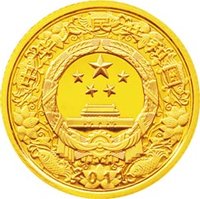
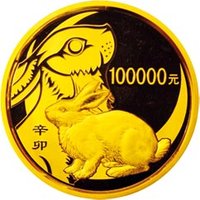
Series: Chinese Zodiac Bullion
✨ Legendary