


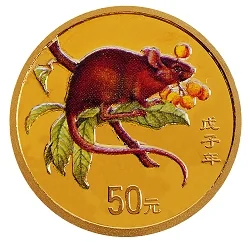
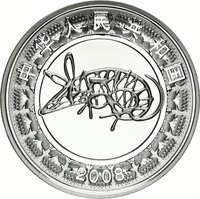
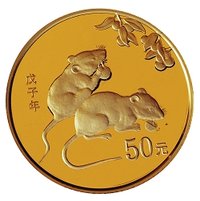
50 yuan – People's Republic of China
Add to wishlist
China
Context
Year: 2008
Country: China
Issuer: People's Republic of China
Period:
(since 1949)
Currency:
(since 1955)
Total mintage: 30,000
Material
Diameter: 18 mm
Weight: 3.11 g
Gold Weight:: 3.11 g
Shape: Round
Composition: 99.9% Gold
Standard: Gold tenth ounce
Magnetic: No
Alignment: Medal alignment

flip
References
KM: #
Numista: #164009
Value
Exchange value: 50 CNY
Bullion value: $483.70
Inflation-adjusted value: 71.48 CNY
Categories
| Animal> Rodent |
| Astrology> Chinese calendar |
Mintings
| Year | Mint Mark | Mintage | Quality | Collection |
|---|---|---|---|---|
| 2008 | — | 30,000 |
Historical background
In 2008, the People's Republic of China's currency, the renminbi (RMB), was at a critical juncture, governed by a managed float regime pegged to a basket of currencies. Following a landmark reform in July 2005 that ended a strict decade-long peg to the U.S. dollar, the RMB had been allowed to appreciate gradually. By the time the global financial crisis erupted in late 2008, the RMB had appreciated approximately 21% against the dollar. This controlled appreciation was a key component of China's economic strategy, aimed at rebalancing the economy towards domestic consumption, curbing inflation, and addressing international (particularly U.S.) pressure to reduce its large trade surplus.
The collapse of Lehman Brothers and the ensuing global financial shock dramatically altered this trajectory. Facing a sudden collapse in external demand that threatened its export-dependent economy, Chinese authorities effectively halted the RMB's appreciation. In mid-2008, the currency's movement flatlined, and it was repegged to the U.S. dollar at around 6.83 RMB per dollar for the following two years. This decisive policy shift was a defensive measure to provide stability and certainty for Chinese exporters, who were seeing orders vanish, and to insulate the domestic economy from volatile capital flows during a period of intense global uncertainty.
This return to a de facto dollar peg was therefore a strategic pause in China's long-term currency liberalization agenda. It underscored the primacy of domestic economic stability and growth during the crisis, even as it drew renewed international criticism for currency manipulation. The 2008 episode highlighted the fundamental tension in China's exchange rate policy: balancing the goals of international integration and reform against the imperative of state-controlled stability, especially during external shocks. The stage was set for the gradual resumption of appreciation and reform efforts once global conditions stabilized after 2010.
The collapse of Lehman Brothers and the ensuing global financial shock dramatically altered this trajectory. Facing a sudden collapse in external demand that threatened its export-dependent economy, Chinese authorities effectively halted the RMB's appreciation. In mid-2008, the currency's movement flatlined, and it was repegged to the U.S. dollar at around 6.83 RMB per dollar for the following two years. This decisive policy shift was a defensive measure to provide stability and certainty for Chinese exporters, who were seeing orders vanish, and to insulate the domestic economy from volatile capital flows during a period of intense global uncertainty.
This return to a de facto dollar peg was therefore a strategic pause in China's long-term currency liberalization agenda. It underscored the primacy of domestic economic stability and growth during the crisis, even as it drew renewed international criticism for currency manipulation. The 2008 episode highlighted the fundamental tension in China's exchange rate policy: balancing the goals of international integration and reform against the imperative of state-controlled stability, especially during external shocks. The stage was set for the gradual resumption of appreciation and reform efforts once global conditions stabilized after 2010.
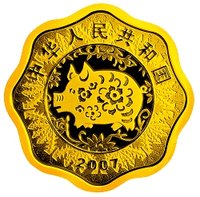
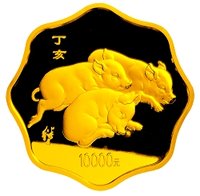
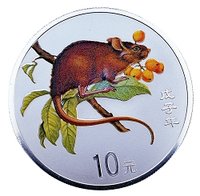
Series: Chinese Zodiac Bullion

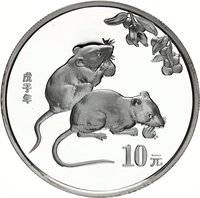

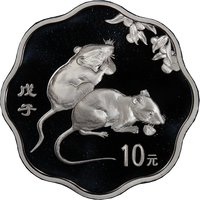


✨ Legendary