

100 escudos – Portugal
Add to wishlist
Circulating commemorative coins
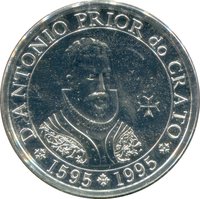
Commemoration: 4th centennial of the death of D. António, Prior of Crato
Series: System 1981-2001
Portugal
Context
Year: 1995
Issuer: Portugal
Period:
(since 1974)
Currency:
(1911—2001)
Demonetization: 28 February 2002
Total mintage: 350,000
Material
Diameter: 34 mm
Weight: 15 g
Thickness: 2.7 mm
Shape: Round
Composition: Copper-nickel
Technique: Milled
Alignment: Coin alignment
flip
References
KM: #
Numista: #10617
Value
Exchange value: 100 PTE
Inflation-adjusted value: 194.12 PTE
Obverse
Description:
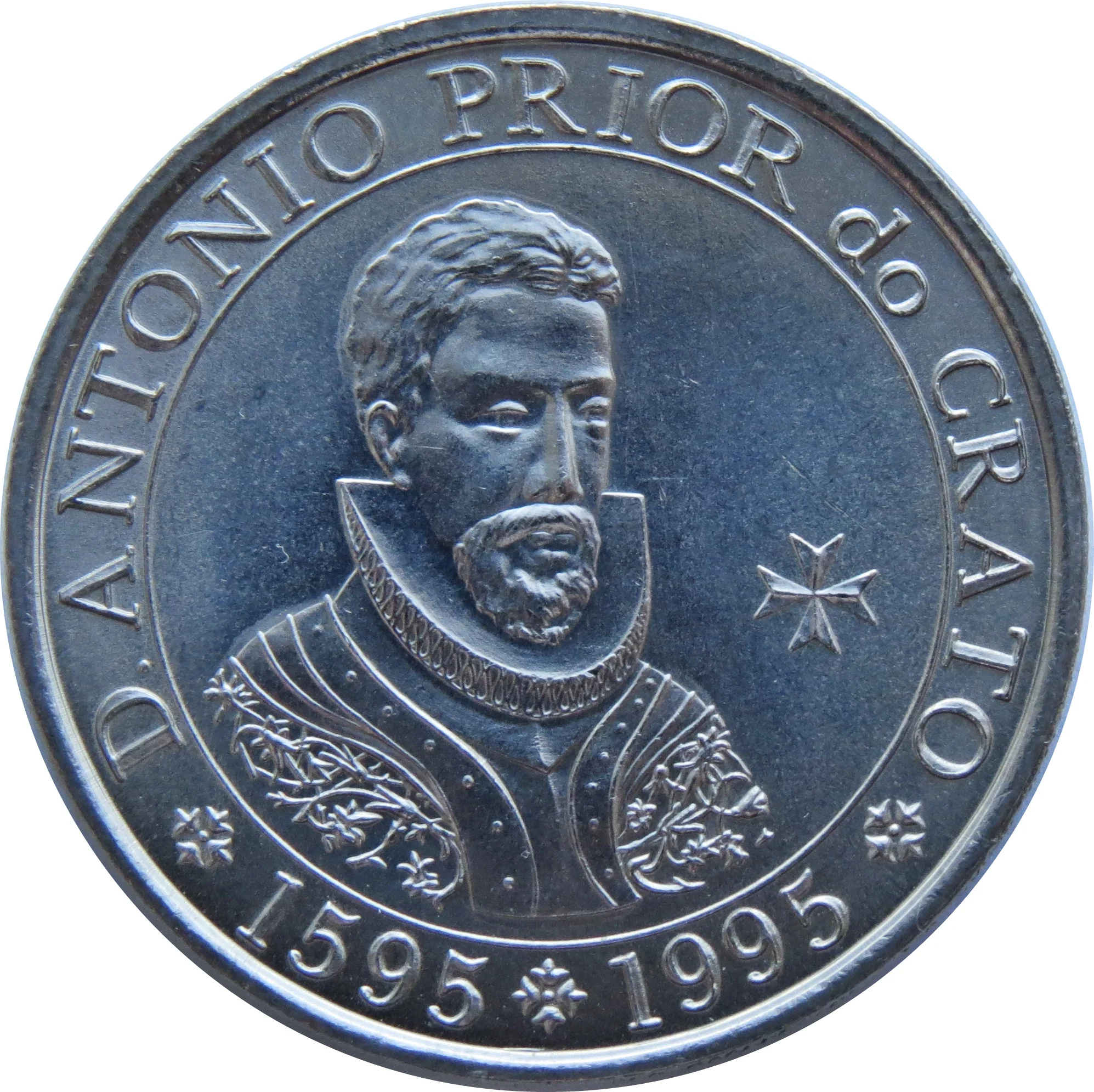
Portrait of D. António, Prior of Crato, wearing the Maltese Cross.
Inscription:
D. ANTONIO PRIOR do CRATO
* 1595 * 1995 *
* 1595 * 1995 *
Translation:
D. ANTONIO PRIOR do CRATO
* 1595 * 1995 *
* 1595 * 1995 *
Script: Latin
Language: Portuguese
Engraver: Alípio Pinto
Reverse
Description:
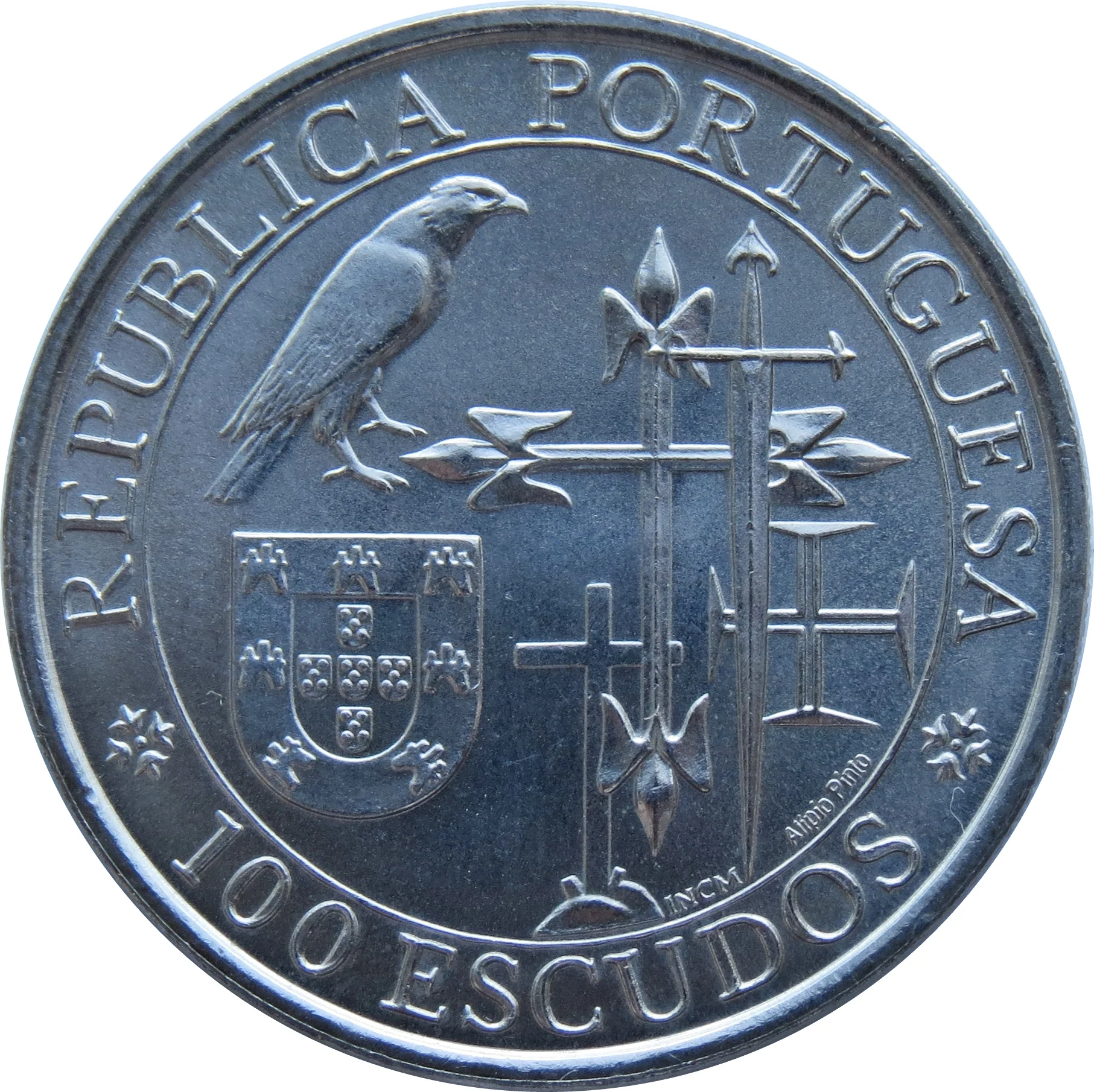
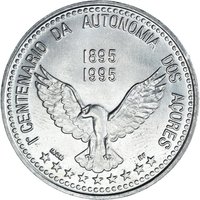
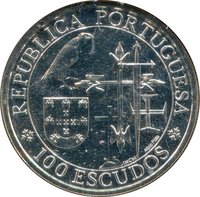
- National coat of arms: A Northern Goshawk (*Accipiter gentilis*), known in Portuguese as *açor*, the bird of prey that gave the Azores its name.
- Coin crosses: Representing the Military Orders of Santiago, Avis, and Christ, plus a calvary cross, from coins issued under D. António.
- Coin crosses: Representing the Military Orders of Santiago, Avis, and Christ, plus a calvary cross, from coins issued under D. António.
Inscription:
REPUBLICA PORTUGUESA
* 100 ESCUDOS *
INCM
Alípio Pinto
* 100 ESCUDOS *
INCM
Alípio Pinto
Translation:
Portuguese Republic
* 100 Escudos *
INCM
Alípio Pinto
* 100 Escudos *
INCM
Alípio Pinto
Script: Latin
Language: Portuguese
Engraver: Alípio Pinto
Edge
Reeded
Categories
| Animal> Bird |
| Symbols> Coat of Arms |
Mints
| Name | Mark |
|---|---|
| Imprensa Nacional - Casa da Moeda | incm |
Mintings
| Year | Mint Mark | Mintage | Quality | Collection |
|---|---|---|---|---|
| 1995 | incm | 350,000 |
Historical background
In 1995, Portugal's currency situation was defined by its pivotal and challenging path toward European Monetary Union (EMU). The country was a member of the European Union's Exchange Rate Mechanism (ERM), having joined in April 1992, which required maintaining the escudo within a narrow band of fluctuation against other European currencies, particularly the German Deutsche Mark. This commitment was part of a broader national strategy to converge with the core European economies, curb historically high inflation, and secure a place among the first wave of countries to adopt the planned single currency, the euro.
The year was marked by significant pressure and deliberate policy action. Following the 1992-93 ERM crises, Portugal had been forced to devalue the escudo in 1993. By 1995, under a center-right government led by Prime Minister Aníbal Cavaco Silva, the key objective was to demonstrate unwavering stability. The Banco de Portugal maintained a tight monetary policy, successfully bringing inflation down to approximately 4.1% (from over 13% in the early 1990s) and reducing budget deficits. However, this discipline came at a short-term economic cost, including high interest rates that constrained growth and contributed to a rise in unemployment.
Ultimately, 1995 was a year of proving credibility on the international stage. The stringent policies, though domestically difficult, were largely successful in meeting the Maastricht Treaty convergence criteria on inflation, interest rates, and exchange rate stability. This rigorous adherence set the stage for the subsequent socialist government, which took office in October 1995, to inherit a trajectory that would lead to Portugal's qualification for the euro in 1998 and the eventual phasing out of the escudo in 2002.
The year was marked by significant pressure and deliberate policy action. Following the 1992-93 ERM crises, Portugal had been forced to devalue the escudo in 1993. By 1995, under a center-right government led by Prime Minister Aníbal Cavaco Silva, the key objective was to demonstrate unwavering stability. The Banco de Portugal maintained a tight monetary policy, successfully bringing inflation down to approximately 4.1% (from over 13% in the early 1990s) and reducing budget deficits. However, this discipline came at a short-term economic cost, including high interest rates that constrained growth and contributed to a rise in unemployment.
Ultimately, 1995 was a year of proving credibility on the international stage. The stringent policies, though domestically difficult, were largely successful in meeting the Maastricht Treaty convergence criteria on inflation, interest rates, and exchange rate stability. This rigorous adherence set the stage for the subsequent socialist government, which took office in October 1995, to inherit a trajectory that would lead to Portugal's qualification for the euro in 1998 and the eventual phasing out of the escudo in 2002.
Series: System 1981-2001
🌱 Common