

1 Shilling – Fiji
Fiji
Context
Material
References
KM: #Click to copy to clipboard12
Numista: #16381
Value
Bullion value: $8.04
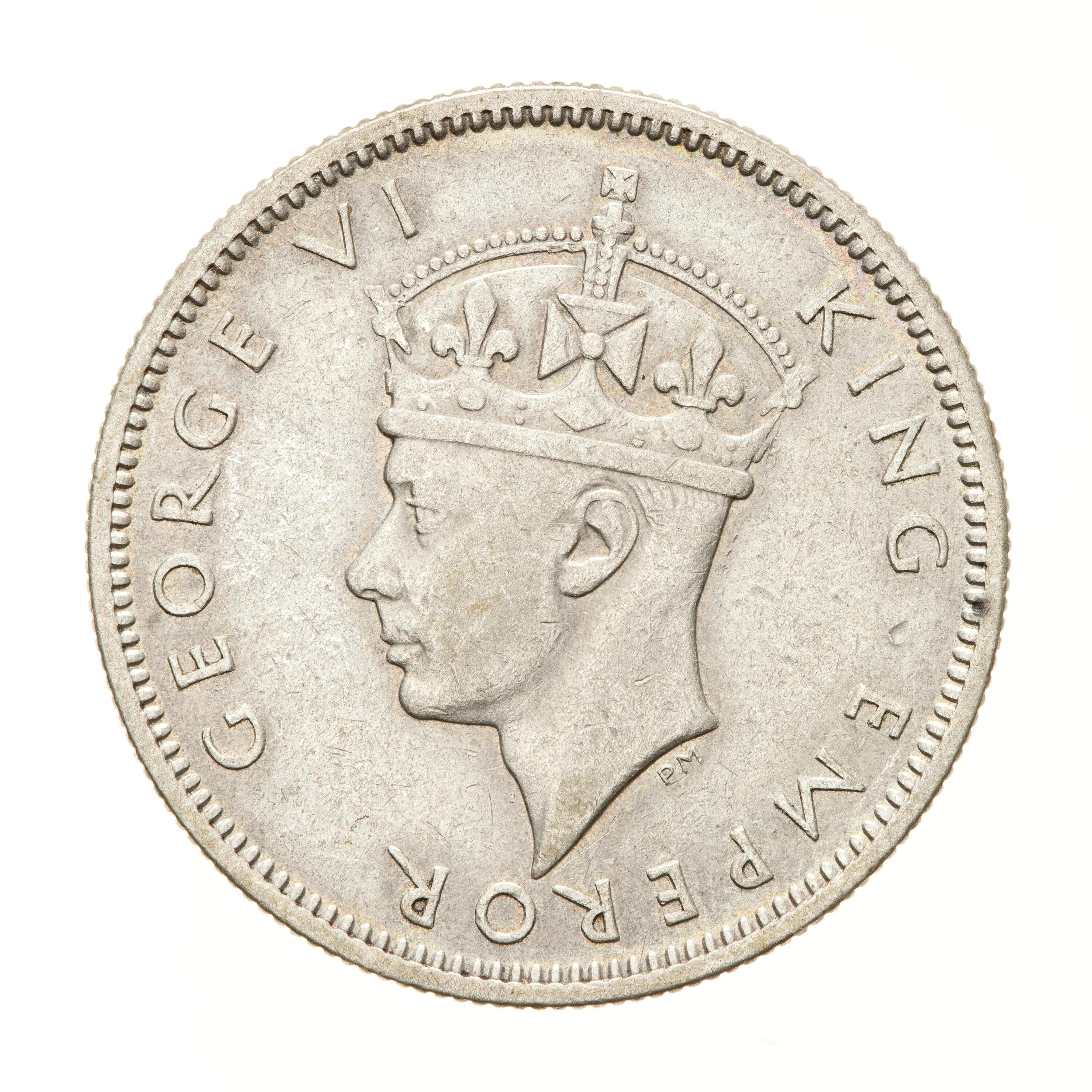
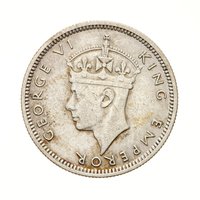
Obverse
Description:
George VI left-facing crowned bust.
Inscription:
GEORGE VI KING EMPEROR
Translation:
GEORGE VI KING EMPEROR
Script: Latin
Language: English
Engraver: Percy Metcalfe
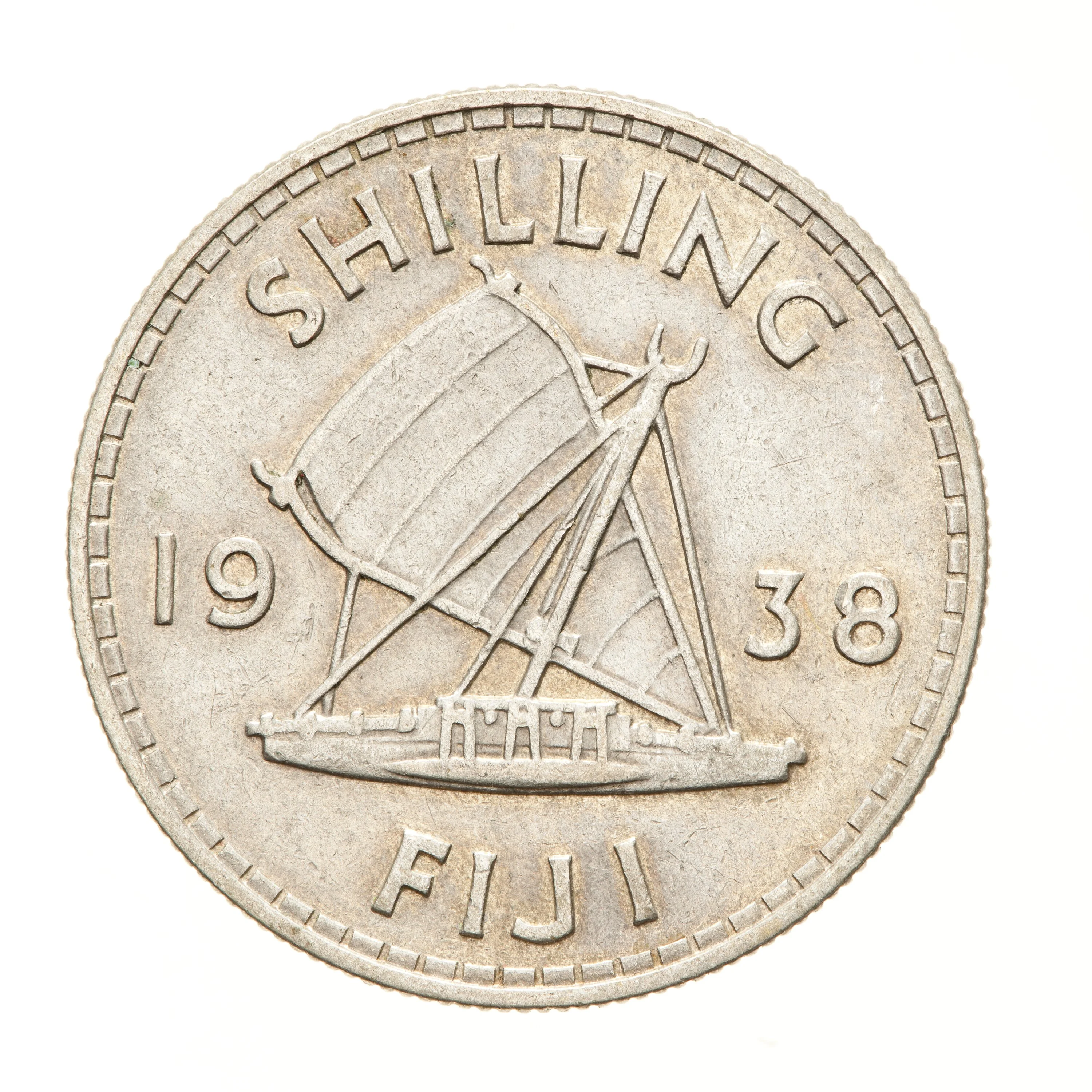
Reverse
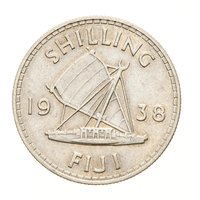
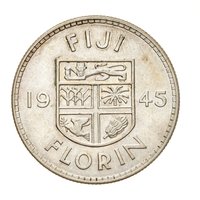
Description:
Outrigger splits dates and denominations.
Inscription:
SHILLING
19 41
FIJI
19 41
FIJI
Script: Latin
Engraver: Percy Metcalfe
Edge
Milled
Categories
| Person> Monarch |
| Transportation> Watercraft |
Mints
| Name | Mark |
|---|---|
| Royal Mint (Tower Hill) | — |
Mintings
| Year | Mint Mark | Mintage | Quality | Collection |
|---|---|---|---|---|
| 1938 | — | 40,000 | ||
| 1938 | — | — | Proof | |
| 1941 | — | 40,000 | ||
| 1941 | — | — | Proof |
Historical background
In 1938, Fiji's currency was firmly integrated into the British imperial monetary system, operating under the auspices of the Western Pacific (British) Currency Board. Established in 1913 and headquartered in London, this board issued the Fiji pound (£F), which was pegged at par with the British pound sterling. This meant the colony had no independent monetary policy; the currency was fully backed by sterling reserves held in London, ensuring stability and facilitating trade with the United Kingdom and other parts of the Empire. The physical currency in circulation consisted of British coinage and distinctive Fiji banknotes, all adhering to the sterling standard.
The economy underpinning this currency was dominated by the sugar industry, controlled by the Colonial Sugar Refining Company of Australia, and copra production. These export commodities generated the sterling earnings that backed the currency. However, this system also meant Fiji's financial health was directly tied to global commodity prices and the economic conditions of the British Empire. The late 1930s were a period of recovery from the Great Depression, and while the peg provided stability, it also imported the monetary policies of Britain, which were not necessarily tailored to Fiji's specific economic needs or its diverse population of indigenous Fijians, Indo-Fijian indentured labour descendants, and European settlers.
Socially, the currency situation reflected the colonial hierarchy. The pound system, with its shillings and pence, was a direct imposition of British economic structures. For many Indo-Fijian labourers and rural Fijians, a cash economy was still interwoven with subsistence living and barter. As the decade progressed, there were nascent discussions about greater autonomy, but in 1938, the currency remained a clear symbol of colonial control, managed from afar for the primary purpose of facilitating imperial trade and administrative efficiency rather than fostering localized economic development. This would remain the status quo until the establishment of a Fiji-specific currency board in the early 1960s.
The economy underpinning this currency was dominated by the sugar industry, controlled by the Colonial Sugar Refining Company of Australia, and copra production. These export commodities generated the sterling earnings that backed the currency. However, this system also meant Fiji's financial health was directly tied to global commodity prices and the economic conditions of the British Empire. The late 1930s were a period of recovery from the Great Depression, and while the peg provided stability, it also imported the monetary policies of Britain, which were not necessarily tailored to Fiji's specific economic needs or its diverse population of indigenous Fijians, Indo-Fijian indentured labour descendants, and European settlers.
Socially, the currency situation reflected the colonial hierarchy. The pound system, with its shillings and pence, was a direct imposition of British economic structures. For many Indo-Fijian labourers and rural Fijians, a cash economy was still interwoven with subsistence living and barter. As the decade progressed, there were nascent discussions about greater autonomy, but in 1938, the currency remained a clear symbol of colonial control, managed from afar for the primary purpose of facilitating imperial trade and administrative efficiency rather than fostering localized economic development. This would remain the status quo until the establishment of a Fiji-specific currency board in the early 1960s.
🌟 Limited