

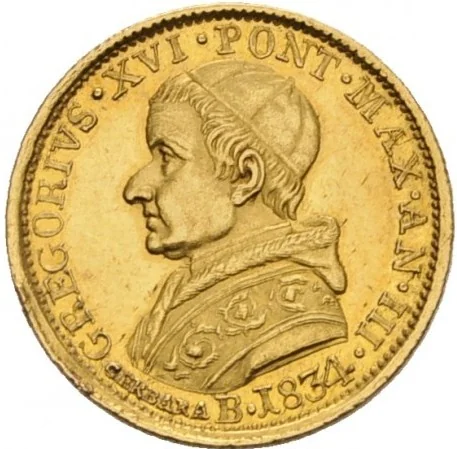
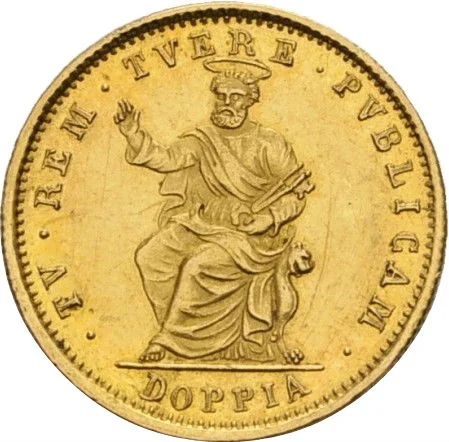
1 doppia – Papal States
Add to wishlist
Vatican City
Context
Year: 1833
Country: Vatican City
Issuer: Papal States
Ruler: Gregory XVI
Currency:
(1534—1835)
Demonetized: Yes
Material
References
KM: #
Numista: #106143
Value
Bullion value: $771.38
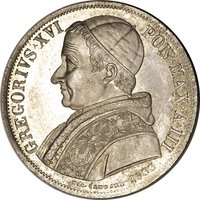
Obverse
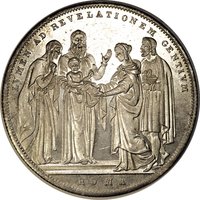
Reverse
Description:
Seated saint facing upward.
Inscription:
· TV · REM · TVERE · PVBLICAM ·
DOPPIA
DOPPIA
Script: Latin
Edge
Historical background
In 1833, the Papal States faced a complex and fragmented monetary situation, a legacy of centuries of political and administrative division. The territory was not a unified economic zone, and no single, authoritative Papal currency dominated circulation. Instead, a bewildering array of coins from various Italian and European states, including those from neighbouring Tuscany, the Kingdom of the Two Sicilies, and even French and Austrian issues, circulated alongside local papal coinage. This created chronic confusion in trade, as merchants and citizens had to constantly negotiate exchange rates and metal purity between dozens of different denominations.
The official papal coinage itself, minted in Rome and Bologna, was based on the scudo (divided into 100 baiocchi), but its production was inconsistent and failed to meet the needs of the economy. Crucially, the state suffered from a severe shortage of small-denomination coins (moneta spicciola) necessary for everyday transactions, which crippled local markets and exacerbated poverty. This vacuum was often filled by debased foreign small coins or even privately issued tokens, further undermining monetary stability and state authority.
This chaotic system reflected the broader governance challenges of the Papal States under Pope Gregory XVI, whose conservative regime resisted modernizing reforms. The lack of a uniform, trusted currency hindered economic development and state revenue collection, contributing to fiscal weakness. While some clerical officials recognized the problem, substantive monetary reform would not be attempted until the brief liberal government of 1847 and the subsequent upheavals of the Risorgimento, which ultimately swept away the Papal States' temporal power and its monetary system altogether.
The official papal coinage itself, minted in Rome and Bologna, was based on the scudo (divided into 100 baiocchi), but its production was inconsistent and failed to meet the needs of the economy. Crucially, the state suffered from a severe shortage of small-denomination coins (moneta spicciola) necessary for everyday transactions, which crippled local markets and exacerbated poverty. This vacuum was often filled by debased foreign small coins or even privately issued tokens, further undermining monetary stability and state authority.
This chaotic system reflected the broader governance challenges of the Papal States under Pope Gregory XVI, whose conservative regime resisted modernizing reforms. The lack of a uniform, trusted currency hindered economic development and state revenue collection, contributing to fiscal weakness. While some clerical officials recognized the problem, substantive monetary reform would not be attempted until the brief liberal government of 1847 and the subsequent upheavals of the Risorgimento, which ultimately swept away the Papal States' temporal power and its monetary system altogether.
✨ Legendary