

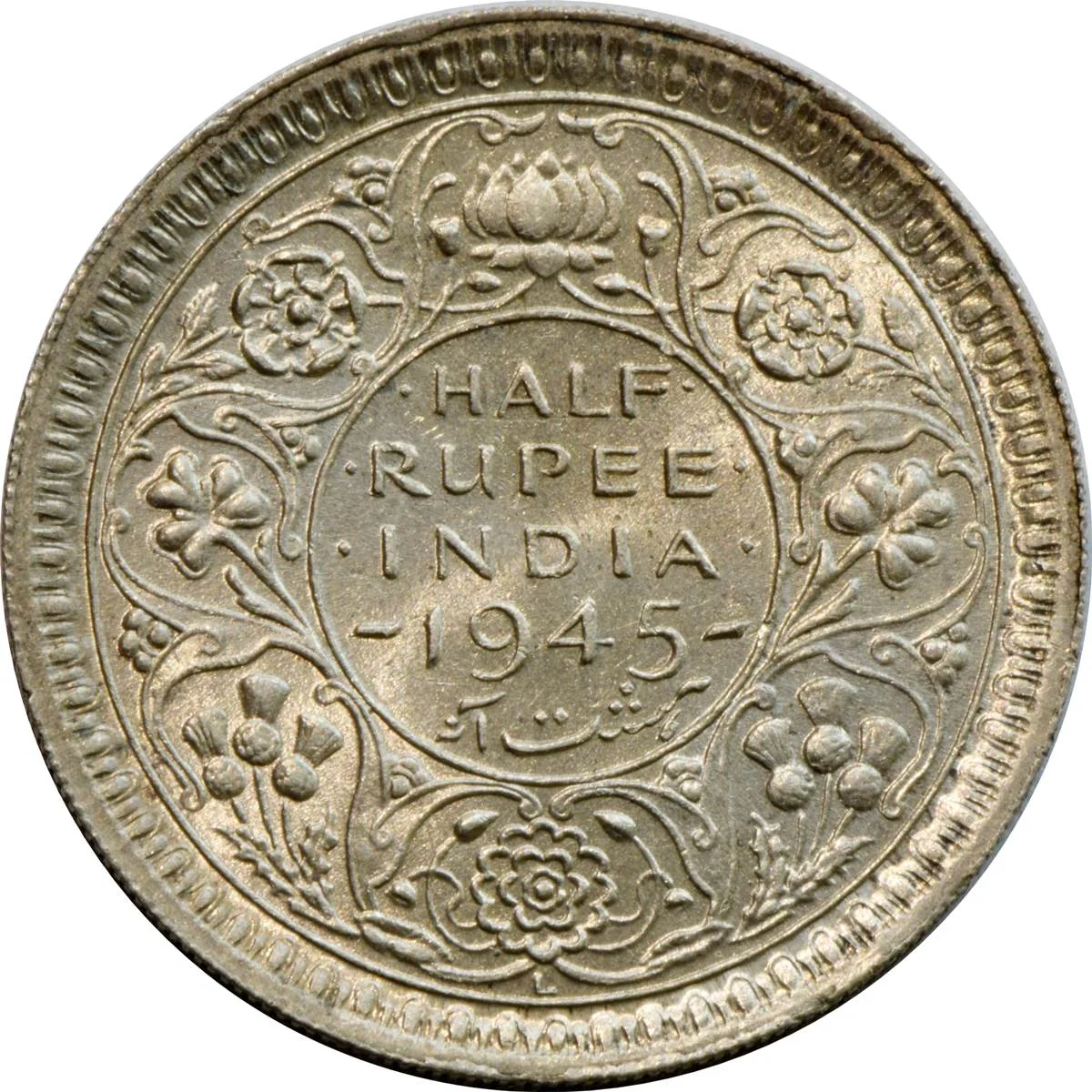
½ rupee – India - British
Add to wishlist
India
Context
Years: 1942–1945
Country: India
Issuer: India - British
Ruler: George VI
Currency:
(1770—1947)
Demonetized: Yes
Total mintage: 224,700,000
Material
References
KM: #
Numista: #10613
Value
Bullion value: $7.32
Obverse
Description:
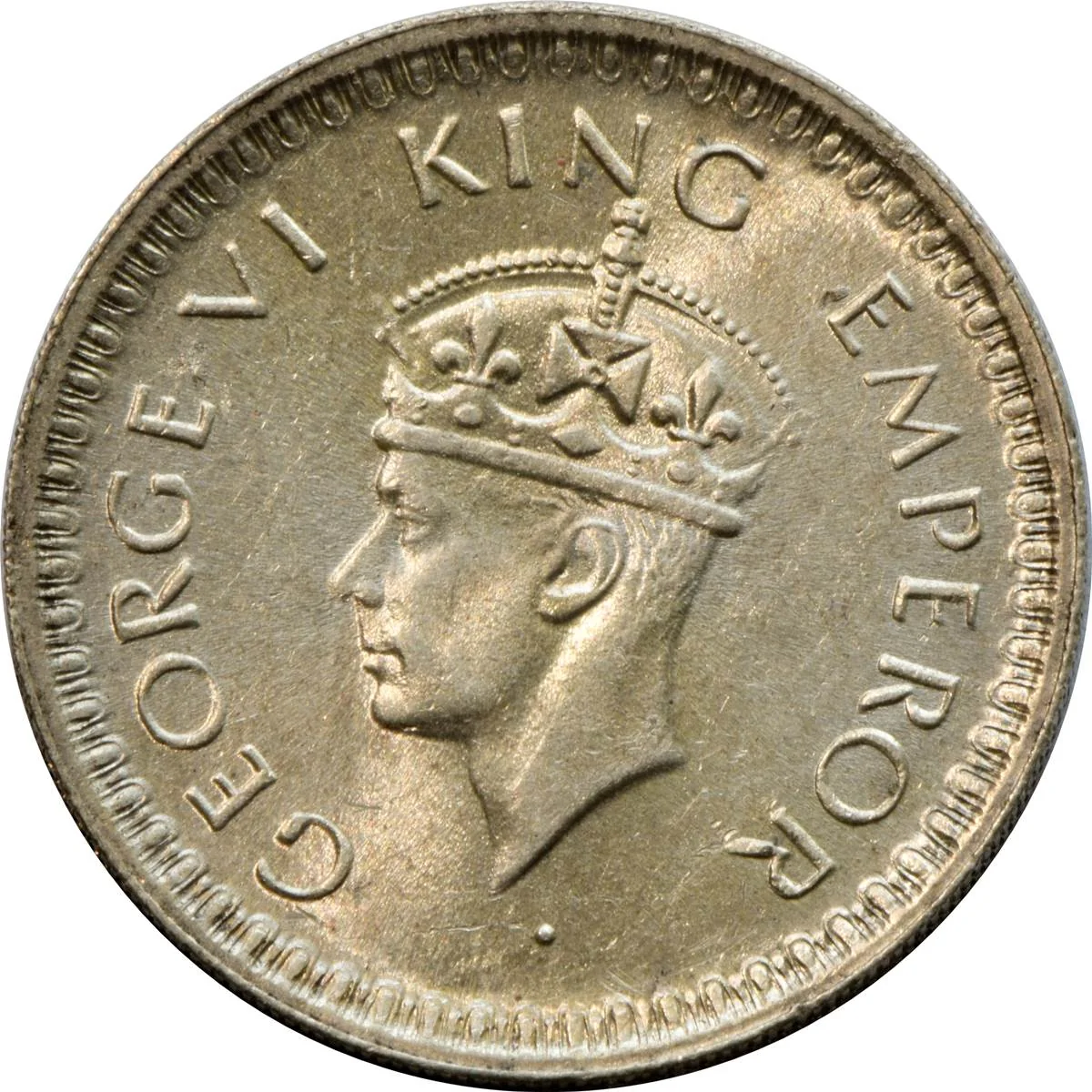
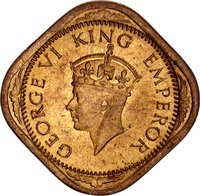
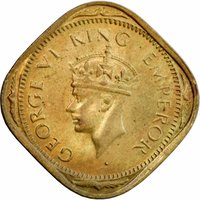
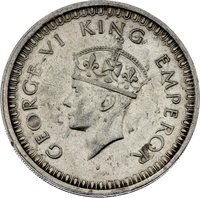
Small crowned left-facing bust of George VI within a decorative rim inscription.
Inscription:
GEORGE VI KING EMPEROR
Translation:
GEORGE VI KING EMPEROR
Language: English
Engraver: Percy Metcalfe
Reverse
Edge
Security
Mints
| Name | Mark |
|---|---|
| Mumbai / Bombay | • |
| Mumbai / Bombay | ♦ |
| Lahore | L |
Mintings
Historical background
In 1942, British India faced a severe currency crisis driven by the immense financial pressures of World War II. The fall of Burma to Japanese forces earlier that year triggered a massive influx of refugees and soldiers into eastern India, while also cutting off a key source of rice imports. This, combined with the need to fund both the war in the East and the large Allied military presence in India, placed unsustainable strain on the colonial economy. The government was forced to print vast quantities of currency to meet its expenditures, leading to a sharp decline in the rupee's real value and stoking rampant inflation.
The situation was exacerbated by a widespread fear of a Japanese invasion, which sparked a classic liquidity crisis. Panicked civilians, particularly in coastal regions like Calcutta and Madras, began hoarding cash and demanding their deposits from banks and post offices, leading to bank runs. This "scramble for cash" removed currency from circulation, crippling everyday commerce. Simultaneously, the government's need to pay for war supplies and troop deployments in the East led to a physical shortage of rupee notes and coins in these regions, creating a paradoxical scenario of inflation co-existing with a crippling lack of physical money in the hands of the public.
The British colonial administration responded with a series of emergency measures. These included imposing withdrawal limits on banks, introducing higher denomination notes (like the ₹1,000 and ₹10,000 notes), and even issuing "Emergency Issues" of currency—notes printed locally on simpler paper without sophisticated security features, solely for use within specific provinces. While these steps helped to mechanically ease the cash shortage, they did not address the root causes of inflation and economic distress. The crisis of 1942 starkly exposed the extractive nature of colonial war financing, severely disrupted the Indian economy, and contributed to the devastating Bengal famine that would unfold in the following year.
The situation was exacerbated by a widespread fear of a Japanese invasion, which sparked a classic liquidity crisis. Panicked civilians, particularly in coastal regions like Calcutta and Madras, began hoarding cash and demanding their deposits from banks and post offices, leading to bank runs. This "scramble for cash" removed currency from circulation, crippling everyday commerce. Simultaneously, the government's need to pay for war supplies and troop deployments in the East led to a physical shortage of rupee notes and coins in these regions, creating a paradoxical scenario of inflation co-existing with a crippling lack of physical money in the hands of the public.
The British colonial administration responded with a series of emergency measures. These included imposing withdrawal limits on banks, introducing higher denomination notes (like the ₹1,000 and ₹10,000 notes), and even issuing "Emergency Issues" of currency—notes printed locally on simpler paper without sophisticated security features, solely for use within specific provinces. While these steps helped to mechanically ease the cash shortage, they did not address the root causes of inflation and economic distress. The crisis of 1942 starkly exposed the extractive nature of colonial war financing, severely disrupted the Indian economy, and contributed to the devastating Bengal famine that would unfold in the following year.
🌱 Very Common