

25 Paise – India
India

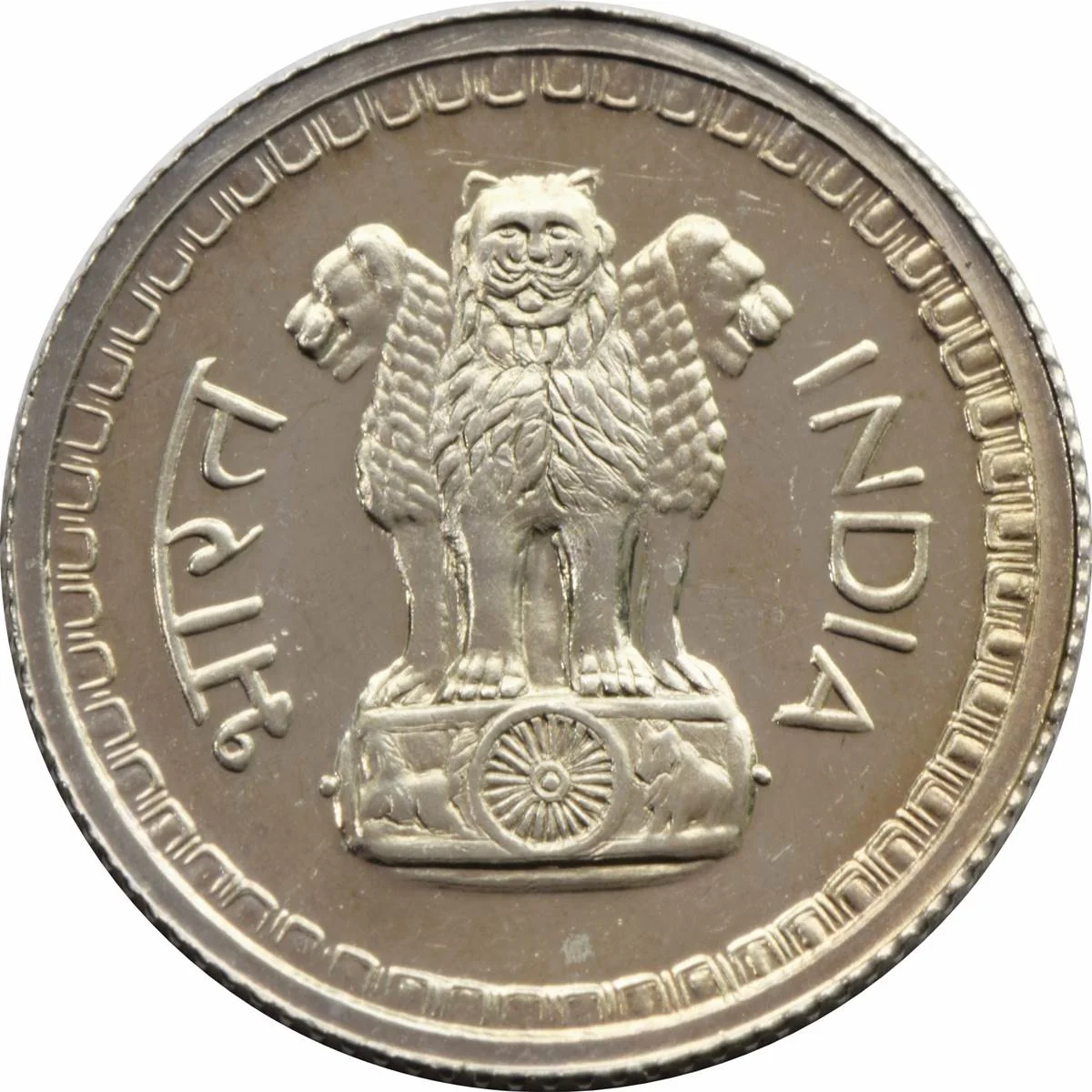
Obverse
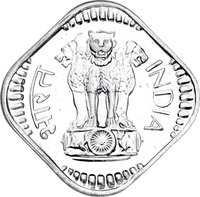
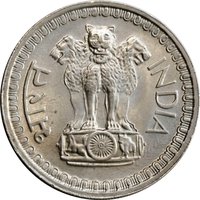
Description:
Asoka lion pedestal types:
Type 1: Side lions toothless, 2–3 fur rows, short squat "D" in INDIA.
Type 2: More imposing, 3–4 fur rows, elegant "D" in INDIA.
Type 3: Like Type 1 but with 2 teeth, 4–5 fur rows, smaller lion head.
Note: Redesigns and varieties exist.
Type 1: Side lions toothless, 2–3 fur rows, short squat "D" in INDIA.
Type 2: More imposing, 3–4 fur rows, elegant "D" in INDIA.
Type 3: Like Type 1 but with 2 teeth, 4–5 fur rows, smaller lion head.
Note: Redesigns and varieties exist.
Inscription:
भारत INDIA
Translation:
India
Scripts: Devanagari, Latin
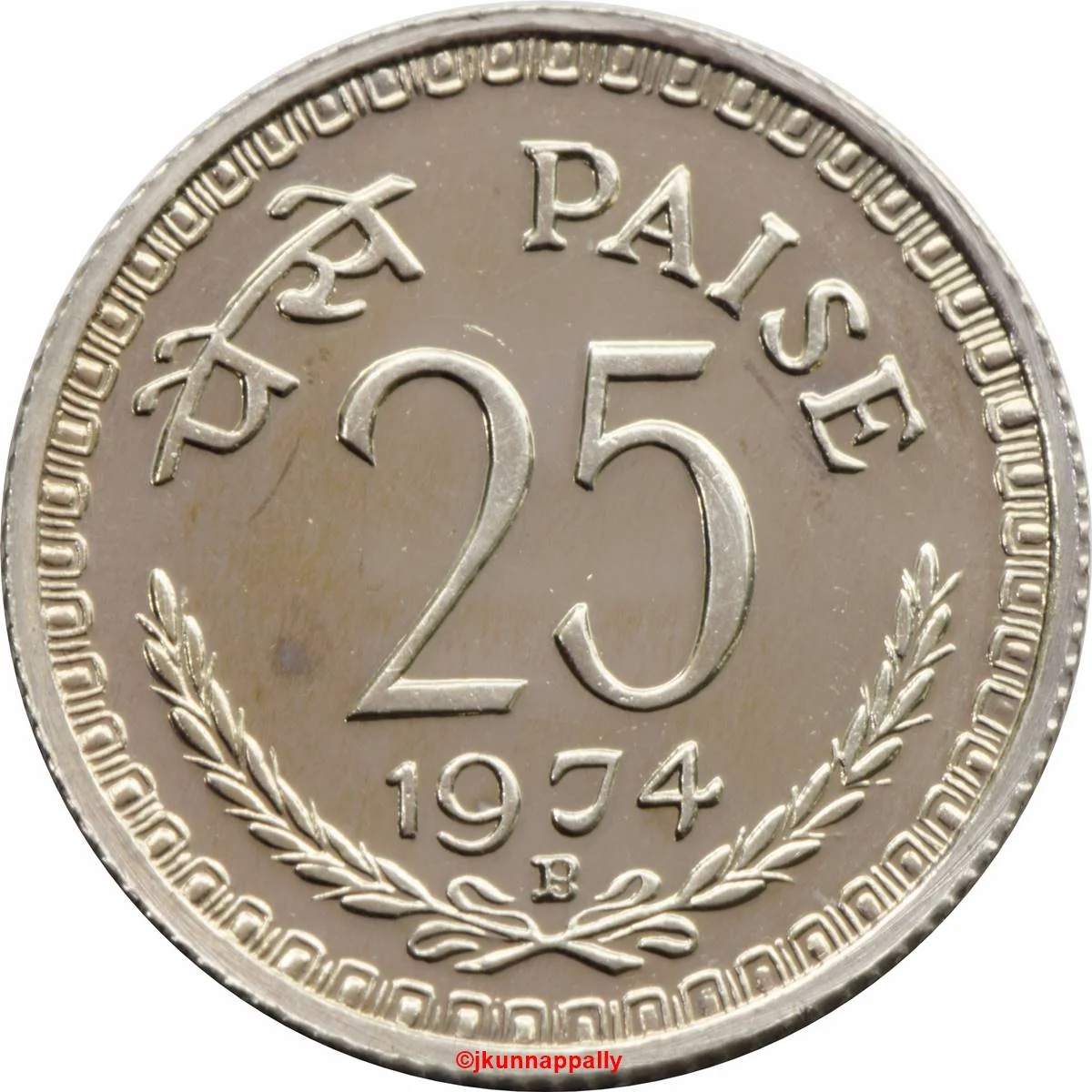
Reverse
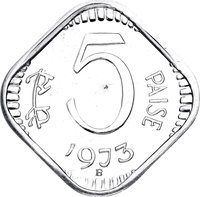
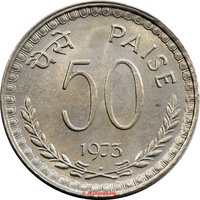
Description:
Date above denomination.
Inscription:
पैसे PAISE
25
1974
B
25
1974
B
Translation:
PAISE
25
1974
25
1974
Scripts: Devanagari, Latin
Edge
Mints
| Name | Mark |
|---|---|
| Kolkata / Calcutta / Murshidabad | — |
| Hyderabad | ★ |
| Mumbai / Bombay | ♦ & B |
| Royal Canadian Mint of Ottawa | C |
Mintings
| Year | Mint Mark | Mintage | Quality | Collection |
|---|---|---|---|---|
| 1972 | — | — | ||
| 1972 | ★ | — | ||
| 1972 | ♦ | — | ||
| 1972 | B | 7,895 | Proof | |
| 1973 | — | — | ||
| 1973 | ★ | — | ||
| 1973 | ♦ | — | ||
| 1973 | B | 7,567 | Proof | |
| 1974 | ♦ | — | ||
| 1974 | ★ | — | ||
| 1974 | — | — | ||
| 1974 | B | — | Proof | |
| 1975 | — | — | ||
| 1975 | ★ | — | ||
| 1975 | ♦ | 559,980,000 | ||
| 1975 | B | — | Proof | |
| 1976 | — | — | ||
| 1976 | ★ | — | ||
| 1976 | ♦ | 30,016,000 | ||
| 1976 | B | — | Proof | |
| 1977 | ♦ | 270,520,000 | ||
| 1977 | ★ | — | ||
| 1977 | B | — | Proof | |
| 1977 | — | — | ||
| 1978 | ♦ | — | ||
| 1978 | B | — | Proof | |
| 1978 | — | 131,632,000 | ||
| 1978 | ★ | — | ||
| 1979 | — | — | ||
| 1979 | ★ | — | ||
| 1979 | ♦ | — | ||
| 1979 | B | — | Proof | |
| 1980 | — | 6,175,000 | ||
| 1980 | ★ | — | ||
| 1981 | — | — | ||
| 1981 | ★ | — | ||
| 1981 | ♦ | 11,048,000 | ||
| 1982 | — | 38,288,000 | ||
| 1982 | ♦ | — | ||
| 1983 | — | 137,488,000 | ||
| 1984 | ★ | — | ||
| 1984 | ♦ | 98,740,000 | ||
| 1984 | — | — | ||
| 1985 | — | — | ||
| 1985 | ★ | — | ||
| 1985 | ♦ | 113,872,000 | ||
| 1985 | C | — | ||
| 1986 | — | — | ||
| 1986 | ★ | — | ||
| 1986 | ♦ | 362,624,000 | ||
| 1987 | ♦ | — | ||
| 1987 | — | — | ||
| 1987 | ★ | — | ||
| 1988 | — | — | ||
| 1988 | ★ | 303,252,000 | ||
| 1988 | ♦ | — | ||
| 1989 | ★ | — | ||
| 1989 | ♦ | — | ||
| 1989 | — | — | ||
| 1990 | — | — | ||
| 1990 | ♦ | — |
Historical background
In 1972, India's currency situation was shaped by the lingering economic and political shockwaves of the 1971 Indo-Pakistani War, which led to the creation of Bangladesh. The war effort had placed a significant strain on the national exchequer, exacerbating existing fiscal deficits and inflationary pressures. While the immediate monetary crisis of 1971—which had triggered a rush on banks and a temporary freeze on foreign currency accounts—had been stabilized, the underlying vulnerabilities remained. The economy was grappling with high inflation, a growing trade deficit, and the burden of post-war reconstruction, all of which placed stress on the Indian rupee's stability and the government's foreign exchange reserves.
The international context further complicated India's currency management. The Bretton Woods system had effectively collapsed in 1971 with the US suspending gold convertibility, leading to global monetary uncertainty. For India, this meant the rupee's peg to the British pound (within the Sterling Area) became more volatile. Furthermore, the war had led to the suspension of most Western economic aid, except from the Soviet Union and a few other nations, tightening the availability of foreign exchange. The government, under Prime Minister Indira Gandhi, was therefore focused on conservative foreign exchange management, import restrictions, and seeking alternative sources of credit to shore up reserves and fund essential imports.
Domestically, 1972 was a year of consolidation rather than major monetary reform, setting the stage for the more dramatic measures that would follow later in the decade. The focus was on controlling inflation and managing the balance of payments through administrative measures, as the structural issues of low industrial growth and agricultural dependency persisted. This cautious holding pattern would ultimately prove insufficient, leading to the much more radical step of demonetizing high-value banknotes (₹1,000, ₹5,000, and ₹10,000) in 1978, an action partly prefigured by the economic pressures that were acutely felt in the period immediately following the 1971 war.
The international context further complicated India's currency management. The Bretton Woods system had effectively collapsed in 1971 with the US suspending gold convertibility, leading to global monetary uncertainty. For India, this meant the rupee's peg to the British pound (within the Sterling Area) became more volatile. Furthermore, the war had led to the suspension of most Western economic aid, except from the Soviet Union and a few other nations, tightening the availability of foreign exchange. The government, under Prime Minister Indira Gandhi, was therefore focused on conservative foreign exchange management, import restrictions, and seeking alternative sources of credit to shore up reserves and fund essential imports.
Domestically, 1972 was a year of consolidation rather than major monetary reform, setting the stage for the more dramatic measures that would follow later in the decade. The focus was on controlling inflation and managing the balance of payments through administrative measures, as the structural issues of low industrial growth and agricultural dependency persisted. This cautious holding pattern would ultimately prove insufficient, leading to the much more radical step of demonetizing high-value banknotes (₹1,000, ₹5,000, and ₹10,000) in 1978, an action partly prefigured by the economic pressures that were acutely felt in the period immediately following the 1971 war.
🌱 Very Common