

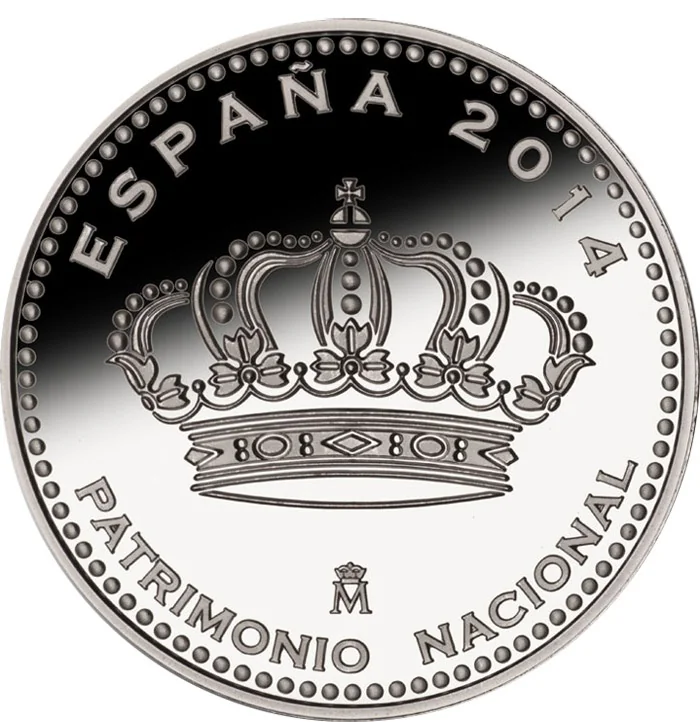
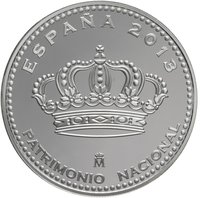
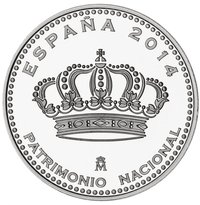
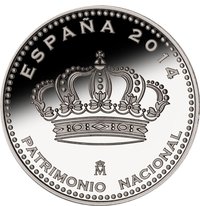
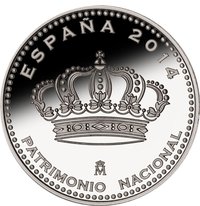
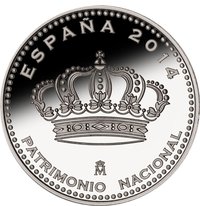
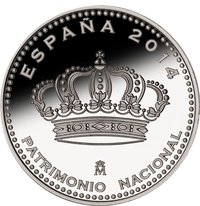
Obverse
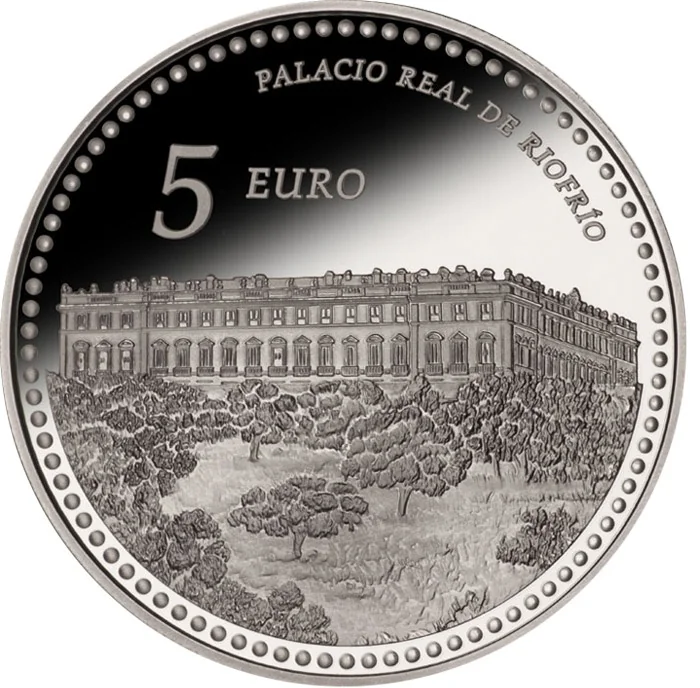
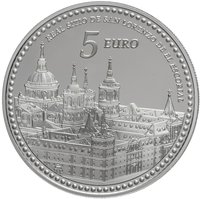
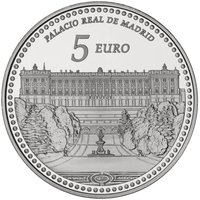
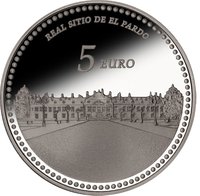
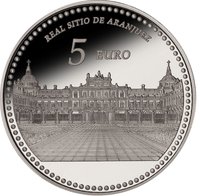
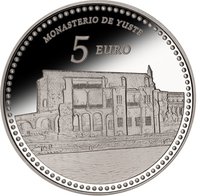
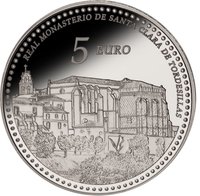
Reverse
Edge
Reeded
Mints
| Name | Mark |
|---|---|
| Royal Mint of Madrid | M |
Mintings
| Year | Mint Mark | Mintage | Quality | Collection |
|---|---|---|---|---|
| 2014 | M | 7,000 | Proof |
Historical background
In 2014, Spain was in its sixth year of grappling with the aftermath of the 2008 financial crisis, operating within the framework of the Eurozone's common currency, the euro. The immediate sovereign debt crisis of 2012 had been stabilized by the European Central Bank's (ECB) intervention, but the country remained under significant economic pressure. Key challenges included a stubbornly high unemployment rate, which peaked at over 26%, a large public debt burden exceeding 100% of GDP, and the ongoing task of restructuring a banking sector that had been crippled by the collapse of a massive property bubble. The euro's stability, managed by the ECB, provided a crucial shield against currency speculation, but it also meant Spain had relinquished monetary policy tools like devaluation to regain competitiveness.
Domestically, the currency situation was defined by austerity measures and internal devaluation. Without the ability to devalue the peseta, Spain was forced to implement painful structural reforms and wage cuts to reduce its unit labor costs and improve export competitiveness within the Eurozone. This period saw significant fiscal consolidation efforts to meet EU deficit targets, alongside a labor market reform aimed at making hiring and firing more flexible. While these measures contributed to a slow return to economic growth by 2014—with GDP expanding for the first time since 2008—they came at a high social cost, fueling public discontent and political fragmentation.
The broader Eurozone context was pivotal. In 2014, the ECB under Mario Draghi took further steps to support the currency union, including introducing negative deposit rates and preparing for a major quantitative easing (QE) program announced in early 2015. For Spain, this meant continued access to low borrowing costs in bond markets, as investor confidence slowly returned. The euro's strength was a double-edged sword: it ensured financial stability but also made Spanish exports more expensive outside the Eurozone. Ultimately, 2014 represented a fragile turning point where Spain exited a prolonged recession, yet the legacy of the crisis and the constraints of the common currency continued to shape its path to recovery.
Domestically, the currency situation was defined by austerity measures and internal devaluation. Without the ability to devalue the peseta, Spain was forced to implement painful structural reforms and wage cuts to reduce its unit labor costs and improve export competitiveness within the Eurozone. This period saw significant fiscal consolidation efforts to meet EU deficit targets, alongside a labor market reform aimed at making hiring and firing more flexible. While these measures contributed to a slow return to economic growth by 2014—with GDP expanding for the first time since 2008—they came at a high social cost, fueling public discontent and political fragmentation.
The broader Eurozone context was pivotal. In 2014, the ECB under Mario Draghi took further steps to support the currency union, including introducing negative deposit rates and preparing for a major quantitative easing (QE) program announced in early 2015. For Spain, this meant continued access to low borrowing costs in bond markets, as investor confidence slowly returned. The euro's strength was a double-edged sword: it ensured financial stability but also made Spanish exports more expensive outside the Eurozone. Ultimately, 2014 represented a fragile turning point where Spain exited a prolonged recession, yet the legacy of the crisis and the constraints of the common currency continued to shape its path to recovery.
Series: National Patrimony
✨ Legendary