

20 Paise – India
India
Context

Material
Diameter: 22 mm
Weight: 4.6 g
Thickness: 1.75 mm
Shape: Round
Composition: Nickel brass
Magnetic: No
Technique: Milled
Alignment: Medal alignment
flip
References
KM: #Click to copy to clipboard41
Numista: #1622
Value
Exchange value: 0.20 INR = $0.00
Inflation-adjusted value: 11.17 INR
Obverse
Description:
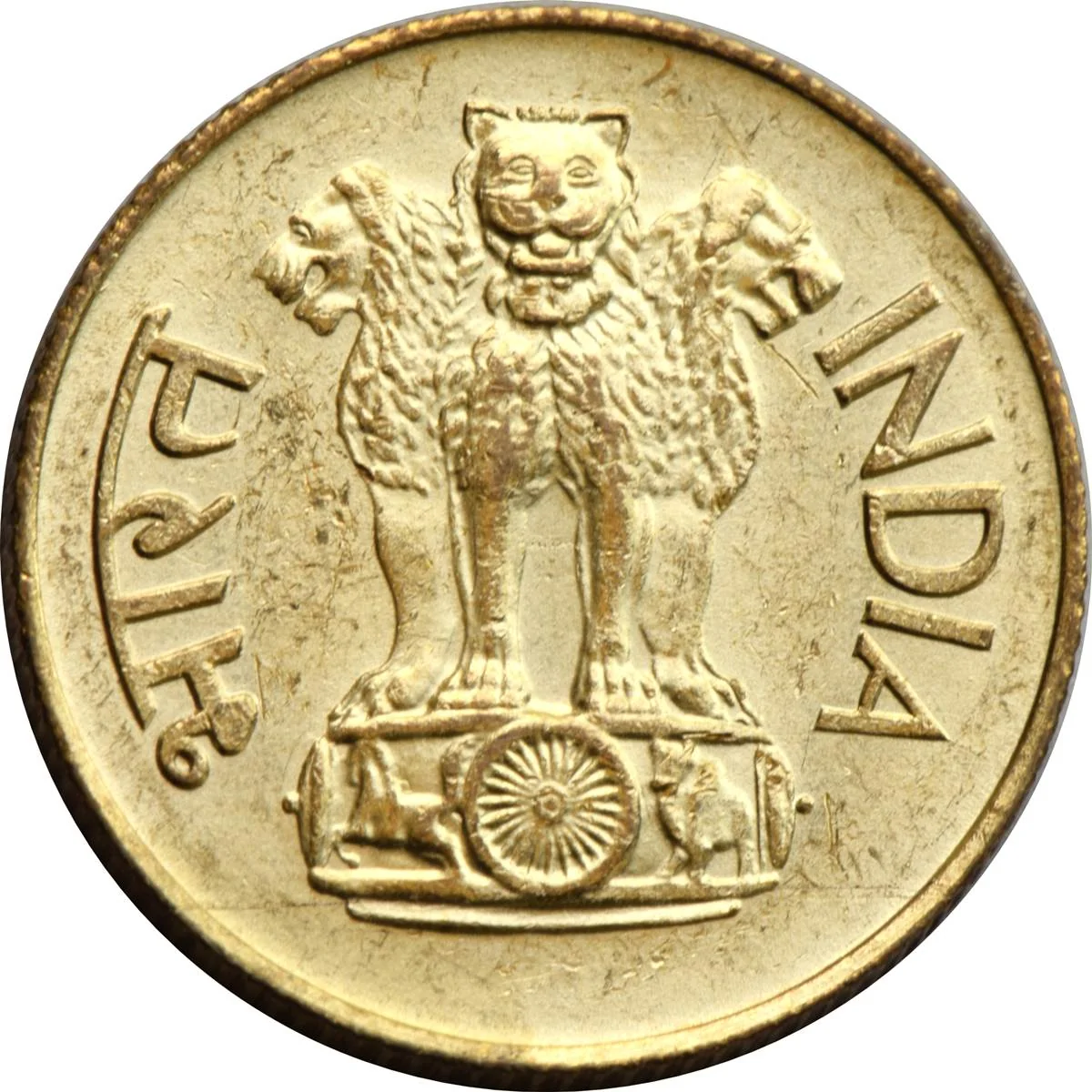
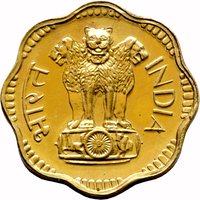
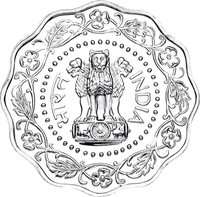
Ashoka pillar emblem with "India" inscribed.
Inscription:
भारत INDIA
Translation:
India
Scripts: Devanagari, Latin
Reverse
Description:
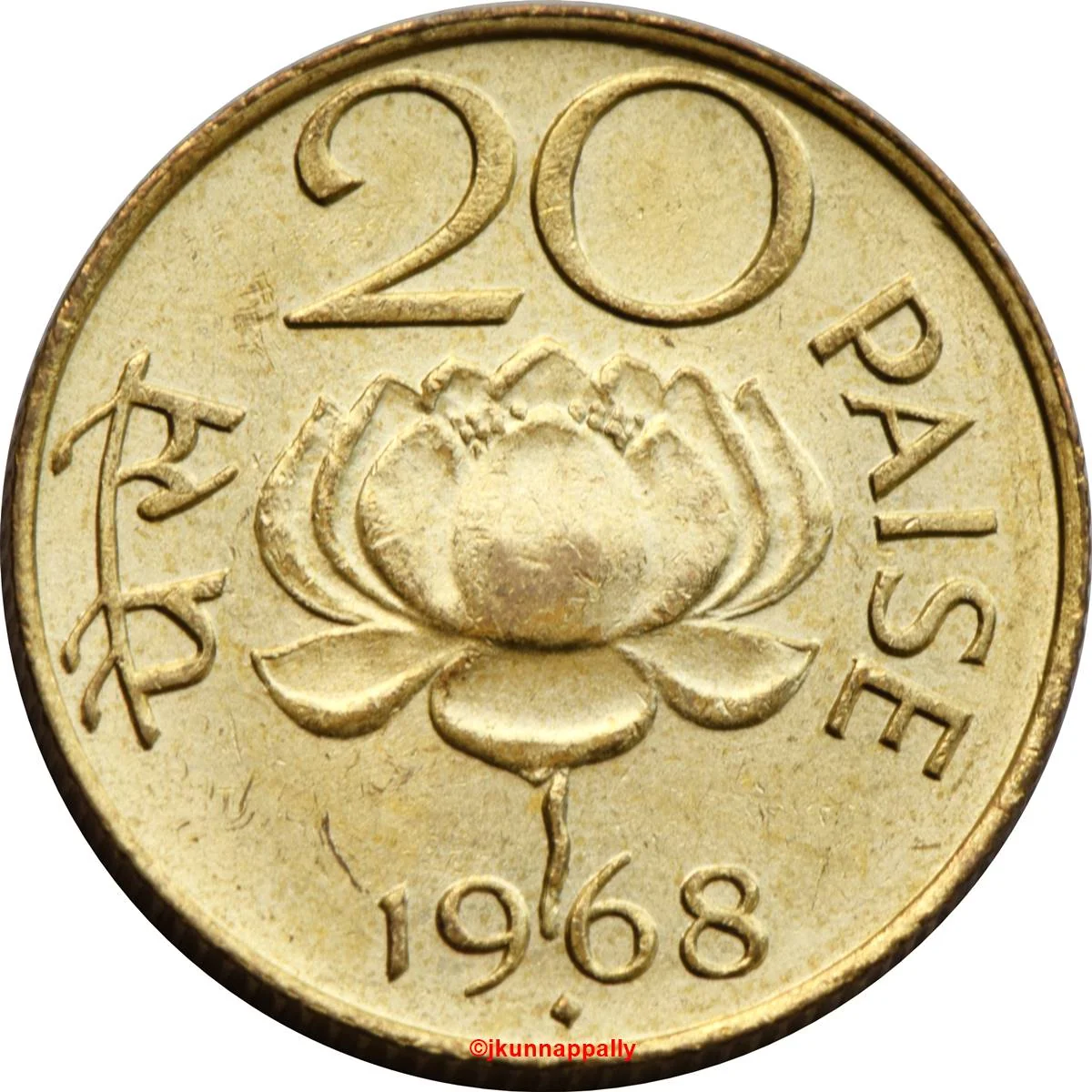
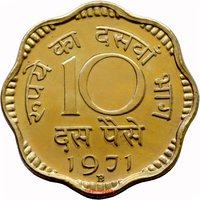
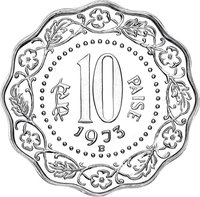
Lotus blossom with denomination above and sides, date above mintmark below.
Inscription:
20
पैसे PAISE
1968
पैसे PAISE
1968
Translation:
Twenty Paise
1968
1968
Scripts: Devanagari, Latin
Edge
Milled
Mints
| Name | Mark |
|---|---|
| Kolkata / Calcutta / Murshidabad | — |
| Hyderabad | * |
| Mumbai / Bombay | ♦ |
Mintings
Historical background
In 1968, India's currency situation was defined by the lingering effects of the 1966 devaluation of the rupee and the ongoing challenges of a planned economy with a fixed exchange rate. The devaluation, a condition for aid from the International Monetary Fund and the World Bank, had sharply reduced the rupee's value from 4.76 to 7.50 to the US dollar. The intended goals were to boost exports by making them cheaper and to curb imports by making them more expensive, thereby correcting a severe balance of payments crisis. However, by 1968, the results were mixed; while some export sectors saw growth, the overall trade deficit persisted, and the cost of essential imports like food and machinery had risen, contributing to inflationary pressures.
Domestically, the currency system operated under strict control, with the Reserve Bank of India managing a complex regime of licenses and regulations for foreign exchange. The rupee was not freely convertible, and all foreign exchange transactions were tightly controlled by the government to conserve scarce foreign reserves. This period was also marked by the continued prominence of high-denomination banknotes, including the ₹1,000 and ₹10,000 notes, which facilitated large transactions but also raised concerns about black money and tax evasion—issues that would later lead to policy actions.
Looking forward, 1968 was a year of cautious stabilization rather than dramatic change. The government, led by Prime Minister Indira Gandhi, focused on agricultural development following the Green Revolution and gradual industrial growth, hoping these would strengthen the economy's fundamentals and support the currency. The situation remained fragile, heavily dependent on monsoon rains and foreign aid, setting the stage for the economic and monetary challenges of the 1970s. The experience underscored the difficulties of managing a fixed exchange rate in the face of structural economic weaknesses.
Domestically, the currency system operated under strict control, with the Reserve Bank of India managing a complex regime of licenses and regulations for foreign exchange. The rupee was not freely convertible, and all foreign exchange transactions were tightly controlled by the government to conserve scarce foreign reserves. This period was also marked by the continued prominence of high-denomination banknotes, including the ₹1,000 and ₹10,000 notes, which facilitated large transactions but also raised concerns about black money and tax evasion—issues that would later lead to policy actions.
Looking forward, 1968 was a year of cautious stabilization rather than dramatic change. The government, led by Prime Minister Indira Gandhi, focused on agricultural development following the Green Revolution and gradual industrial growth, hoping these would strengthen the economy's fundamentals and support the currency. The situation remained fragile, heavily dependent on monsoon rains and foreign aid, setting the stage for the economic and monetary challenges of the 1970s. The experience underscored the difficulties of managing a fixed exchange rate in the face of structural economic weaknesses.
🌱 Very Common