

50 poisha – Bangladesh
Add to wishlist
Bangladesh
Context
Material
Diameter: 22 mm
Weight: 4 g
Shape: Round
Composition: Nickel brass
Magnetic: No
Technique: Milled
Alignment: Medal alignment
flip
References
KM: #
Numista: #16216
Value
Exchange value: 0.50 BDT
Obverse
Description:
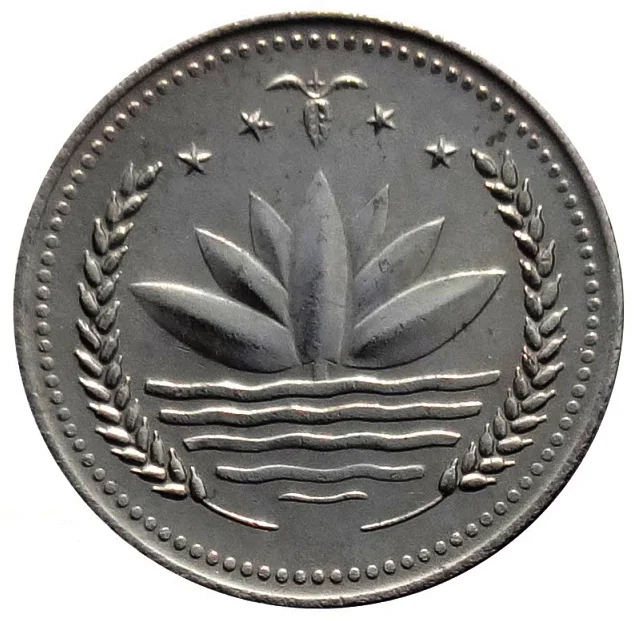
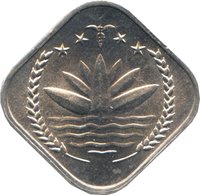
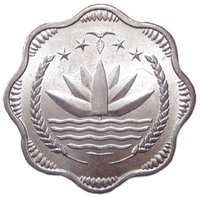
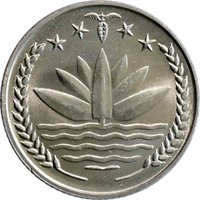
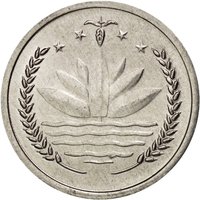
Bangladesh's national emblem features a water lily flanked by rice sheaves, topped with tea leaves and four stars symbolizing the 1972 constitutional principles: nationalism, secularism, socialism, and democracy.
Reverse
Edge
Reeded
Mints
| Name | Mark |
|---|---|
| Berlin | — |
Mintings
| Year | Mint Mark | Mintage | Quality | Collection |
|---|---|---|---|---|
| 1973 | — | 18,000,000 |
Historical background
In 1973, Bangladesh was grappling with the profound economic challenges of its nascent independence. The currency situation was particularly acute, as the country had recently introduced the Bangladeshi Taka in 1972, replacing the Pakistani Rupee. This move was a crucial symbol of sovereignty, but the new currency entered circulation in an economy devastated by the 1971 Liberation War, which had destroyed infrastructure, disrupted trade, and severely depleted foreign exchange reserves. The government, under Prime Minister Sheikh Mujibur Rahman, faced the immediate tasks of establishing monetary authority and financing reconstruction.
The primary policy was one of strict control. The Bangladesh Bank, established in late 1971, managed a fixed exchange rate system, pegging the Taka to the British Pound. However, this official rate was overvalued, which, combined with rampant scarcity of goods, fueled a thriving black market for foreign currency. The disparity between the official and black-market rates for US Dollars and other hard currencies was substantial, undermining formal trade and encouraging capital flight. Inflation was a severe problem, driven by deficit financing—printing money to fund government spending—as revenue sources were extremely limited.
Consequently, 1973 represented a period of fragile monetary foundation. The currency regime was characterized by a widening gap between policy intent and economic reality. While the Taka was the legitimate national currency, its value and stability were under immense pressure from structural deficits, low export earnings (primarily from jute), and a heavy reliance on imports for essential goods. This precarious situation set the stage for the economic difficulties that would intensify in the coming years, preceding more significant reforms and eventual devaluations.
The primary policy was one of strict control. The Bangladesh Bank, established in late 1971, managed a fixed exchange rate system, pegging the Taka to the British Pound. However, this official rate was overvalued, which, combined with rampant scarcity of goods, fueled a thriving black market for foreign currency. The disparity between the official and black-market rates for US Dollars and other hard currencies was substantial, undermining formal trade and encouraging capital flight. Inflation was a severe problem, driven by deficit financing—printing money to fund government spending—as revenue sources were extremely limited.
Consequently, 1973 represented a period of fragile monetary foundation. The currency regime was characterized by a widening gap between policy intent and economic reality. While the Taka was the legitimate national currency, its value and stability were under immense pressure from structural deficits, low export earnings (primarily from jute), and a heavy reliance on imports for essential goods. This precarious situation set the stage for the economic difficulties that would intensify in the coming years, preceding more significant reforms and eventual devaluations.
🌱 Common