

1000 rupiah – Indonesia
Add to wishlist
Indonesia
Context
Material

References
KM: #
Numista: #16213
Value
Exchange value: 1000 IDR
Inflation-adjusted value: 1823.11 IDR
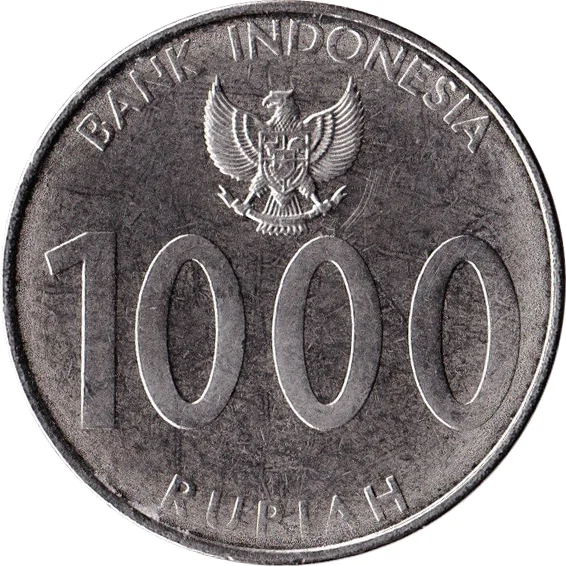
Obverse
Description:
The Indonesian coat of arms motto
Inscription:
BANK INDONESIA
1000
RUPIAH
1000
RUPIAH
Translation:
BANK INDONESIA
1000
RUPIAH
1000
RUPIAH
Script: Latin
Languages: Indonesian, English
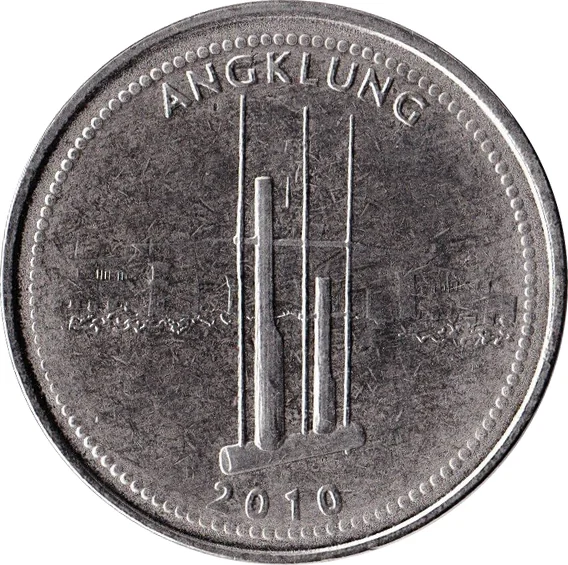
Reverse
Description:
The Angklung, a musical instrument, and the Gedung Sate, a public building in Bandung, West Java.
Inscription:
ANGKLUNG
2010
2010
Script: Latin
Edge
Plain
Mints
| Name | Mark |
|---|---|
| Perum Peruri | — |
Mintings
| Year | Mint Mark | Mintage | Quality | Collection |
|---|---|---|---|---|
| 2010 | — | 719,000,000 |
Historical background
In 2010, Indonesia's currency, the rupiah (IDR), demonstrated notable resilience and strength, marking a period of robust economic performance in the post-Global Financial Crisis (GFC) recovery. The year began with the IDR trading around 9,400 per US dollar and appreciated significantly, breaking past the psychologically important 9,000 barrier by mid-year and reaching a three-year high near 8,900 by year-end. This appreciation was driven by strong capital inflows into Indonesian stocks and bonds, attracted by the country's solid economic growth—which exceeded 6%—and higher yields compared to developed markets. Furthermore, rising global commodity prices benefited Indonesia's export revenues, improving the current account and bolstering foreign exchange reserves.
However, this strength presented a policy dilemma for Bank Indonesia (BI), the central bank. A rapidly appreciating currency threatened to make Indonesian exports less competitive and could dampen the nascent recovery of the manufacturing sector. In response, BI implemented a series of interventions and policy measures aimed at tempering the rupiah's volatility and preventing excessive hot money inflows. These included intervening directly in the foreign exchange market to buy US dollars, which also helped build reserves, and introducing a holding period for certain central bank certificates (SBIs) to discourage short-term speculative capital. The government also encouraged domestic companies to utilize foreign exchange earnings for capital expenditure to support growth.
Despite these stabilization efforts, the year ended with underlying concerns about the sustainability of the inflows and potential overheating. The strong rupiah, while curbing imported inflation, masked persistent structural challenges, including a reliance on commodity exports and a need for infrastructure investment. The buoyant conditions of 2010, therefore, set the stage for increased volatility in the following years, as global risk sentiment shifted and Indonesia's current account later moved into deficit, testing the central bank's ability to manage the currency amidst changing external pressures.
However, this strength presented a policy dilemma for Bank Indonesia (BI), the central bank. A rapidly appreciating currency threatened to make Indonesian exports less competitive and could dampen the nascent recovery of the manufacturing sector. In response, BI implemented a series of interventions and policy measures aimed at tempering the rupiah's volatility and preventing excessive hot money inflows. These included intervening directly in the foreign exchange market to buy US dollars, which also helped build reserves, and introducing a holding period for certain central bank certificates (SBIs) to discourage short-term speculative capital. The government also encouraged domestic companies to utilize foreign exchange earnings for capital expenditure to support growth.
Despite these stabilization efforts, the year ended with underlying concerns about the sustainability of the inflows and potential overheating. The strong rupiah, while curbing imported inflation, masked persistent structural challenges, including a reliance on commodity exports and a need for infrastructure investment. The buoyant conditions of 2010, therefore, set the stage for increased volatility in the following years, as global risk sentiment shifted and Indonesia's current account later moved into deficit, testing the central bank's ability to manage the currency amidst changing external pressures.




🌱 Very Common