

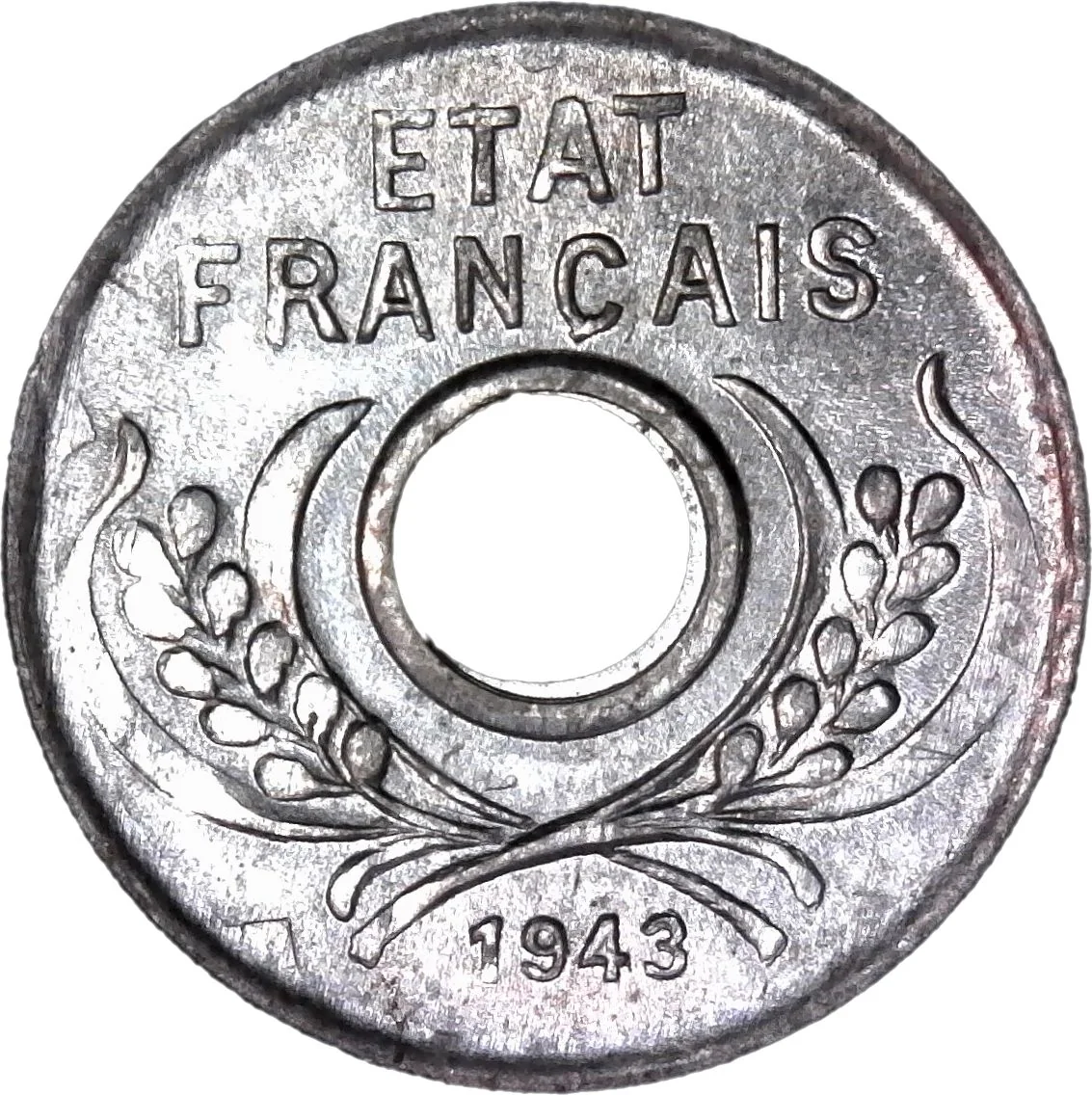
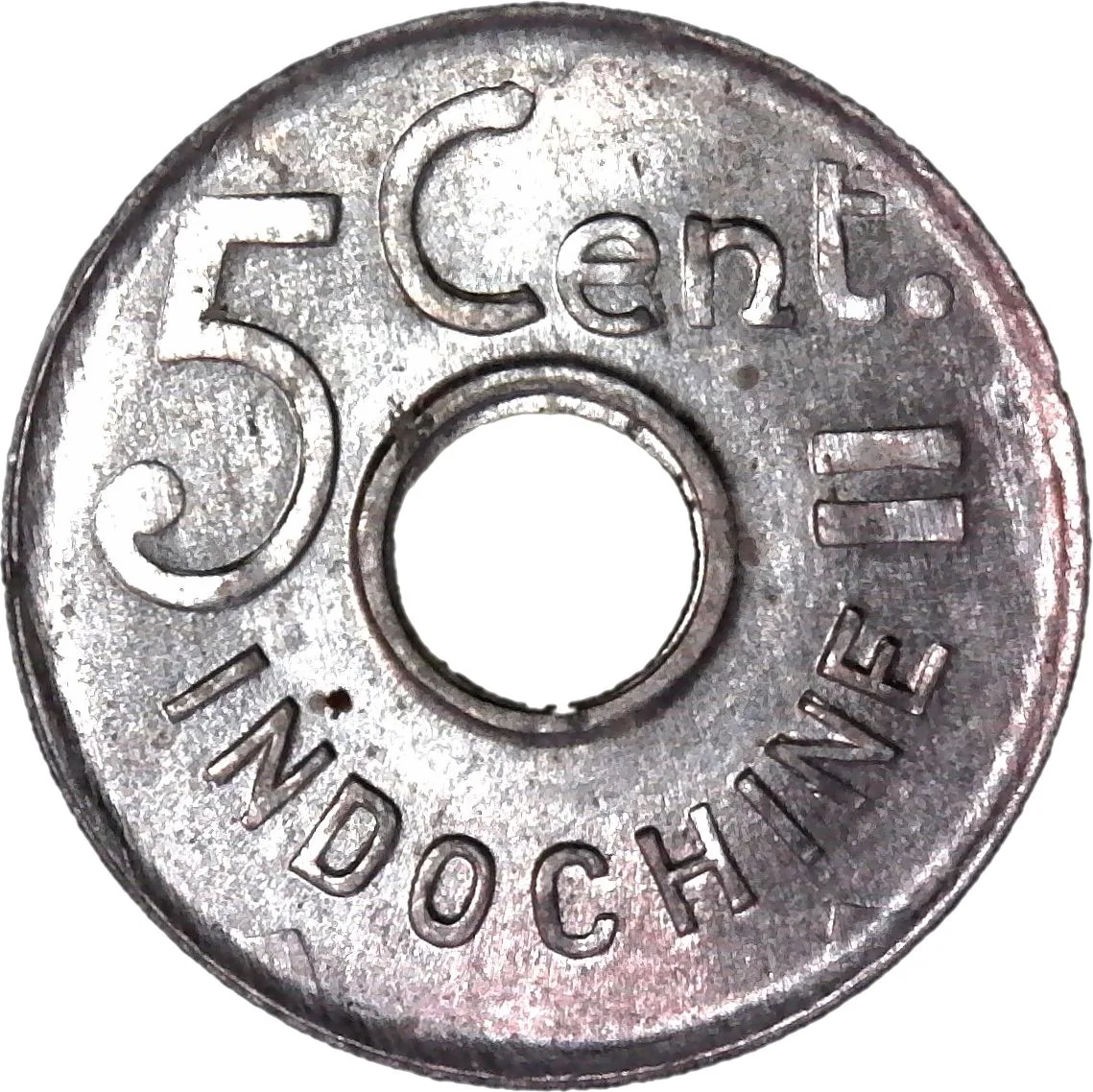
5 cents – French Indochina
Add to wishlist
Context
Material
Diameter: 20.5 mm
Weight: 0.7 g
Thickness: 1.15 mm
Shape: Round with a round hole
Composition: Aluminium
Magnetic: No
Technique: Milled
Alignment: Coin alignment
flip
References
KM: #
Numista: #10588
Value
Exchange value: 0.05 ICFP
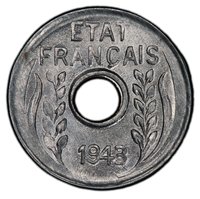
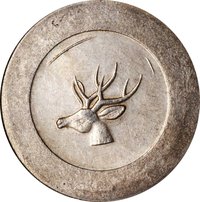
Obverse
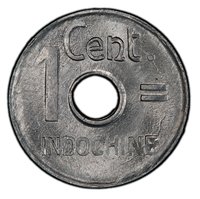
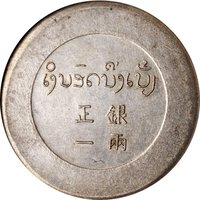
Reverse
Edge
Plain
Mints
| Name | Mark |
|---|---|
| Hanoi | — |
Mintings
| Year | Mint Mark | Mintage | Quality | Collection |
|---|---|---|---|---|
| 1943 | — | — |
Historical background
In 1943, the currency situation in French Indochina was a complex and deteriorating system under the dual pressures of Japanese occupation and Vichy French colonial administration. Officially, the currency remained the French Indochinese Piastre (ICPI), issued by the Banque de l'Indochine. However, its stability had been severely compromised. To finance their military occupation and procure local resources, Japanese forces compelled the Banque de l'Indochine to provide massive, unsecured advances. This was facilitated through a special account, effectively forcing the bank to print currency to cover the Japanese expenditures, leading to rampant inflation and a growing disconnect between the printed money and the colony's real economic output.
The monetary landscape became a tangled hierarchy of currencies. Alongside the increasingly devalued piastre, the Japanese introduced their own military scrip, the Japanese Military Yen (JMY), which circulated at a forced, artificial parity with the piastre. This created a dual-currency system where both forms of money were losing value, but the JMY was particularly distrusted by the local population. Furthermore, hoarding of silver piastres and a retreat into barter trade became common as inflation eroded purchasing power, especially for essential goods which were scarce due to wartime blockades and the Japanese prioritization of resource extraction.
This unstable financial environment served as a significant factor in rising social discontent and hardship. The Vichy French authorities, while retaining nominal administrative control, had no power to refuse Japanese financial demands, making them complicit in the inflationary spiral in the eyes of the local populace. The currency crisis of 1943 thus weakened the legitimacy of the colonial regime, exacerbated economic suffering, and laid the groundwork for the severe hyperinflation and monetary chaos that would engulf the region in the final years of the war and its immediate aftermath.
The monetary landscape became a tangled hierarchy of currencies. Alongside the increasingly devalued piastre, the Japanese introduced their own military scrip, the Japanese Military Yen (JMY), which circulated at a forced, artificial parity with the piastre. This created a dual-currency system where both forms of money were losing value, but the JMY was particularly distrusted by the local population. Furthermore, hoarding of silver piastres and a retreat into barter trade became common as inflation eroded purchasing power, especially for essential goods which were scarce due to wartime blockades and the Japanese prioritization of resource extraction.
This unstable financial environment served as a significant factor in rising social discontent and hardship. The Vichy French authorities, while retaining nominal administrative control, had no power to refuse Japanese financial demands, making them complicit in the inflationary spiral in the eyes of the local populace. The currency crisis of 1943 thus weakened the legitimacy of the colonial regime, exacerbated economic suffering, and laid the groundwork for the severe hyperinflation and monetary chaos that would engulf the region in the final years of the war and its immediate aftermath.
🌱 Common