

½ gulden – Netherlands
Add to wishlist
Netherlands
Context
Years: 1910–1919
Issuer: Netherlands
Ruler: Wilhelmina
Currency:
(1817—2001)
Demonetized: Yes
Total mintage: 24,000,000
Material
References
KM: #
Numista: #16124
Value
Exchange value: ½ NLG
Bullion value: $12.07
Obverse
Description:
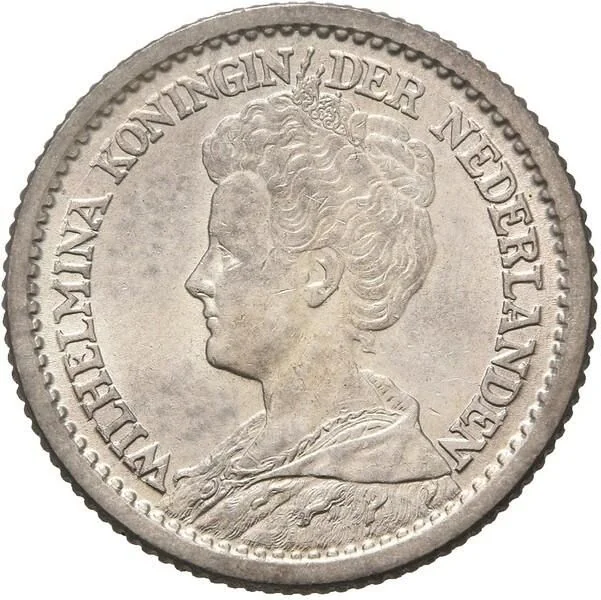
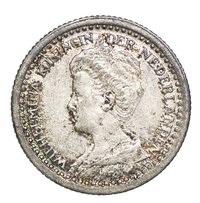
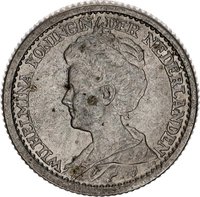
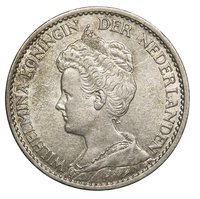
Queen Wilhelmina in tiara and ermine, facing left.
Inscription:
WILHELMINA KONINGIN DER NEDERLANDEN
Translation:
Wilhelmina Queen of the Netherlands
Script: Latin
Language: Dutch
Engraver: Johannes Cornelis Wienecke
Reverse
Edge
Reeded
Categories
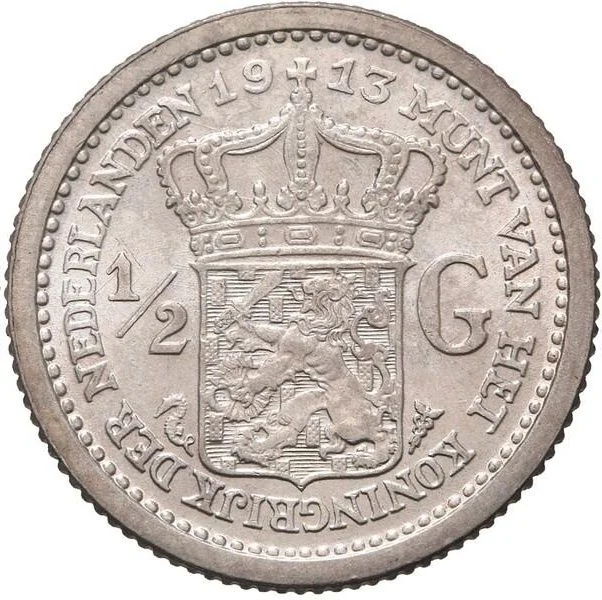
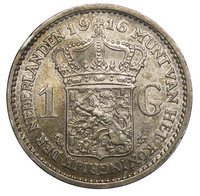
| Symbol> Crown |
| Symbols> Coat of Arms |
Mints
| Name | Mark |
|---|---|
| Royal Dutch Mint | — |
Mintings
| Year | Mint Mark | Mintage | Quality | Collection |
|---|---|---|---|---|
| 1910 | — | 4,000,000 | ||
| 1912 | — | 4,000,000 | ||
| 1913 | — | 8,000,000 | ||
| 1919 | — | 8,000,000 |
Historical background
In 1910, the Netherlands operated under the classical gold standard, a system it had adhered to since 1875. This meant the Dutch guilder (gulden) had a fixed value defined by a specific quantity of gold, ensuring both domestic price stability and international credibility. The country's central bank, De Nederlandsche Bank (DNB), was legally obligated to exchange banknotes for gold on demand, and the money supply was directly tied to the nation's gold reserves. This framework facilitated smooth trade and investment flows, anchoring the Netherlands firmly within the global financial system of the era.
Economically, the period was one of general prosperity and growth, with the guilder considered a strong and reliable currency. The Netherlands benefited from its extensive colonial empire, particularly the Dutch East Indies (modern-day Indonesia), which was a major source of wealth and contributed to the balance of payments. However, the system was not without underlying tensions. The strict gold standard limited the government's and central bank's ability to respond to economic downturns with monetary policy, as interest rates were primarily set to protect gold reserves rather than stimulate the domestic economy.
Looking ahead, the stability of 1910 was on the cusp of profound change. The outbreak of the First World War in 1914 would shatter the international gold standard, forcing the Netherlands—which remained neutral—to suspend gold convertibility to protect its reserves. This marked the beginning of the end for the pre-war monetary order, setting the stage for the financial turbulence and eventual restructuring that would characterize the 1920s and 1930s. Thus, the currency situation in 1910 represented the final years of a confident, gold-backed monetary regime soon to be eclipsed by the forces of global conflict.
Economically, the period was one of general prosperity and growth, with the guilder considered a strong and reliable currency. The Netherlands benefited from its extensive colonial empire, particularly the Dutch East Indies (modern-day Indonesia), which was a major source of wealth and contributed to the balance of payments. However, the system was not without underlying tensions. The strict gold standard limited the government's and central bank's ability to respond to economic downturns with monetary policy, as interest rates were primarily set to protect gold reserves rather than stimulate the domestic economy.
Looking ahead, the stability of 1910 was on the cusp of profound change. The outbreak of the First World War in 1914 would shatter the international gold standard, forcing the Netherlands—which remained neutral—to suspend gold convertibility to protect its reserves. This marked the beginning of the end for the pre-war monetary order, setting the stage for the financial turbulence and eventual restructuring that would characterize the 1920s and 1930s. Thus, the currency situation in 1910 represented the final years of a confident, gold-backed monetary regime soon to be eclipsed by the forces of global conflict.
🌱 Fairly Common