

25 Paise – India
India
Context

Material
Diameter: 19 mm
Weight: 2.83 g
Thickness: 1.55 mm
Shape: Round
Composition: Stainless steel
Technique: Milled
Alignment: Medal alignment
flip
References
KM: #Click to copy to clipboard54
Numista: #1610
Value
Exchange value: 0.25 INR = $0.00
Inflation-adjusted value: 3.31 INR
Obverse
Description:
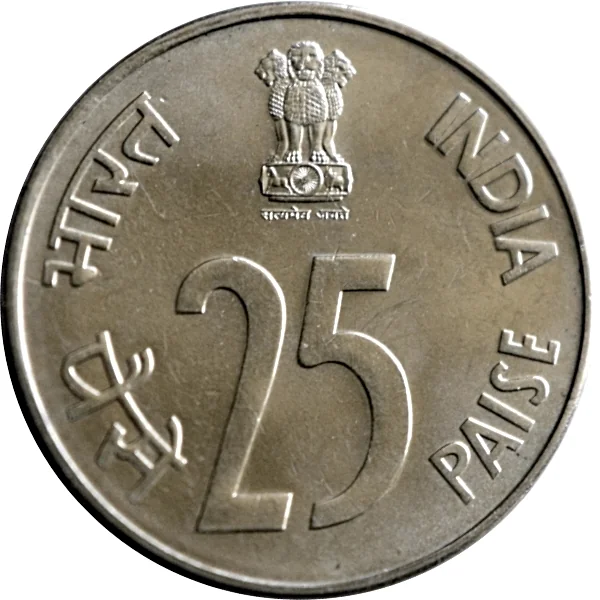
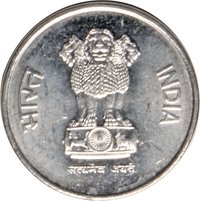
Ashoka pillar above the denomination.
Inscription:
भारत INDIA
सत्यमेव जयते
पैसे 25 PAISE
सत्यमेव जयते
पैसे 25 PAISE
Translation:
India
Truth Alone Triumphs
Twenty-Five Paise
Truth Alone Triumphs
Twenty-Five Paise
Scripts: Devanagari, Latin
Reverse
Edge
Plain
Mints
| Name | Mark |
|---|---|
| Kolkata / Calcutta / Murshidabad | — |
| Hyderabad | * |
| Noida | ° |
| Mumbai / Bombay | ♦ |
| Royal Canadian Mint of Ottawa | C |
Mintings
| Year | Mint Mark | Mintage | Quality | Collection |
|---|---|---|---|---|
| 1988 | — | 18,920,000 | ||
| 1988 | * | — | ||
| 1988 | ° | — | ||
| 1988 | ♦ | — | ||
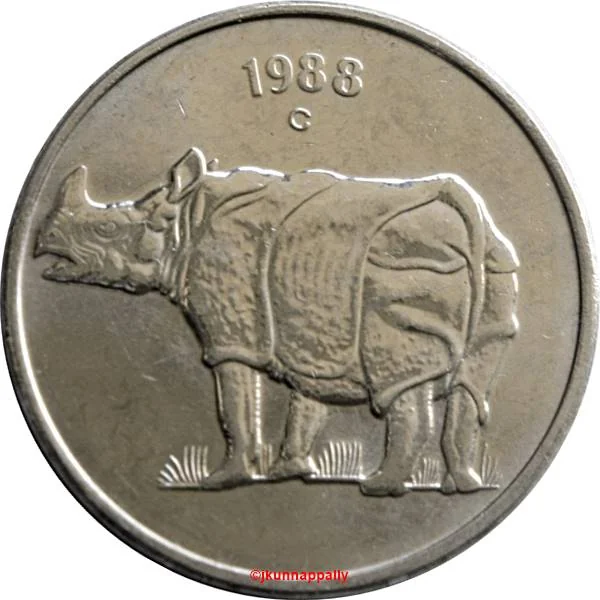
| 1988 | C | 305,280,000 | ||
| 1989 | ° | — | ||
| 1989 | ♦ | — | ||
| 1989 | — | — | ||
| 1989 | * | — | ||
| 1990 | — | — | ||
| 1990 | * | — | ||
| 1990 | ° | — | ||
| 1990 | ♦ | — | ||
| 1991 | — | — | ||
| 1991 | * | — | ||
| 1991 | ° | — | ||
| 1991 | ♦ | — | ||
| 1992 | — | — | ||
| 1992 | * | — | ||
| 1992 | ° | — | ||
| 1992 | ♦ | — | ||
| 1993 | * | — | ||
| 1993 | ° | — | ||
| 1993 | — | — | ||
| 1993 | ♦ | — | ||
| 1994 | ° | — | ||
| 1994 | * | — | ||
| 1994 | ♦ | — | ||
| 1994 | — | — | ||
| 1995 | — | — | ||
| 1995 | * | — | ||
| 1995 | ° | — | ||
| 1995 | ♦ | — | ||
| 1996 | — | — | ||
| 1996 | * | — | ||
| 1996 | ° | — | ||
| 1996 | ♦ | — | ||
| 1997 | — | — | ||
| 1997 | * | — | ||
| 1997 | ° | — | ||
| 1997 | ♦ | — | ||
| 1998 | ♦ | — | ||
| 1998 | ° | — | ||
| 1998 | — | — | ||
| 1998 | * | — | ||
| 1999 | — | — | ||
| 1999 | * | — | ||
| 1999 | ° | — | ||
| 1999 | ♦ | — | ||
| 2000 | * | — | ||
| 2000 | ° | — | ||
| 2000 | — | — | ||
| 2000 | ♦ | — | ||
| 2001 | * | — | ||
| 2001 | ♦ | — | ||
| 2001 | — | — | ||
| 2002 | — | — | ||
| 2002 | * | — | ||
| 2002 | ♦ | — |
Historical background
In 1988, India's currency situation was characterized by a tightly controlled and protected financial system, operating under the broader framework of a planned, mixed economy. The Indian Rupee (INR) was not fully convertible; its exchange rate was managed by the Reserve Bank of India (RBI) and pegged to a basket of currencies of major trading partners, primarily to ensure stability rather than reflect market forces. This period saw a complex web of regulations, including the Foreign Exchange Regulation Act (FERA) of 1973, which strictly limited foreign currency holdings and transactions for both individuals and businesses, aiming to conserve scarce foreign exchange reserves.
Economically, the late 1980s were a period of growing strain that set the stage for the later crisis of 1991. While the Rajiv Gandhi government had introduced some liberalizing measures in the mid-80s, the fiscal deficit was widening due to increased government spending and subsidies. This led to a rising current account deficit and mounting external debt, which began to put significant pressure on the country's foreign exchange reserves. The currency regime, while stable on the surface, was becoming increasingly unsustainable, propped up by borrowing and restrictive controls that stifled trade and investment.
Consequently, a dual exchange rate system existed in practice, with the official RBI rate coexisting with a thriving black market for foreign currency, especially US dollars. The premium on the black market rate was a clear indicator of the overvaluation of the official rupee and the pent-up demand for foreign exchange. Thus, in 1988, the currency situation was one of managed stability but underlying fragility, representing the final years of an inward-looking economic model before the balance of payments crisis of 1991 would force the landmark liberalization reforms, including a major devaluation and a shift towards current account convertibility.
Economically, the late 1980s were a period of growing strain that set the stage for the later crisis of 1991. While the Rajiv Gandhi government had introduced some liberalizing measures in the mid-80s, the fiscal deficit was widening due to increased government spending and subsidies. This led to a rising current account deficit and mounting external debt, which began to put significant pressure on the country's foreign exchange reserves. The currency regime, while stable on the surface, was becoming increasingly unsustainable, propped up by borrowing and restrictive controls that stifled trade and investment.
Consequently, a dual exchange rate system existed in practice, with the official RBI rate coexisting with a thriving black market for foreign currency, especially US dollars. The premium on the black market rate was a clear indicator of the overvaluation of the official rupee and the pent-up demand for foreign exchange. Thus, in 1988, the currency situation was one of managed stability but underlying fragility, representing the final years of an inward-looking economic model before the balance of payments crisis of 1991 would force the landmark liberalization reforms, including a major devaluation and a shift towards current account convertibility.
🌱 Very Common