

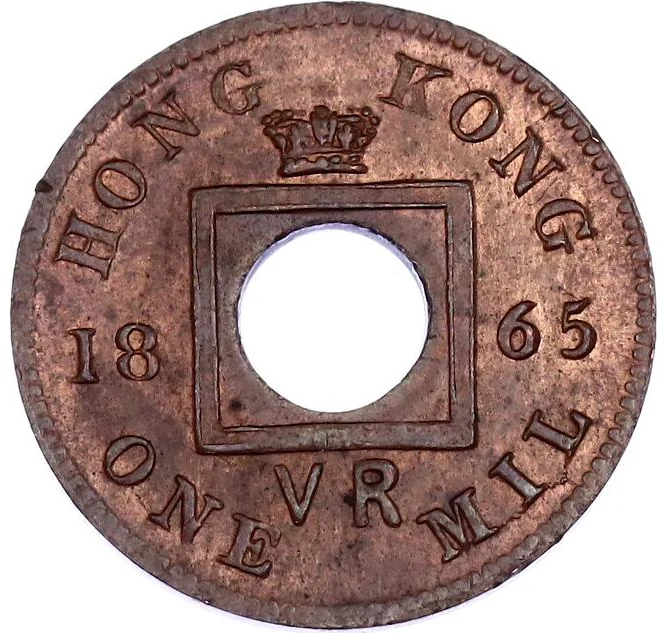
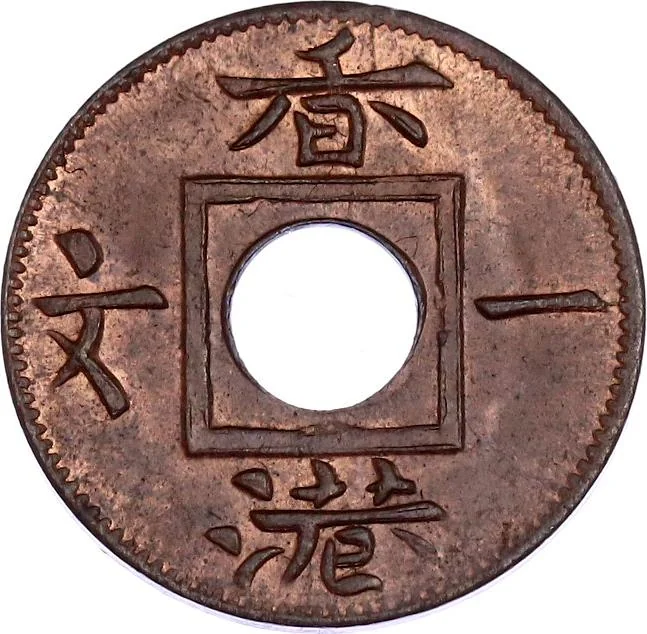
1 Mil – Hong Kong
China
Context


Material
Diameter: 15 mm
Weight: 1 g
Thickness: 1 mm
Shape: Round with a round hole
Composition: Bronze
Magnetic: No
Technique: Milled
Alignment: Medal alignment
flip
References
KM: #Click to copy to clipboard2
Numista: #16048
Value
Exchange value: 0.001 HKD = $0.00
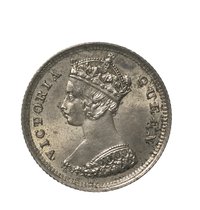
Obverse
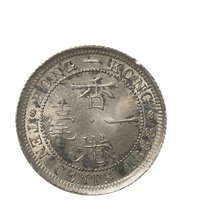
Reverse
Edge
Plain
Mintings
| Year | Mint Mark | Mintage | Quality | Collection |
|---|---|---|---|---|
| 1865 | — | 40,000,000 |
Historical background
In 1865, Hong Kong's currency situation was a complex and often chaotic reflection of its status as a burgeoning British colonial entrepôt. There was no single, unified currency. Instead, the monetary system was a jumble of various silver coins circulating simultaneously. The most important was the Mexican silver dollar, a legacy of the China trade, which served as the de facto standard. Alongside it circulated British silver coins (like shillings and rupees from other colonies), Chinese silver sycee (bulion in shoe-shaped ingots), and a multitude of copper cash for small, everyday transactions. This proliferation created constant difficulties in commerce, requiring merchants to assay the weight and purity of coins and leading to fluctuating exchange rates between the different forms of money.
The instability of this system directly led to a major institutional development: the founding of The Hongkong and Shanghai Banking Corporation (HSBC) in March of that year. A key impetus for its establishment, as stated in its founding ordinance, was "the want of adequate Banking arrangements in the Colony." The existing banks, primarily branches of larger foreign institutions, were reluctant to issue banknotes denominated in the local dollar, creating a credit shortage. HSBC was founded by local merchants precisely to provide such a currency and to finance the growing trade between China, Europe, and the wider region, with a firm mandate to operate within and stabilize the local monetary environment.
Therefore, 1865 stands as a pivotal year of transition. While the old, fragmented system of physical silver remained dominant in daily use, the foundation was laid for its eventual modernization. HSBC began issuing its own banknotes, denominated in dollars, which would gradually gain acceptance and help standardize the unit of account. This move, coupled with the colony's official adoption of a silver dollar standard (though not yet minting its own), marked the beginning of a slow shift from a purely commodity-based currency towards a managed banknote system, seeking to bring order to the financial chaos that accompanied Hong Kong's rapid commercial growth.
The instability of this system directly led to a major institutional development: the founding of The Hongkong and Shanghai Banking Corporation (HSBC) in March of that year. A key impetus for its establishment, as stated in its founding ordinance, was "the want of adequate Banking arrangements in the Colony." The existing banks, primarily branches of larger foreign institutions, were reluctant to issue banknotes denominated in the local dollar, creating a credit shortage. HSBC was founded by local merchants precisely to provide such a currency and to finance the growing trade between China, Europe, and the wider region, with a firm mandate to operate within and stabilize the local monetary environment.
Therefore, 1865 stands as a pivotal year of transition. While the old, fragmented system of physical silver remained dominant in daily use, the foundation was laid for its eventual modernization. HSBC began issuing its own banknotes, denominated in dollars, which would gradually gain acceptance and help standardize the unit of account. This move, coupled with the colony's official adoption of a silver dollar standard (though not yet minting its own), marked the beginning of a slow shift from a purely commodity-based currency towards a managed banknote system, seeking to bring order to the financial chaos that accompanied Hong Kong's rapid commercial growth.
⭐ Somewhat Rare