

20 centavos – Mozambique
Add to wishlist
Mozambique
Context
Year: 1941
Issuer: Mozambique
Period:
(1910—1951)
Currency:
(1911—1974)
Demonetization: 1975
Total mintage: 2,000,000
Material
References
KM: #
Numista: #16035
Obverse
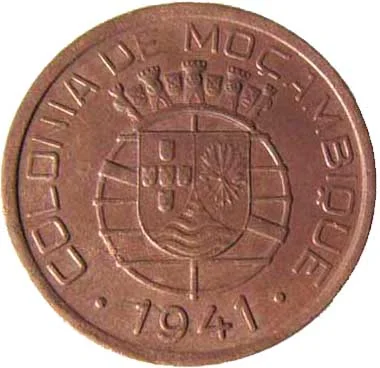
Description:
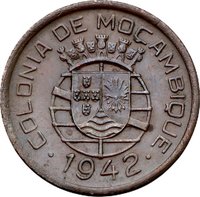
Crowned globe enclosing arms.
Inscription:
· COLONIA DE MOÇAMBIQUE ·
1941
1941
Translation:
Colony of Mozambique
1941
1941
Script: Latin
Language: Portuguese
Reverse
Description:
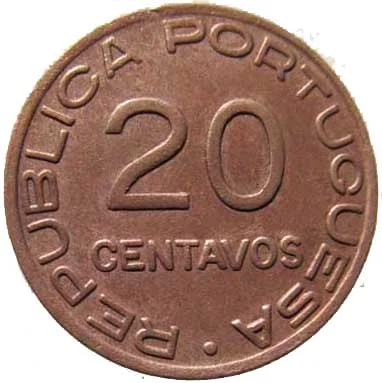
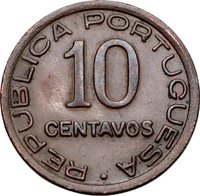
Central value, encircled legend.
Inscription:
REPUBLICA PORTUGUESA
20
CENTAVOS
20
CENTAVOS
Translation:
Portuguese Republic
20
Cents
20
Cents
Script: Latin
Language: Portuguese
Edge
Plain
Mintings
| Year | Mint Mark | Mintage | Quality | Collection |
|---|---|---|---|---|
| 1941 | — | 2,000,000 |
Historical background
In 1941, Mozambique, as a colony of Portugal, was integrated into the Portuguese Empire's monetary system. The official currency was the Portuguese escudo, which had replaced the real in 1911. However, the colony's economy operated under a distinct branch of the Banco Nacional Ultramarino (BNU), which issued banknotes specifically for Mozambique. These notes were denominated in escudos but were physically different from those circulating in mainland Portugal, representing a colonial currency pegged to and controlled by the metropole.
The economic context of 1941 was heavily shaped by World War II. While Portugal was officially neutral, its colonies, including Mozambique, were affected by global disruptions to trade and shipping. The colony's primary economic roles were as a supplier of agricultural commodities (like cotton and sugar) and a geographic conduit for Allied trade due to its strategic ports, particularly Lourenço Marques (now Maputo). This position likely increased the flow of foreign currencies, especially British pounds and South African pounds, in commercial circles, but the official monetary policy remained firmly under Lisbon's control.
Internally, the currency system reflected the territory's social and economic stratification. The escudo banknotes facilitated the formal colonial economy and administration. However, in many rural and indigenous communities, barter and traditional forms of exchange persisted alongside the colonial currency, especially for local and subsistence transactions. Thus, the monetary situation was dualistic: a centrally managed colonial escudo for official trade and taxation, coexisting with non-monetary economies and influenced by wartime pressures on international commerce.
The economic context of 1941 was heavily shaped by World War II. While Portugal was officially neutral, its colonies, including Mozambique, were affected by global disruptions to trade and shipping. The colony's primary economic roles were as a supplier of agricultural commodities (like cotton and sugar) and a geographic conduit for Allied trade due to its strategic ports, particularly Lourenço Marques (now Maputo). This position likely increased the flow of foreign currencies, especially British pounds and South African pounds, in commercial circles, but the official monetary policy remained firmly under Lisbon's control.
Internally, the currency system reflected the territory's social and economic stratification. The escudo banknotes facilitated the formal colonial economy and administration. However, in many rural and indigenous communities, barter and traditional forms of exchange persisted alongside the colonial currency, especially for local and subsistence transactions. Thus, the monetary situation was dualistic: a centrally managed colonial escudo for official trade and taxation, coexisting with non-monetary economies and influenced by wartime pressures on international commerce.
🌱 Fairly Common