

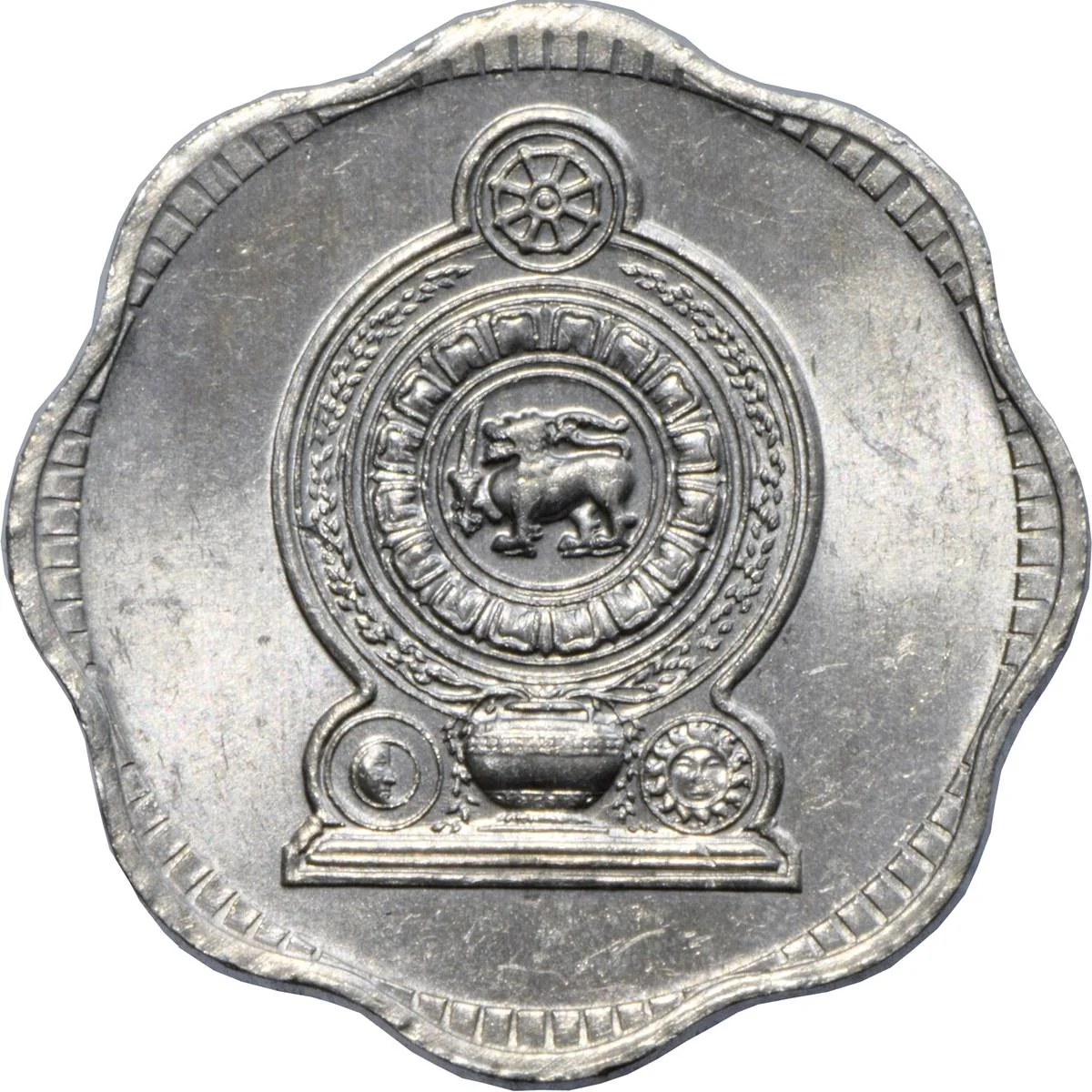
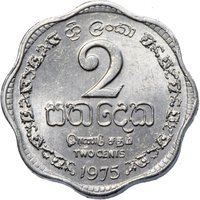
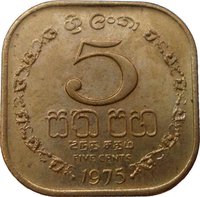
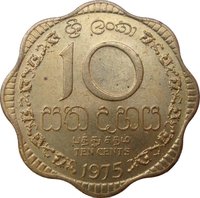
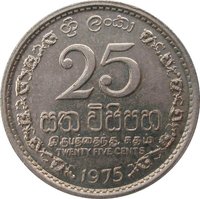
Obverse
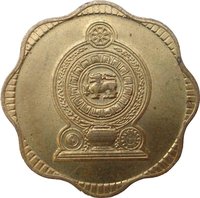
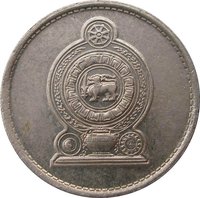
Description:
Arms
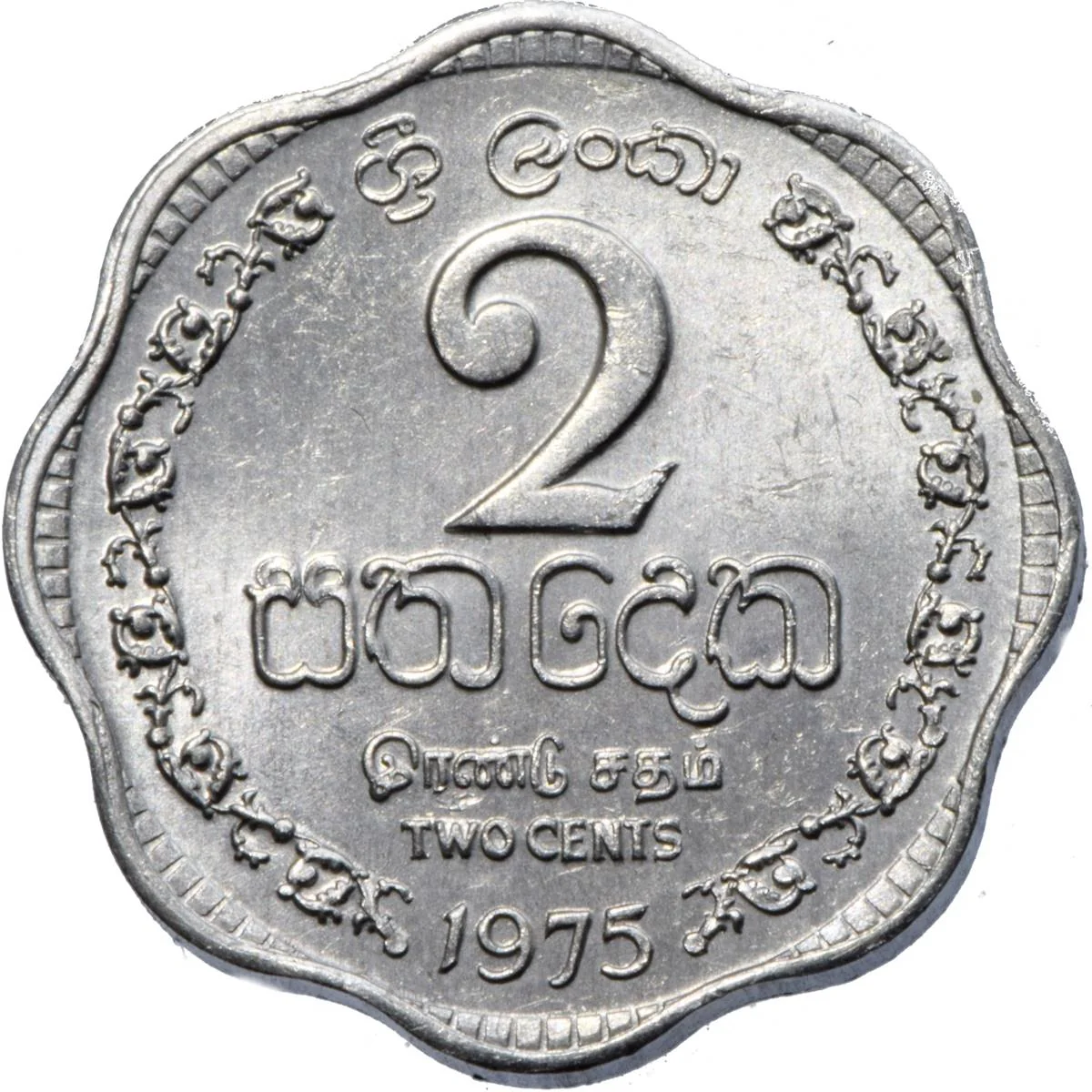
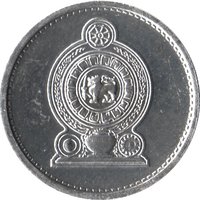
Reverse
Edge
Plain
Mints
| Name | Mark |
|---|---|
| Royal Mint | — |
Mintings
| Year | Mint Mark | Mintage | Quality | Collection |
|---|---|---|---|---|
| 1975 | — | 62,503,000 | ||
| 1978 | — | 23,425,000 | ||
| 1978 | — | 20,000 | Proof |
Historical background
In 1975, Sri Lanka's currency situation was characterized by a tightly controlled and overvalued exchange rate under a fixed regime, managed by the Central Bank of Ceylon. The official exchange rate was pegged at approximately 6 Sri Lankan rupees to 1 US dollar, a rate that had been maintained with minor adjustments since the late 1960s. This overvaluation was a policy choice to keep the cost of essential imports—like food and fuel—artificially low for the population. However, it created a significant disparity with the black market, where the rupee traded at a much weaker rate, reflecting its true market scarcity and the underlying economic pressures.
The economy was strained by the legacy of the 1973 global oil crisis, which exacerbated chronic balance of payments difficulties. Sri Lanka's export base, reliant on tea, rubber, and coconut, faced volatile commodity prices, while import bills remained high. To defend the fixed parity and manage the foreign exchange shortage, the government enforced strict import controls and exchange regulations. These measures led to shortages of goods, fostered a burgeoning black market for foreign currency, and created inefficiencies that stifled industrial growth and contributed to inflationary pressures within a largely closed economy.
This rigid monetary framework existed within the context of the socialist-oriented policies of Sirimavo Bandaranaike's government, which emphasized state intervention and welfare. The currency controls were part of a broader system of economic planning and subsidization. However, by 1975, the limitations of this model were becoming apparent, setting the stage for the gradual economic liberalization that would begin in 1977, which included a dramatic devaluation of the rupee and a shift to a more flexible exchange rate mechanism to address the entrenched imbalances.
The economy was strained by the legacy of the 1973 global oil crisis, which exacerbated chronic balance of payments difficulties. Sri Lanka's export base, reliant on tea, rubber, and coconut, faced volatile commodity prices, while import bills remained high. To defend the fixed parity and manage the foreign exchange shortage, the government enforced strict import controls and exchange regulations. These measures led to shortages of goods, fostered a burgeoning black market for foreign currency, and created inefficiencies that stifled industrial growth and contributed to inflationary pressures within a largely closed economy.
This rigid monetary framework existed within the context of the socialist-oriented policies of Sirimavo Bandaranaike's government, which emphasized state intervention and welfare. The currency controls were part of a broader system of economic planning and subsidization. However, by 1975, the limitations of this model were becoming apparent, setting the stage for the gradual economic liberalization that would begin in 1977, which included a dramatic devaluation of the rupee and a shift to a more flexible exchange rate mechanism to address the entrenched imbalances.
Series: 1975 Sri Lanka circulation coins
🌱 Very Common