

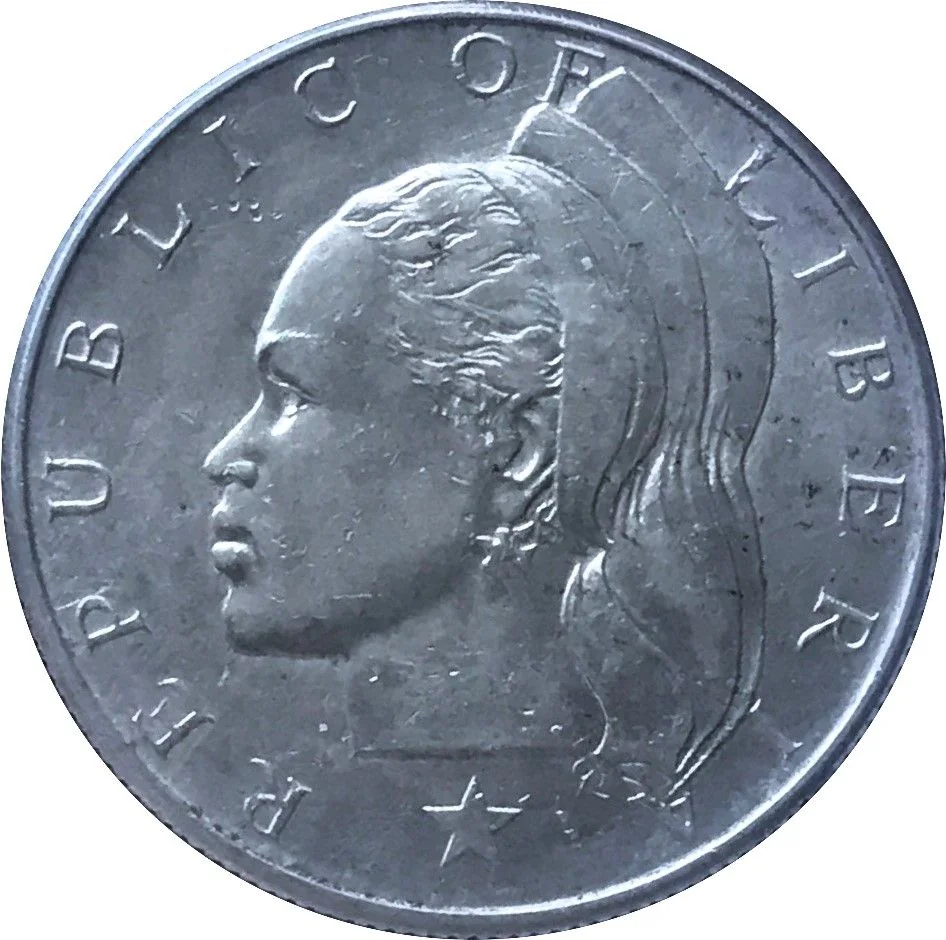
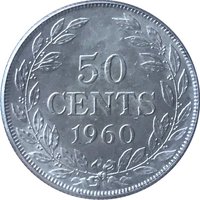
Obverse
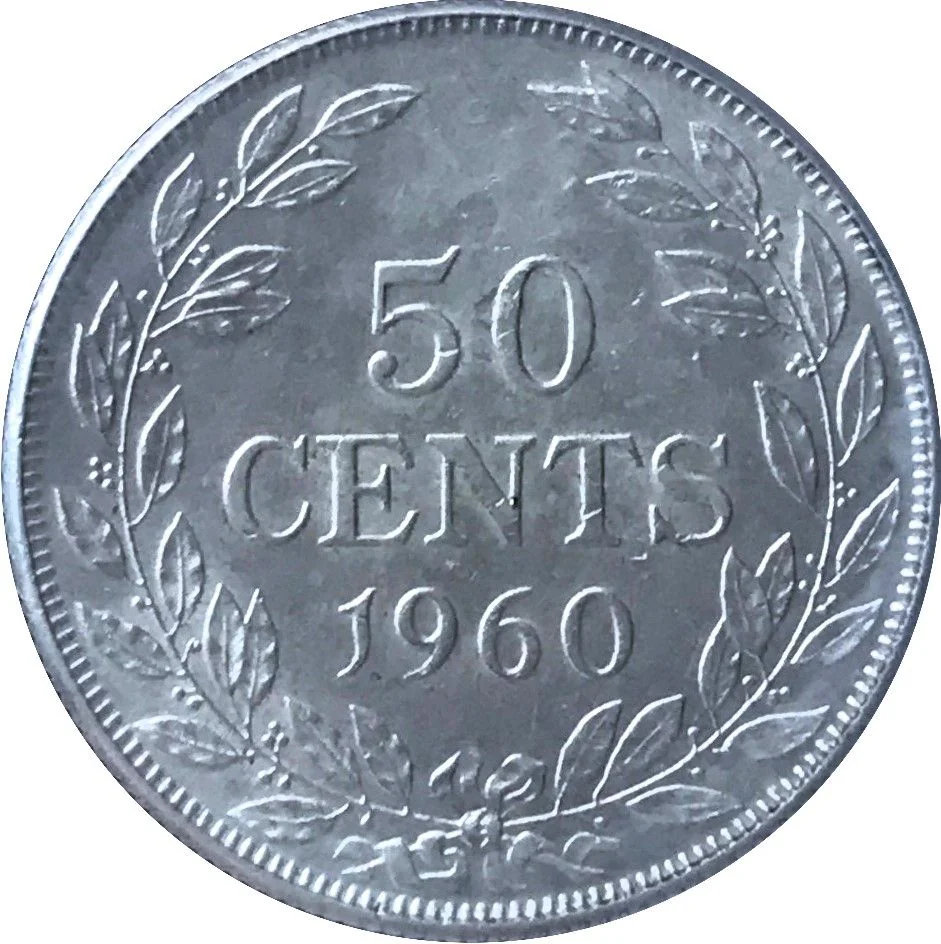
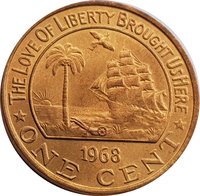
Reverse
Edge
Reeded
Mints
| Name | Mark |
|---|---|
| United States Mint of Philadelphia | — |
Mintings
| Year | Mint Mark | Mintage | Quality | Collection |
|---|---|---|---|---|
| 1960 | 1959-1960 | 1,140,000 | ||
| 1961 | — | 800,000 |
Historical background
In 1959, Liberia's currency system was in a state of transition, operating under a dual-currency regime that reflected its deep economic ties to the United States. The official currency was the Liberian dollar (LRD), which was pegged at par with the U.S. dollar. However, U.S. dollars themselves circulated widely and were accepted as legal tender for all transactions, creating a de facto dollarized economy. This arrangement stemmed from Liberia's historical financial links with America, established by freed African-American settlers and reinforced by major U.S. investments, particularly in the Firestone rubber plantations.
This dollar-centric system provided monetary stability and facilitated international trade but also highlighted Liberia's limited monetary sovereignty. The country did not have a central bank; instead, currency issuance was managed by the Bank of Monrovia, a private U.S. institution, and later by the First National City Bank of New York (Citibank) under a government contract. Consequently, Liberia had little independent control over its money supply or interest rates, as its financial policy was effectively anchored to decisions made by the U.S. Federal Reserve.
The situation in 1959 was on the cusp of change, driven by a wave of economic nationalism across post-colonial Africa. Discussions were already underway to establish a central bank and assert greater national control over monetary policy. This culminated just a few years later, in 1961, with the founding of the National Bank of Liberia, which began issuing a new Liberian dollar to replace the U.S. currency in circulation. Thus, 1959 represents the final years of an older, externally managed currency system before a concerted move toward formal financial independence.
This dollar-centric system provided monetary stability and facilitated international trade but also highlighted Liberia's limited monetary sovereignty. The country did not have a central bank; instead, currency issuance was managed by the Bank of Monrovia, a private U.S. institution, and later by the First National City Bank of New York (Citibank) under a government contract. Consequently, Liberia had little independent control over its money supply or interest rates, as its financial policy was effectively anchored to decisions made by the U.S. Federal Reserve.
The situation in 1959 was on the cusp of change, driven by a wave of economic nationalism across post-colonial Africa. Discussions were already underway to establish a central bank and assert greater national control over monetary policy. This culminated just a few years later, in 1961, with the founding of the National Bank of Liberia, which began issuing a new Liberian dollar to replace the U.S. currency in circulation. Thus, 1959 represents the final years of an older, externally managed currency system before a concerted move toward formal financial independence.
🌱 Fairly Common