

½ Penny – Jamaica
Jamaica
Context
Material
Diameter: 25.3 mm
Weight: 5.6 g
Thickness: 1.5 mm
Shape: Round
Composition: Copper-nickel
Technique: Milled
Alignment: Medal alignment
flip
References
KM: #Click to copy to clipboard25
Numista: #15862
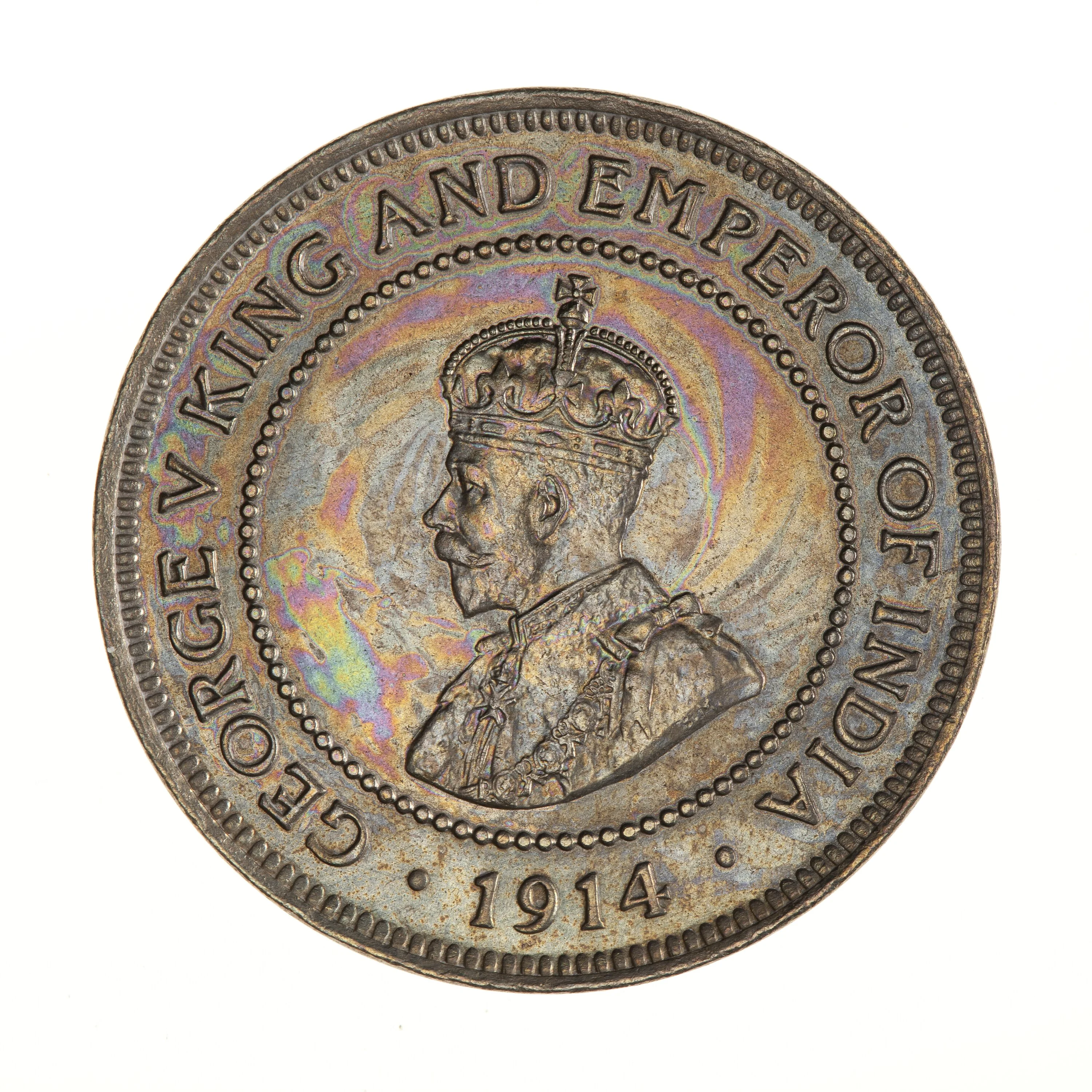
Obverse
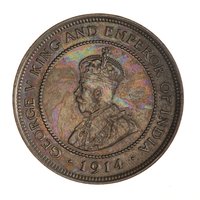
Description:
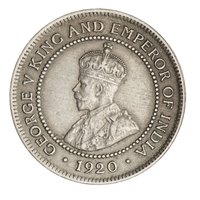
George V left-facing bust within beaded circle, surrounded by legend.
Inscription:
GEORGE V KING AND EMPEROR OF INDIA
· 1919 ·
C
· 1919 ·
C
Translation:
GEORGE V KING AND EMPEROR OF INDIA
· 1919 ·
· 1919 ·
Script: Latin
Language: English
Engraver: Edgar Bertram MacKennal
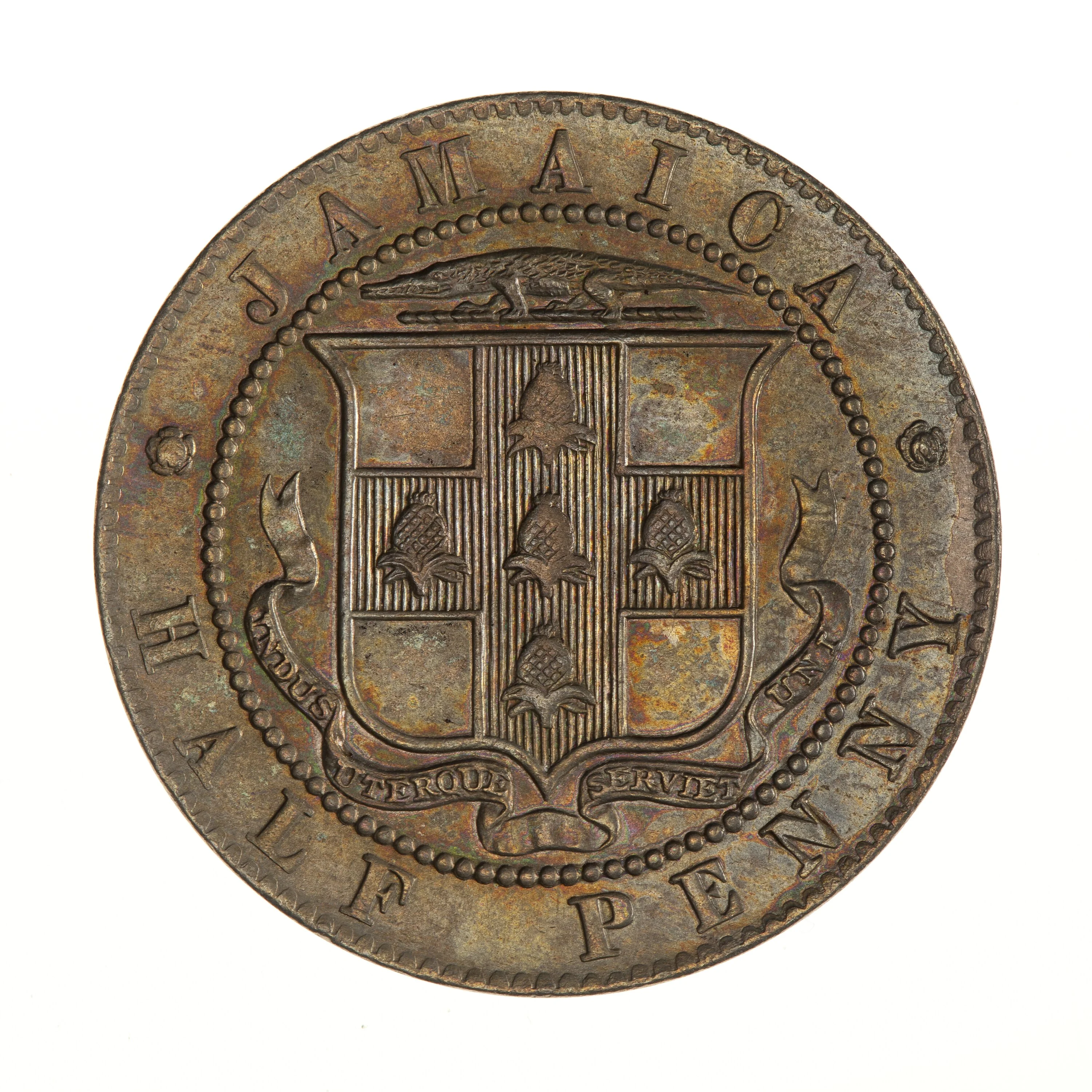
Reverse
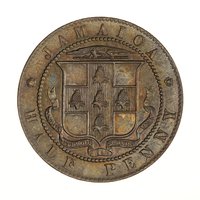
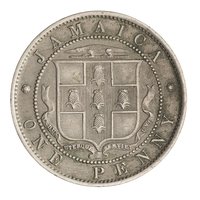
Description:
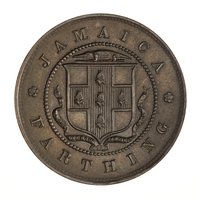
Jamaican coat of arms within a beaded circle, surrounded by legend.
Inscription:
JAMAICA
🏵 HALF PENNY 🏵
INDUS UTERQUE SERVIET UNI
🏵 HALF PENNY 🏵
INDUS UTERQUE SERVIET UNI
Translation:
JAMAICA
🏵 HALF PENNY 🏵
THE TWO INDS WILL SERVE ONE
🏵 HALF PENNY 🏵
THE TWO INDS WILL SERVE ONE
Script: Latin
Engraver: George William de Saulles
Edge
Plain
Mints
| Name | Mark |
|---|---|
| Royal Mint (Tower Hill) | — |
| Royal Canadian Mint of Ottawa | C |
| Heaton and Sons / The Mint Birmingham | H |
Mintings
Historical background
In 1914, Jamaica's currency situation was fundamentally tied to its status as a British colony, operating under a sterling exchange standard. The official currency was the Jamaican pound (£J), which was fixed at parity with the British pound sterling. However, the physical circulation was dominated by British silver and copper coins, alongside notes issued by local commercial banks like the Bank of Nova Scotia and the Colonial Bank. This system created a practical reliance on London, with the island's monetary policy effectively set by the British Treasury and the value of its currency secured by sterling reserves held in the United Kingdom.
The outbreak of the First World War in August 1914 triggered an immediate financial crisis across the British Empire, and Jamaica was no exception. Fearing a run on banks and a drain of specie (gold and silver coin) to finance wartime needs, the British government passed the Currency and Bank Notes Act 1914. This legislation authorized the issuance of British Treasury notes as legal tender and, critically for colonies like Jamaica, suspended the convertibility of currency notes into gold. The local colonial government swiftly followed suit, issuing an emergency proclamation that made British Treasury notes legal tender in Jamaica and effectively took the island off the gold standard, pegging its value solely to the now-inconvertible British pound.
Consequently, by the end of 1914, Jamaica's currency was in a state of managed wartime emergency. The fixed parity with sterling remained, but the guarantee of conversion into gold was gone, replaced by fiduciary (faith-based) issue. While this action prevented a banking collapse and hoarding of specie, it introduced a new layer of inflationary risk and further cemented the island's financial dependence on Britain. The stage was set for the monetary challenges of the war years, which would eventually lead to the establishment of a government-controlled Board of Commissioners of Currency in 1918.
The outbreak of the First World War in August 1914 triggered an immediate financial crisis across the British Empire, and Jamaica was no exception. Fearing a run on banks and a drain of specie (gold and silver coin) to finance wartime needs, the British government passed the Currency and Bank Notes Act 1914. This legislation authorized the issuance of British Treasury notes as legal tender and, critically for colonies like Jamaica, suspended the convertibility of currency notes into gold. The local colonial government swiftly followed suit, issuing an emergency proclamation that made British Treasury notes legal tender in Jamaica and effectively took the island off the gold standard, pegging its value solely to the now-inconvertible British pound.
Consequently, by the end of 1914, Jamaica's currency was in a state of managed wartime emergency. The fixed parity with sterling remained, but the guarantee of conversion into gold was gone, replaced by fiduciary (faith-based) issue. While this action prevented a banking collapse and hoarding of specie, it introduced a new layer of inflationary risk and further cemented the island's financial dependence on Britain. The stage was set for the monetary challenges of the war years, which would eventually lead to the establishment of a government-controlled Board of Commissioners of Currency in 1918.
🌱 Common