

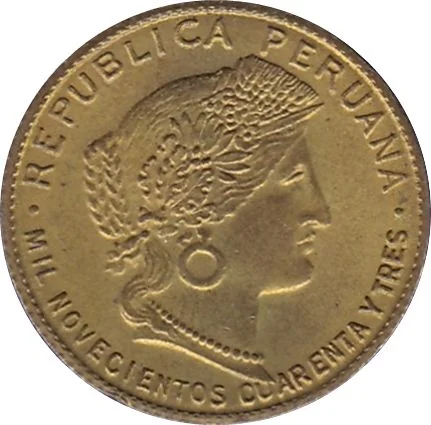
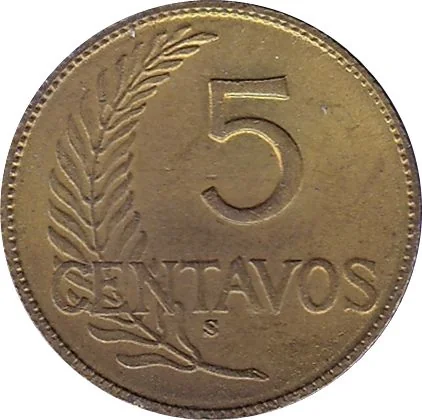
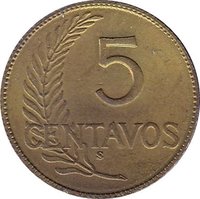
5 Centavos – Peru
Peru
Context
Material
References
KM: #Click to copy to clipboard213.2a
Numista: #15841
Value
Exchange value: 0.05 PEH
Mintings
Historical background
In 1942, Peru's currency situation was characterized by stability and alignment with the United States, a direct consequence of its geopolitical stance during World War II. Following the attack on Pearl Harbor, Peru severed relations with the Axis powers and became a key supplier of strategic materials (like copper, cotton, and rubber) to the Allied war effort. This close economic and political alliance led to Peru entering the U.S. dollar bloc, formally pegging the Peruvian sol to the U.S. dollar at a fixed rate of 6.50 soles per dollar through a 1942 agreement with the U.S. Treasury and the Federal Reserve.
This fixed exchange rate regime, supported by growing foreign exchange reserves from export revenues, provided a rare period of monetary stability during a turbulent global period. It helped control inflation and facilitated trade with its primary wartime partner. The arrangement was part of a broader hemispheric policy by the United States to stabilize the economies of allied Latin American nations, ensuring the flow of vital resources and strengthening economic ties against Axis influence.
However, this stability was externally anchored and masked underlying structural vulnerabilities in Peru's economy. The system depended heavily on continued high export earnings and U.S. financial backing. While effective during the war boom, the post-war decline in demand for raw materials would later expose these weaknesses, leading to pressure on the sol and contributing to the economic difficulties that would eventually force a devaluation in 1949. Thus, the 1942 currency peg was a successful short-term stabilization tool, but one that deferred longer-term economic challenges.
This fixed exchange rate regime, supported by growing foreign exchange reserves from export revenues, provided a rare period of monetary stability during a turbulent global period. It helped control inflation and facilitated trade with its primary wartime partner. The arrangement was part of a broader hemispheric policy by the United States to stabilize the economies of allied Latin American nations, ensuring the flow of vital resources and strengthening economic ties against Axis influence.
However, this stability was externally anchored and masked underlying structural vulnerabilities in Peru's economy. The system depended heavily on continued high export earnings and U.S. financial backing. While effective during the war boom, the post-war decline in demand for raw materials would later expose these weaknesses, leading to pressure on the sol and contributing to the economic difficulties that would eventually force a devaluation in 1949. Thus, the 1942 currency peg was a successful short-term stabilization tool, but one that deferred longer-term economic challenges.
Series: 1942 Peru circulation coins
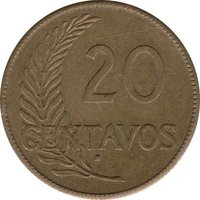
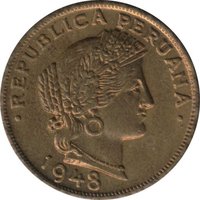
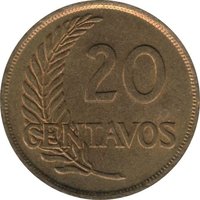
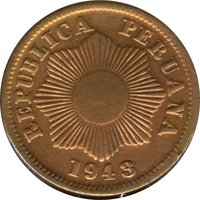
🌱 Common