

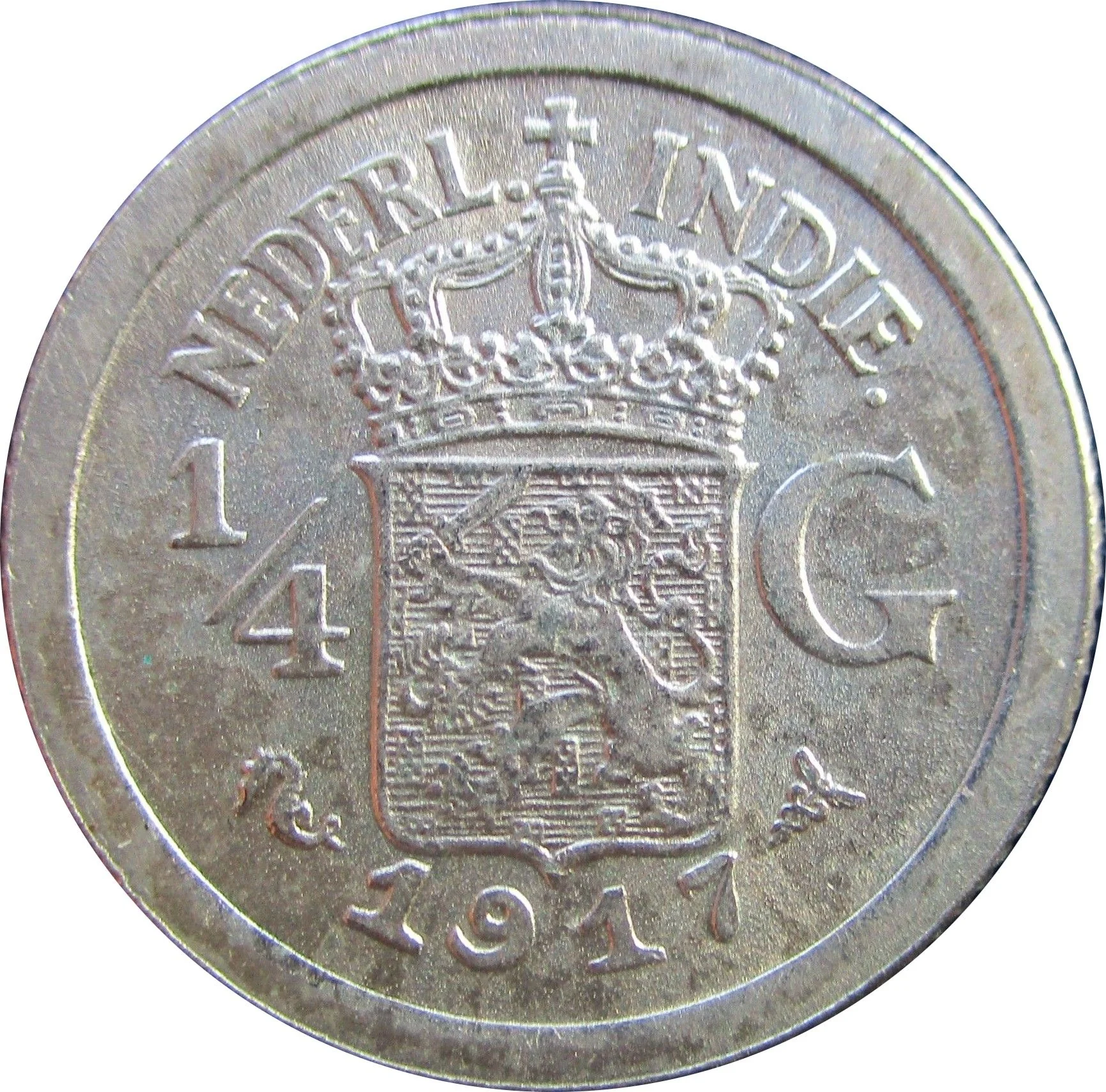
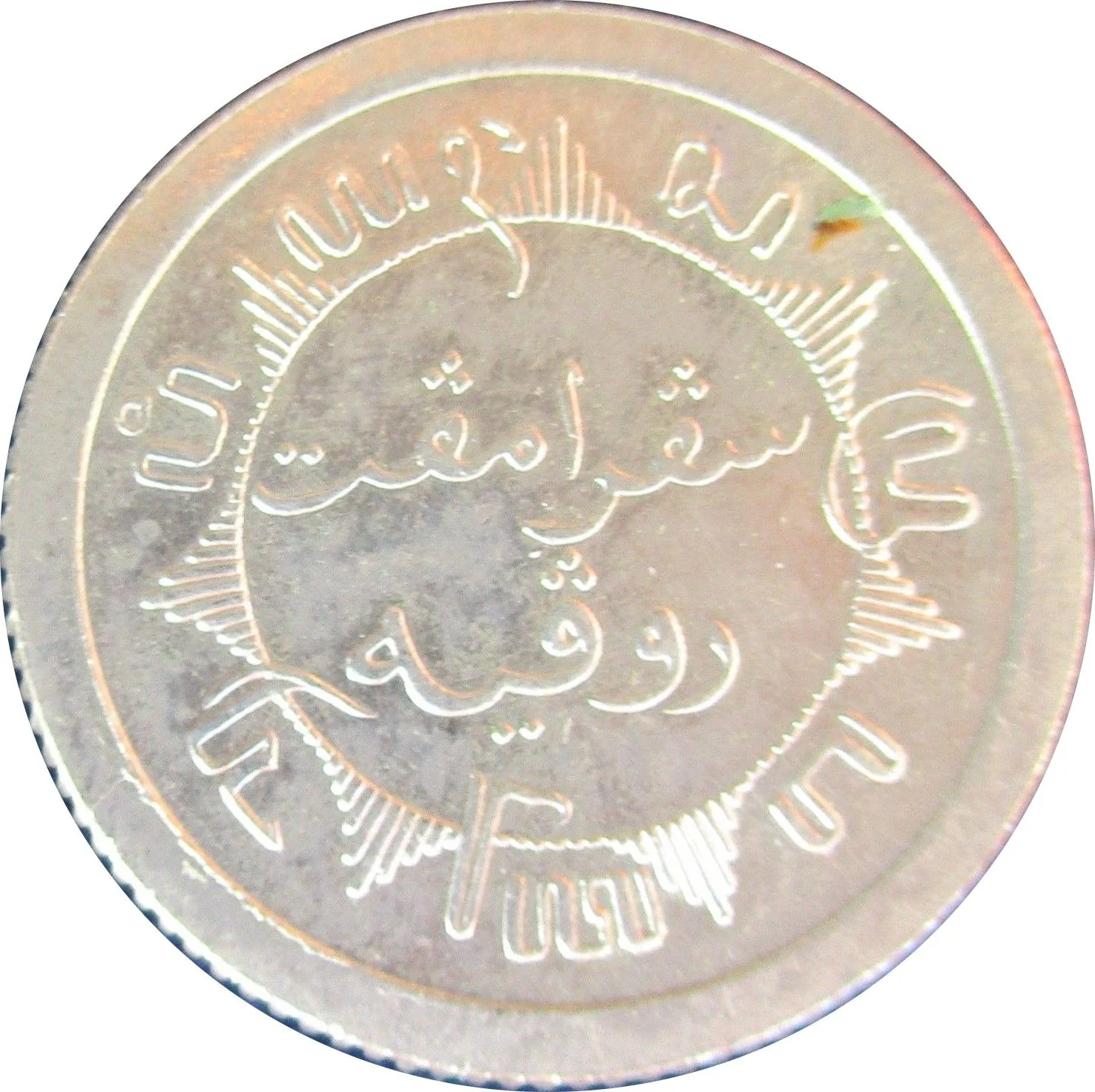
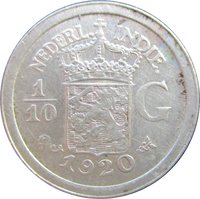
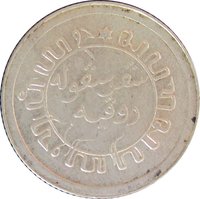
¼ gulden – Netherlands East Indies
Add to wishlist
Indonesia
Context
Years: 1910–1930
Country: Indonesia
Issuer: Netherlands East Indies
Ruler: Wilhelmina
Currency:
(1854—1948)
Demonetization: 1 January 1952
Total mintage: 116,000,000
Material
References
KM: #
Numista: #10552
Value
Bullion value: $5.71
Obverse
Reverse
Edge
Reeded
Categories
| Symbols> Coat of Arms |
Mints
| Name | Mark |
|---|---|
| Royal Dutch Mint | — |
Mintings
| Year | Mint Mark | Mintage | Quality | Collection |
|---|---|---|---|---|
| 1910 | — | 6,000,000 | ||
| 1910 | — | — | Proof | |
| 1911 | — | 4,000,000 | ||
| 1911 | — | — | Proof | |
| 1912 | — | 10,000,000 | ||
| 1912 | — | — | Proof | |
| 1913 | — | 6,000,000 | ||
| 1914 | — | 10,000,000 | ||
| 1915 | — | 6,000,000 | ||
| 1917 | — | 12,000,000 | ||
| 1919 | — | 6,000,000 | ||
| 1920 | — | 20,000,000 | ||
| 1921 | — | 24,000,000 | ||
| 1929 | — | 5,000,000 | ||
| 1930 | — | 7,000,000 | ||
| 1930 | — | — | Proof |
Historical background
By 1910, the currency situation in the Netherlands East Indies (NEI) was characterized by a managed and stable system firmly under the control of the colonial government, primarily administered through the Java Bank (De Javasche Bank). The official currency was the Netherlands Indies Gulden, which was pegged at a fixed rate to the Dutch gold standard. This meant the colony operated on a gold exchange standard; while physical gold coinage circulated, the value of the silver and paper money in use was legally defined by its relation to gold, ensuring international credibility and facilitating trade with the Netherlands and other global partners.
The monetary landscape in circulation was diverse, reflecting the colony's economic complexity. Silver coins (guldens and fractional parts) were the everyday workhorse for the local population and domestic commerce. For larger transactions, paper banknotes issued by the Java Bank were common. Notably, the system also accommodated the lingering use of older copper duit coins among the poorer rural populace for very small purchases. This multi-metallic circulation was carefully regulated to prevent arbitrage and maintain the fixed exchange rates between the different forms of money.
This stability served clear colonial economic interests. A reliable currency was essential for the export-oriented plantation economy, enabling the smooth flow of profits from commodities like sugar, coffee, tobacco, and rubber back to the Netherlands. It also provided a predictable fiscal environment for Dutch businesses and investors. However, this system was primarily designed for the benefit of the export sector and the colonial state, with its management centered in Batavia (Jakarta) and Amsterdam, rather than being tailored to the needs of the indigenous subsistence economy, which often remained on its periphery.
The monetary landscape in circulation was diverse, reflecting the colony's economic complexity. Silver coins (guldens and fractional parts) were the everyday workhorse for the local population and domestic commerce. For larger transactions, paper banknotes issued by the Java Bank were common. Notably, the system also accommodated the lingering use of older copper duit coins among the poorer rural populace for very small purchases. This multi-metallic circulation was carefully regulated to prevent arbitrage and maintain the fixed exchange rates between the different forms of money.
This stability served clear colonial economic interests. A reliable currency was essential for the export-oriented plantation economy, enabling the smooth flow of profits from commodities like sugar, coffee, tobacco, and rubber back to the Netherlands. It also provided a predictable fiscal environment for Dutch businesses and investors. However, this system was primarily designed for the benefit of the export sector and the colonial state, with its management centered in Batavia (Jakarta) and Amsterdam, rather than being tailored to the needs of the indigenous subsistence economy, which often remained on its periphery.
🌱 Common