

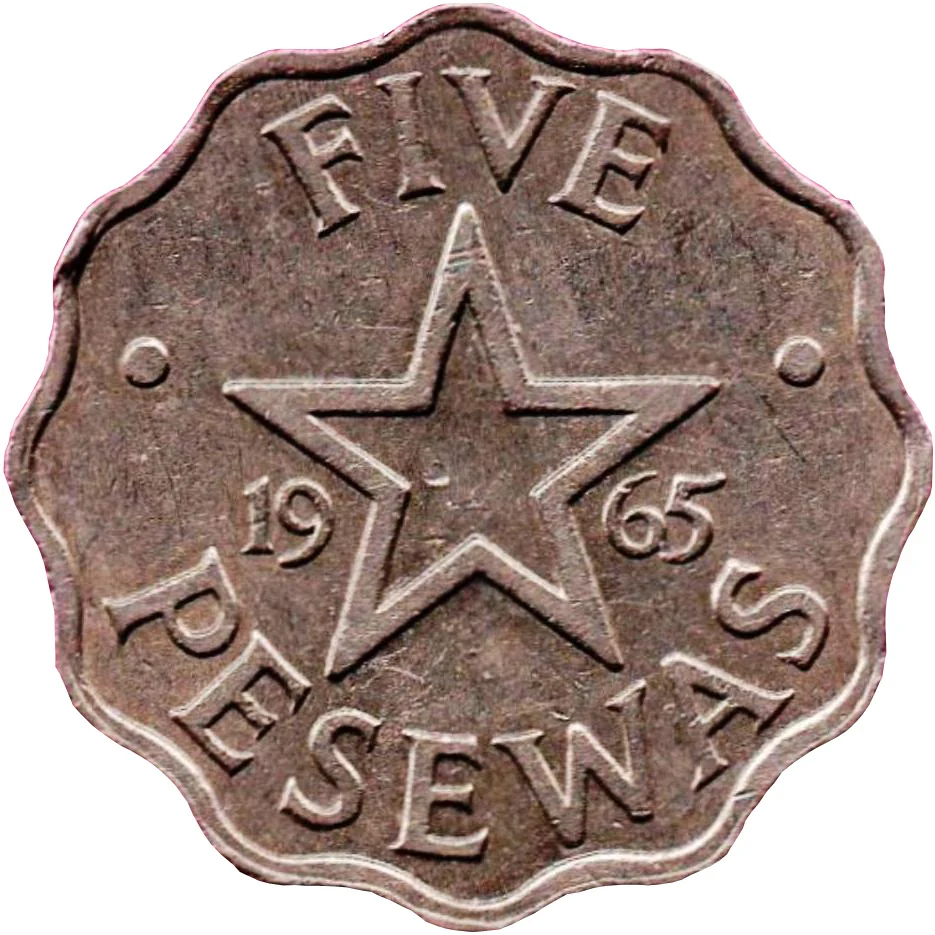
5 pesewas – Ghana
Add to wishlist
Ghana
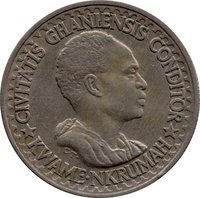
Obverse
Description:
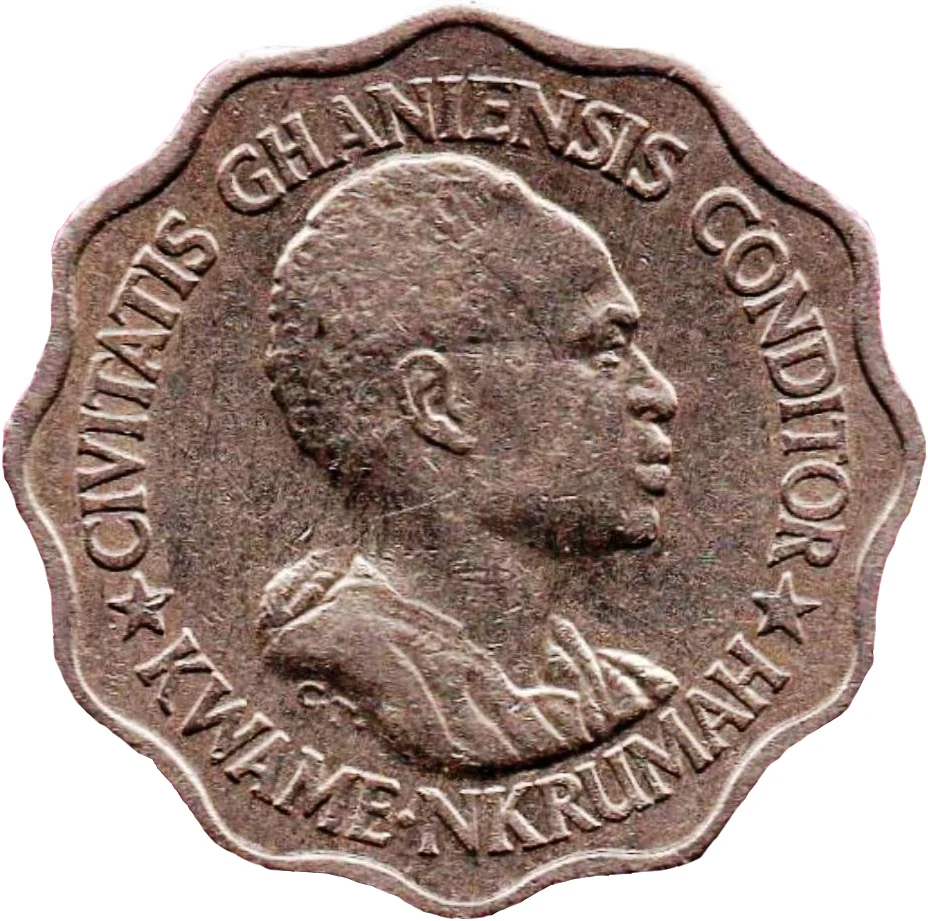
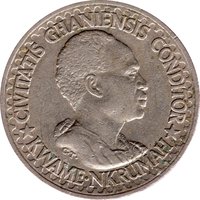
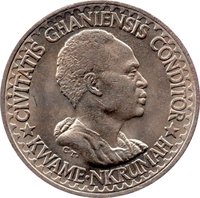
Nkrumah bust, right profile.
Inscription:
CIVITATIS GHANIENSIS CONDITOR
C·T·
KWAME·NKRUMAH
C·T·
KWAME·NKRUMAH
Translation:
Founder of the Nation of Ghana
C.T.
KWAME NKRUMAH
C.T.
KWAME NKRUMAH
Script: Latin
Language: Latin
Engraver: Cecil Thomas
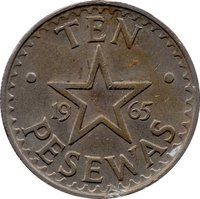
Reverse
Edge
Plain
Categories
| Person> Politician |
Mints
| Name | Mark |
|---|---|
| Royal Mint (Tower Hill) | — |
Mintings
| Year | Mint Mark | Mintage | Quality | Collection |
|---|---|---|---|---|
| 1965 | — | 30,000,000 |
Historical background
In 1965, Ghana's currency situation was defined by the newly introduced Ghanaian Pound (¢G), which had replaced the West African Pound just two years prior in 1963. This change was a significant symbol of economic sovereignty under President Kwame Nkrumah, severing the direct colonial currency link. However, the currency operated within a fixed exchange rate system, pegged to the British Pound Sterling at par, which tied Ghana's monetary policy closely to that of the United Kingdom.
This period was one of underlying economic strain. Nkrumah's ambitious industrialization and infrastructure projects, funded by heavy borrowing and drawing down substantial foreign reserves accumulated during the 1950s cocoa boom, led to growing budget and trade deficits. While the currency's value was officially stable, these pressures created an overvaluation, discouraging exports and encouraging imports, which further drained reserves. The economy was becoming increasingly dependent on volatile cocoa prices, and the fixed peg masked the growing disequilibrium.
Consequently, by the end of 1965, the Ghanaian Pound was under severe pressure, though this was not yet fully apparent in everyday transactions. The fundamental imbalances would culminate just a few months later, in February 1966, following Nkrumah's overthrow in a coup, when the new government was forced to devalue the currency by 30% and later redenominate it as the Cedi. Thus, 1965 represents the final year of an artificially stable currency regime, immediately preceding a major monetary crisis and reform.
This period was one of underlying economic strain. Nkrumah's ambitious industrialization and infrastructure projects, funded by heavy borrowing and drawing down substantial foreign reserves accumulated during the 1950s cocoa boom, led to growing budget and trade deficits. While the currency's value was officially stable, these pressures created an overvaluation, discouraging exports and encouraging imports, which further drained reserves. The economy was becoming increasingly dependent on volatile cocoa prices, and the fixed peg masked the growing disequilibrium.
Consequently, by the end of 1965, the Ghanaian Pound was under severe pressure, though this was not yet fully apparent in everyday transactions. The fundamental imbalances would culminate just a few months later, in February 1966, following Nkrumah's overthrow in a coup, when the new government was forced to devalue the currency by 30% and later redenominate it as the Cedi. Thus, 1965 represents the final year of an artificially stable currency regime, immediately preceding a major monetary crisis and reform.
🌱 Fairly Common