

50 euro cents – Portugal
Add to wishlist
Portugal
Context
Years: 2002–2007
Issuer: Portugal
Period:
(since 1974)
Currency:
(since 2002)
Total mintage: 165,663,633
Material
Diameter: 24.25 mm
Weight: 7.8 g
Thickness: 2.38 mm
Shape: Round
Composition: Nordic gold
Standard: Silver quarter ounce
Magnetic: No
Technique: Milled
Alignment: Medal alignment
flip
References
KM: #
Numista: #158
Value
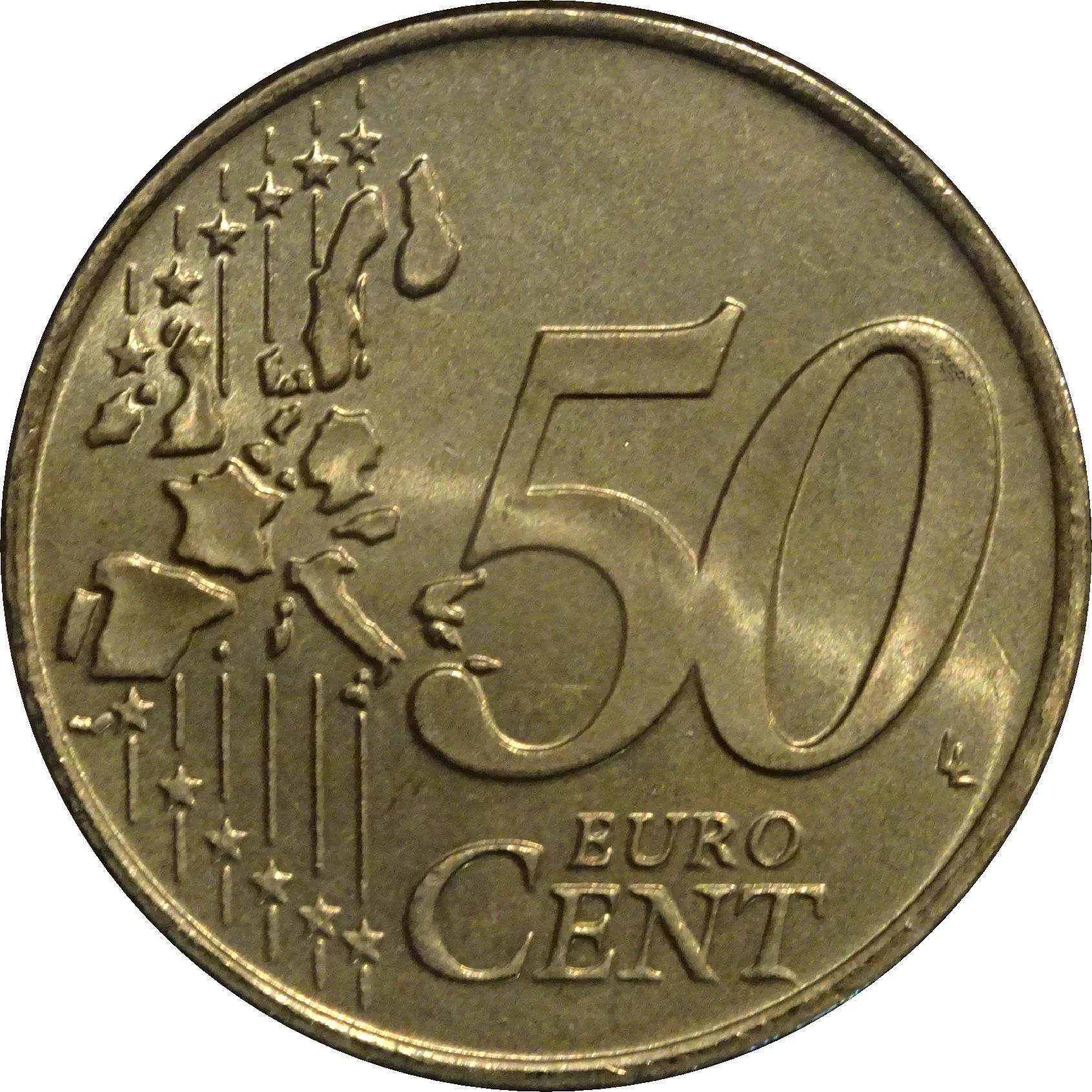
Exchange value: 0.50 EUR
Inflation-adjusted value: 0.78 EUR
Obverse
Description:
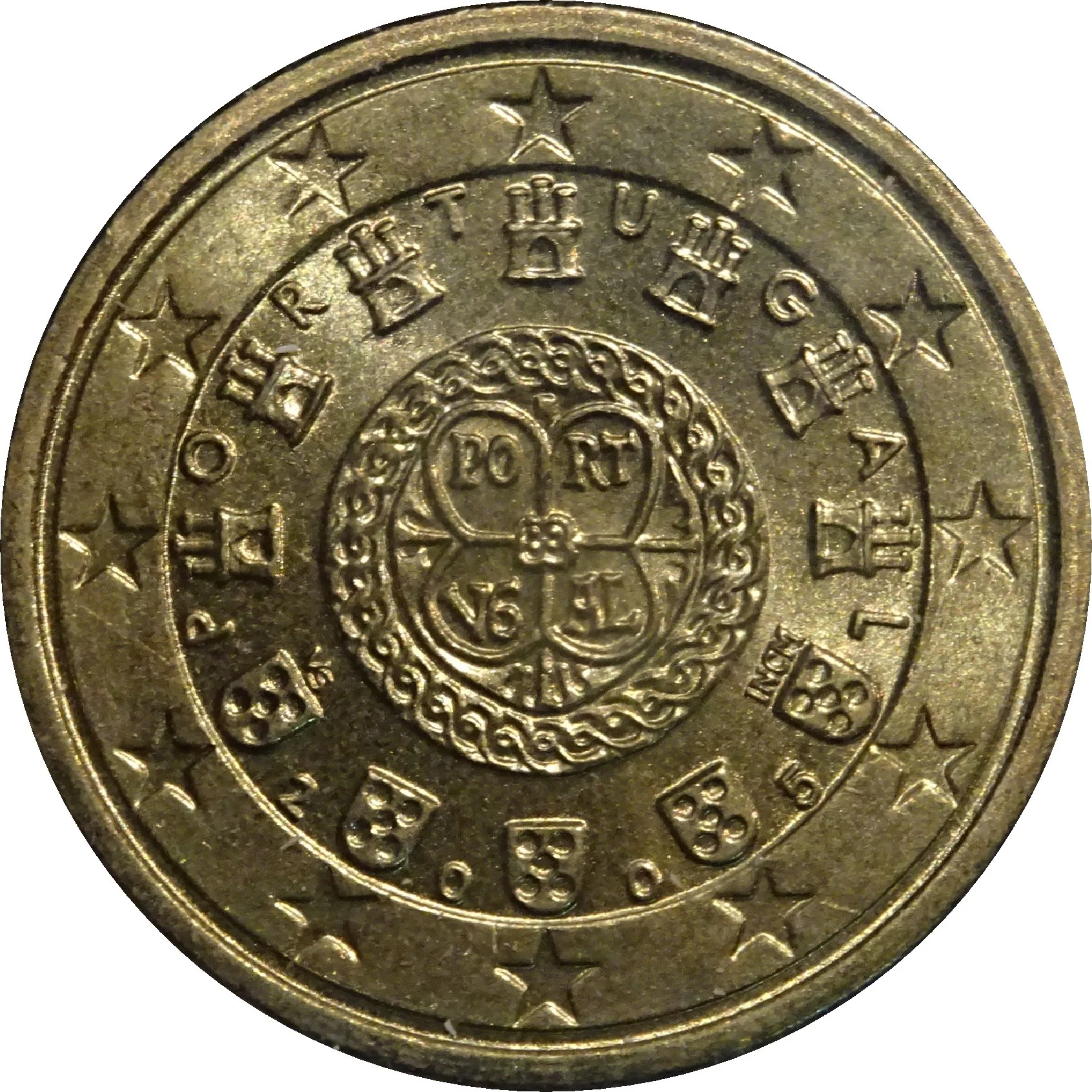
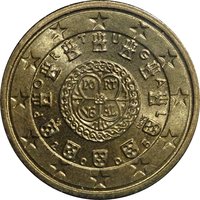
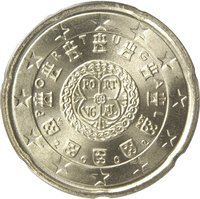
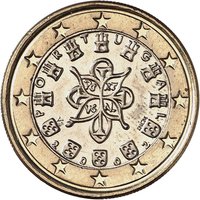
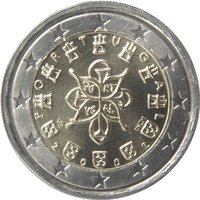
Alfonso Henriques's 1142 royal seal is encircled by Portugal's castles and coats of arms, the letters of "PORTUGAL," and the twelve stars of the European Union.
Inscription:
P O R T U G A L
PO RT
VG AL
VS INCM
2 0 0 5
PO RT
VG AL
VS INCM
2 0 0 5
Script: Latin
Engraver: V. M. F. dos Santos
Reverse
Edge
Indented
Categories
| Map |
Mints
| Name | Mark |
|---|---|
| Imprensa Nacional - Casa da Moeda | INCM |
Mintings
| Year | Mint Mark | Mintage | Quality | Collection |
|---|---|---|---|---|
| 2002 | INCM | 151,947,133 | ||
| 2002 | INCM | 55,000 | BU | |
| 2002 | INCM | 15,000 | Proof | |
| 2003 | INCM | 10,353,000 | ||
| 2003 | INCM | 70,000 | BU | |
| 2003 | INCM | 15,000 | Proof | |
| 2004 | INCM | 1,000,000 | ||
| 2004 | INCM | 70,000 | BU | |
| 2004 | INCM | 15,000 | Proof | |
| 2005 | INCM | 1,000,000 | ||
| 2005 | INCM | 10,000 | Proof | |
| 2005 | INCM | 60,000 | BU | |
| 2006 | INCM | 1,000,000 | ||
| 2006 | INCM | 26,500 | BU | |
| 2006 | INCM | 3,000 | Proof | |
| 2007 | INCM | 2,500 | Proof | |
| 2007 | INCM | 21,500 | BU |
Historical background
In 2002, Portugal underwent a significant monetary transition, bidding farewell to its historic currency, the escudo, and fully adopting the euro as its sole legal tender. This change was not abrupt but the final phase of a three-year process that began in 1999, when the euro was introduced as an electronic currency for accounting and financial transactions, while the escudo remained in physical circulation. The physical replacement of banknotes and coins occurred over a brief dual-circulation period from January 1 to February 28, 2002, after which the escudo was completely withdrawn.
This shift was a cornerstone of Portugal's deeper integration into the European Union and its Economic and Monetary Union (EMU). The country had worked diligently to meet the strict convergence criteria (on inflation, interest rates, budget deficits, and debt) set out in the Maastricht Treaty to qualify for the first wave of euro adoption. For the Portuguese government and many businesses, the euro promised lower transaction costs, eliminated exchange rate risk with major trading partners, and was seen as a catalyst for greater economic stability and foreign investment, anchoring Portugal firmly at the heart of Europe.
However, the transition in 2002 was also met with public anxiety. A widespread concern, often summarized by the term "euro effect," was that the conversion would be used as cover for rounding up prices, effectively fueling inflation and eroding purchasing power. Many Portuguese citizens felt that the 200.482 escudos to 1 euro conversion rate did not translate evenly in the shops, leading to a perception that everyday goods and services became noticeably more expensive. While the euro brought macroeconomic benefits, this period is remembered domestically for its complex social and psychological adjustment, marking the end of a national monetary symbol and the tangible onset of a new, more integrated European era.
This shift was a cornerstone of Portugal's deeper integration into the European Union and its Economic and Monetary Union (EMU). The country had worked diligently to meet the strict convergence criteria (on inflation, interest rates, budget deficits, and debt) set out in the Maastricht Treaty to qualify for the first wave of euro adoption. For the Portuguese government and many businesses, the euro promised lower transaction costs, eliminated exchange rate risk with major trading partners, and was seen as a catalyst for greater economic stability and foreign investment, anchoring Portugal firmly at the heart of Europe.
However, the transition in 2002 was also met with public anxiety. A widespread concern, often summarized by the term "euro effect," was that the conversion would be used as cover for rounding up prices, effectively fueling inflation and eroding purchasing power. Many Portuguese citizens felt that the 200.482 escudos to 1 euro conversion rate did not translate evenly in the shops, leading to a perception that everyday goods and services became noticeably more expensive. While the euro brought macroeconomic benefits, this period is remembered domestically for its complex social and psychological adjustment, marking the end of a national monetary symbol and the tangible onset of a new, more integrated European era.
Series: 2002 Portugal circulation coins
🌱 Very Common