

5 rand – South Africa
Add to wishlist
South Africa
Context
Year: 2009
Issuer: South Africa
Issuing organization: South African Reserve Bank
Period:
(since 1961)
Currency:
(since 1961)
Total mintage: 11,178,757
Material
References
KM: #
Numista: #15786
Value
Exchange value: 5 ZAR
Inflation-adjusted value: 11.50 ZAR
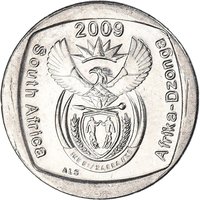
Obverse
Description:
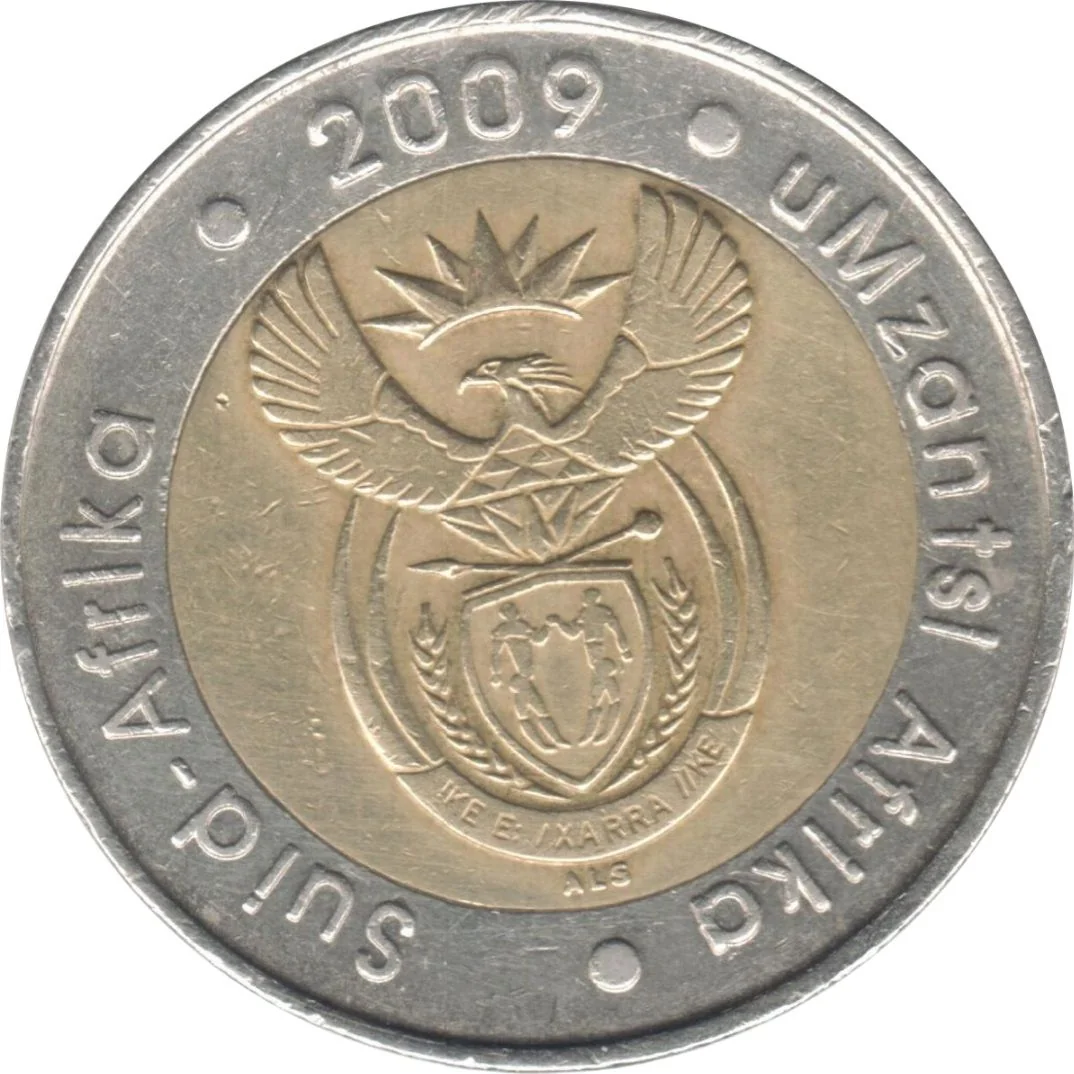
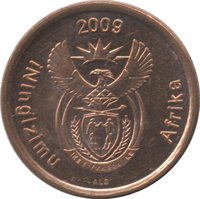
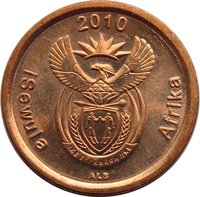
New South African coat of arms.
Inscription:
Suid-Afrika • 2009 • uMzantsi Afrika •
ALS
ALS
Script: Latin
Engraver: Arthur Sutherland
Reverse
Edge
Legend:
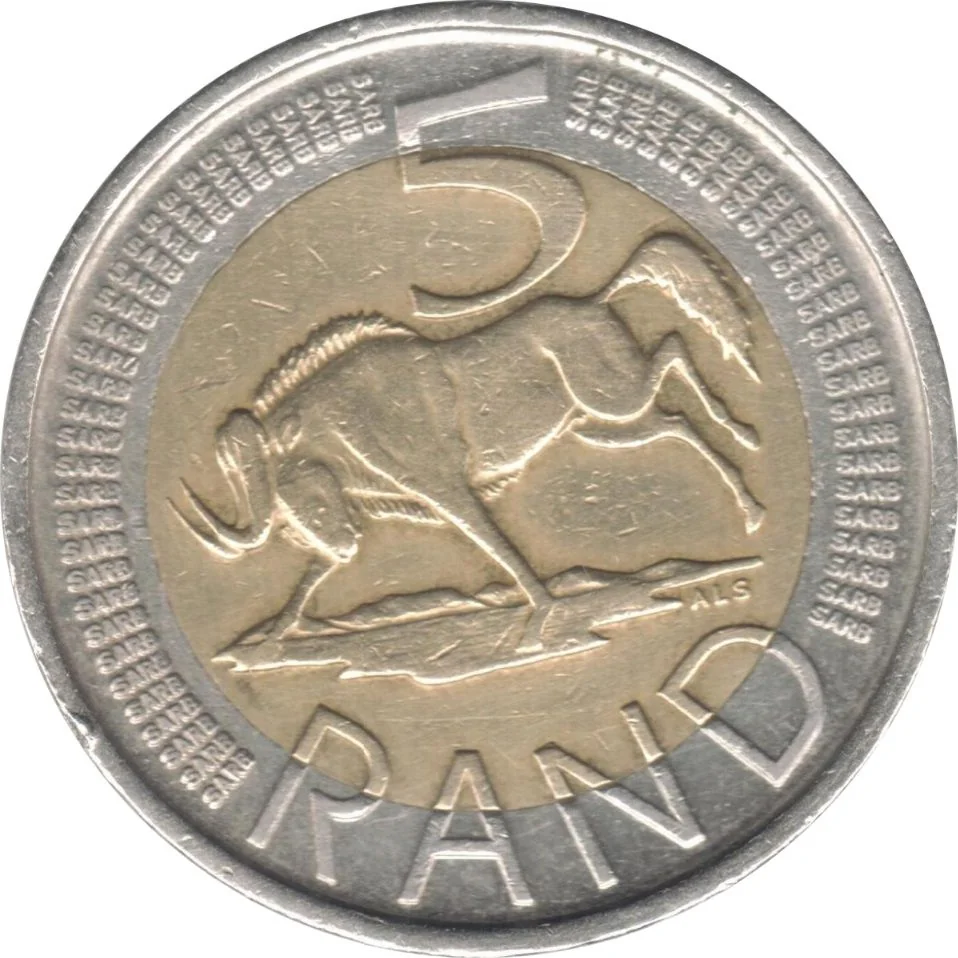
SARB R5 SARB R5 SARB R5 SARB R5 SARB R5 SARB R5 SARB R5 SARB R5 SARB R5 SARB R5
Mintings
| Year | Mint Mark | Mintage | Quality | Collection |
|---|---|---|---|---|
| 2009 | — | 11,178,000 | ||
| 2009 | — | — | BU | |
| 2009 | — | 757 | Proof |
Historical background
In 2009, South Africa's currency, the rand, was emerging from a period of extreme volatility triggered by the global financial crisis. The preceding year had seen the rand depreciate sharply, losing about 28% of its value against the US dollar, as risk-averse global investors fled emerging markets for safe-haven assets. This dramatic fall was exacerbated by a record current account deficit and slowing domestic growth, placing significant strain on an economy already grappling with the global recession.
The newly inaugurated government of President Jacob Zuma, taking office in May 2009, inherited this fragile currency environment. While the rand began to recover somewhat in 2009, buoyed by a general rebound in commodity prices and improved global risk sentiment, its strength was perceived as a mixed blessing. A stronger rand threatened the competitiveness of the country's crucial mining and manufacturing exports, complicating efforts to stimulate economic recovery and address high unemployment. Policymakers, including the South African Reserve Bank (SARB), faced the delicate task of managing inflation—which remained within the target band but under pressure—without stifling the nascent economic rebound.
Overall, the 2009 currency situation reflected a transitional phase from crisis to cautious recovery. The rand's performance was largely dictated by external factors like commodity prices and global capital flows, rather than robust domestic fundamentals. The year ended with the currency on firmer footing, but underlying structural issues—such as the current account deficit, low savings rates, and persistent economic inequality—remained unresolved, leaving the rand vulnerable to future shifts in global investor sentiment.
The newly inaugurated government of President Jacob Zuma, taking office in May 2009, inherited this fragile currency environment. While the rand began to recover somewhat in 2009, buoyed by a general rebound in commodity prices and improved global risk sentiment, its strength was perceived as a mixed blessing. A stronger rand threatened the competitiveness of the country's crucial mining and manufacturing exports, complicating efforts to stimulate economic recovery and address high unemployment. Policymakers, including the South African Reserve Bank (SARB), faced the delicate task of managing inflation—which remained within the target band but under pressure—without stifling the nascent economic rebound.
Overall, the 2009 currency situation reflected a transitional phase from crisis to cautious recovery. The rand's performance was largely dictated by external factors like commodity prices and global capital flows, rather than robust domestic fundamentals. The year ended with the currency on firmer footing, but underlying structural issues—such as the current account deficit, low savings rates, and persistent economic inequality—remained unresolved, leaving the rand vulnerable to future shifts in global investor sentiment.
🌱 Common