

1 Rixdollar – Ceylon
Sri Lanka
Context
Material
References
KM: #Click to copy to clipboard84
Numista: #15734
Value
Bullion value: $22.77
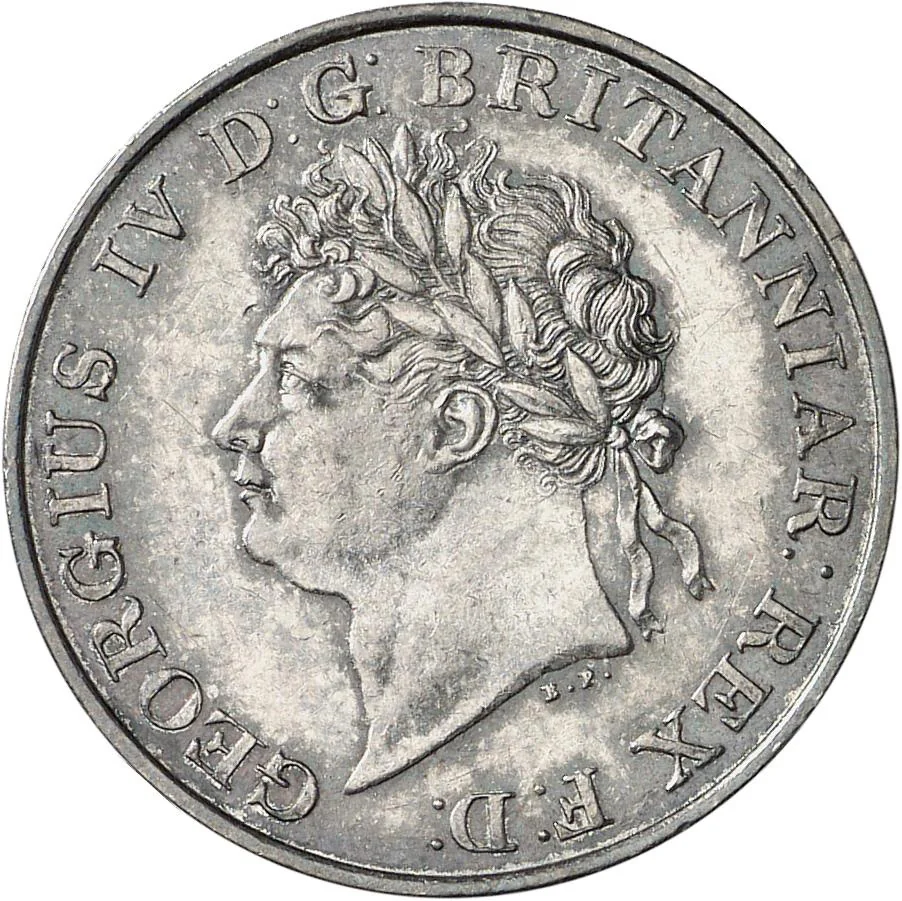
Obverse
Description:
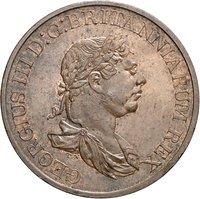
Laureate head left
Inscription:
GEORGIUS IV D:G: BRITANNIAR: REX F:D:
Translation:
George IV by the Grace of God King of the Britains Defender of the Faith
Script: Latin
Language: Latin
Engraver: Benedetto Pistrucci
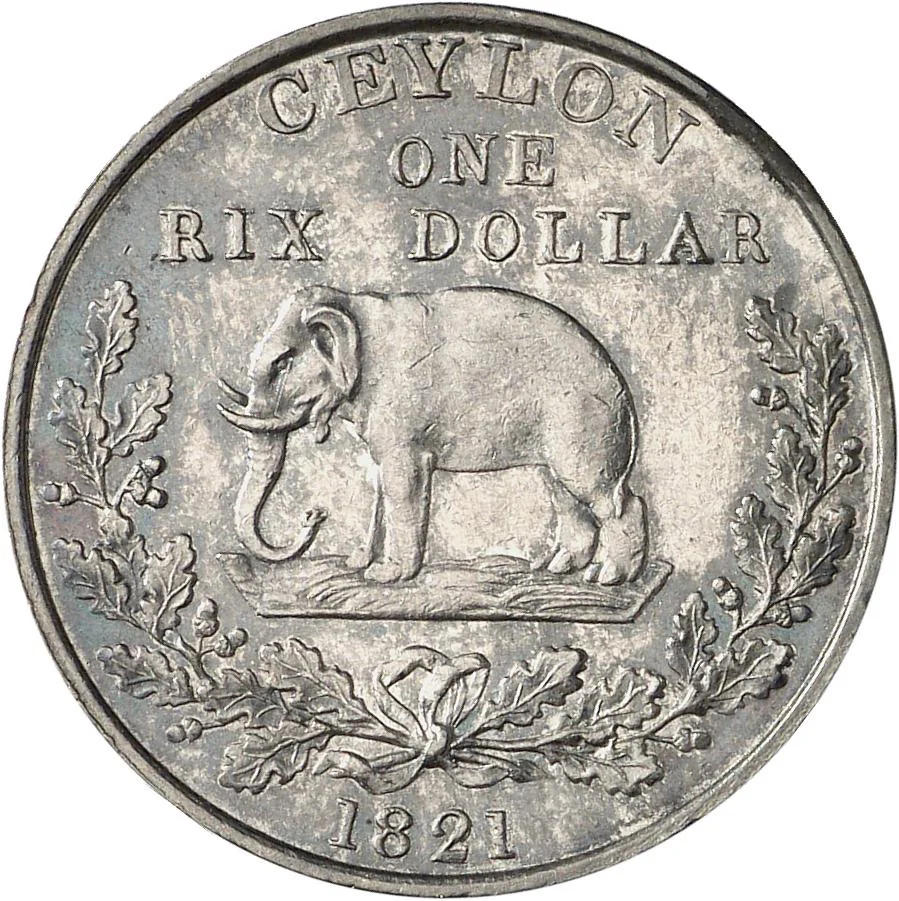
Reverse
Description:
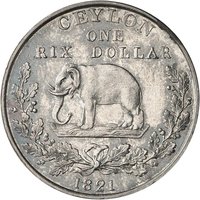
Elephant with wreath, lettered above.
Inscription:
CEYLON
ONE
RIX DOLLAR
1821
ONE
RIX DOLLAR
1821
Script: Latin
Engraver: William Wyon
Edge
Plain
Mints
| Name | Mark |
|---|---|
| Royal Mint (Tower Hill) | — |
Mintings
| Year | Mint Mark | Mintage | Quality | Collection |
|---|---|---|---|---|
| 1821 | — | 400,000 | ||
| 1821 | — | — | Proof |
Historical background
In 1821, the currency situation in Ceylon (present-day Sri Lanka) was a complex and problematic system inherited from its Dutch colonial past and still in a state of transition under British rule, which had begun in 1796. The island operated on a dual-currency system, a source of much confusion and economic friction. The official unit of account was the Dutch rijksdaalder, valued at 48 stivers, but in practice, a multitude of physical coins circulated, including Spanish and Mexican silver dollars (8 reales), Indian gold pagodas, silver fanams, and Dutch copper doits. This proliferation made everyday transactions and government bookkeeping cumbersome, as constant conversion between incompatible metallic standards was required.
The core of the crisis was a severe shortage of small-denomination coinage, particularly copper doits, which were essential for the daily wages and market purchases of the common population. The British administration, recognizing the problem, had begun to address it by importing copper coins from England in 1815, but these efforts were insufficient to meet demand. This scarcity led to widespread hoarding, the circulation of heavily worn and defaced coins, and the use of crude lead tokens issued by local merchants, further destabilizing local trade. The value of copper coinage relative to silver also fluctuated wildly, causing hardship for labourers paid in a devalued medium.
Consequently, the early 1820s marked a period of intense scrutiny and reform. The British authorities were actively moving towards simplifying and standardizing the currency to align with the imperial sterling system, a process that would culminate in the official demonetization of the old Dutch system in 1825. Therefore, the situation in 1821 was one of lingering colonial monetary chaos, acute small-change scarcity, and the nascent stages of a forced transition to a unified British sterling standard, aimed at bringing administrative order and facilitating colonial economic extraction.
The core of the crisis was a severe shortage of small-denomination coinage, particularly copper doits, which were essential for the daily wages and market purchases of the common population. The British administration, recognizing the problem, had begun to address it by importing copper coins from England in 1815, but these efforts were insufficient to meet demand. This scarcity led to widespread hoarding, the circulation of heavily worn and defaced coins, and the use of crude lead tokens issued by local merchants, further destabilizing local trade. The value of copper coinage relative to silver also fluctuated wildly, causing hardship for labourers paid in a devalued medium.
Consequently, the early 1820s marked a period of intense scrutiny and reform. The British authorities were actively moving towards simplifying and standardizing the currency to align with the imperial sterling system, a process that would culminate in the official demonetization of the old Dutch system in 1825. Therefore, the situation in 1821 was one of lingering colonial monetary chaos, acute small-change scarcity, and the nascent stages of a forced transition to a unified British sterling standard, aimed at bringing administrative order and facilitating colonial economic extraction.
💎 Very Rare