

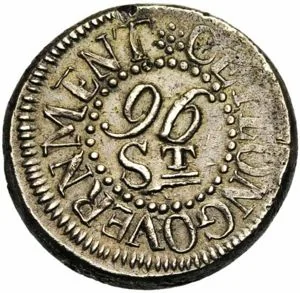
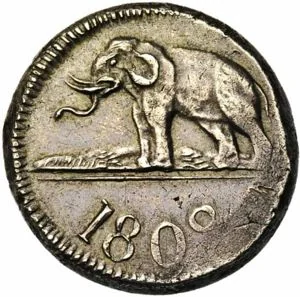
96 Stivers – Ceylon
Sri Lanka
Context
Years: 1808–1809
Country: Sri Lanka 
Issuer: Ceylon
Ruler: George III
Currency:
(1796—1828)
Demonetized: Yes
Material
References
KM: #Click to copy to clipboard79
Numista: #15732
Value
Bullion value: $51.44
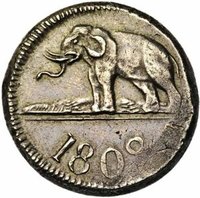
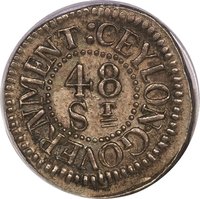
Obverse
Reverse
Edge
Plain
Mintings
| Year | Mint Mark | Mintage | Quality | Collection |
|---|---|---|---|---|
| 1808 | — | — | ||
| 1809 | — | — |
Historical background
In 1808, the currency situation in British Ceylon was a complex and problematic legacy of the island's recent transition from Dutch to British rule. The British had taken control of the coastal provinces (the Maritime Provinces) from the Dutch in 1796, but inherited a chaotic monetary system comprising a wide variety of coins from different eras and empires. The most common circulating mediums were the Dutch rijksdaalder and stiver, but Spanish and Portuguese silver dollars, Indian gold pagodas, and various smaller copper coins also circulated, leading to confusion, frequent counterfeiting, and hindered trade.
The British administration, formalized after the Kandyan Convention of 1815 was still years away, faced significant difficulty in establishing fiscal authority. A key issue was the severe shortage of small-denomination coinage for everyday transactions, which crippled local markets and wage payments. Attempts to introduce a British standard, such as proclaiming the British pound as the official currency, were largely theoretical as the physical coins were scarcely available. In practice, the economy relied on a cumbersome system of barter and the uneven acceptance of old coins, with their values often fluctuating based on metal content and local custom rather than official decree.
This unstable environment prompted early but ineffective attempts at reform. The colonial government issued proclamations to regulate exchange rates between the various silver and copper coins, but these were difficult to enforce. The underlying problem was a lack of a unified, trusted currency in sufficient quantity. Consequently, 1808 represents a period of monetary transition and disorder, setting the stage for more decisive actions in the following decades, such as the establishment of the Ceylon rupee in 1825, which would finally impose a single currency system on the island.
The British administration, formalized after the Kandyan Convention of 1815 was still years away, faced significant difficulty in establishing fiscal authority. A key issue was the severe shortage of small-denomination coinage for everyday transactions, which crippled local markets and wage payments. Attempts to introduce a British standard, such as proclaiming the British pound as the official currency, were largely theoretical as the physical coins were scarcely available. In practice, the economy relied on a cumbersome system of barter and the uneven acceptance of old coins, with their values often fluctuating based on metal content and local custom rather than official decree.
This unstable environment prompted early but ineffective attempts at reform. The colonial government issued proclamations to regulate exchange rates between the various silver and copper coins, but these were difficult to enforce. The underlying problem was a lack of a unified, trusted currency in sufficient quantity. Consequently, 1808 represents a period of monetary transition and disorder, setting the stage for more decisive actions in the following decades, such as the establishment of the Ceylon rupee in 1825, which would finally impose a single currency system on the island.
✨ Legendary