

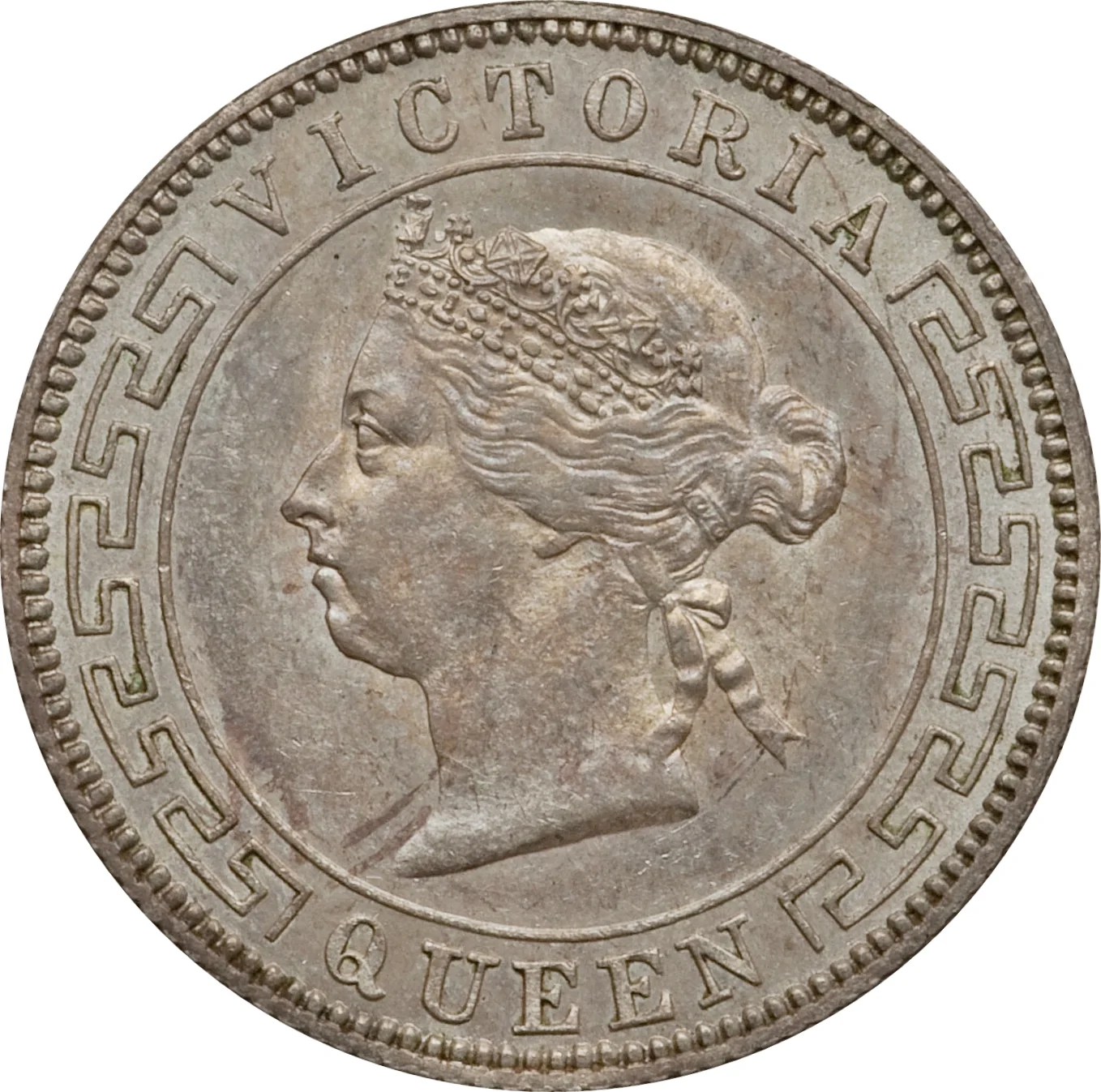
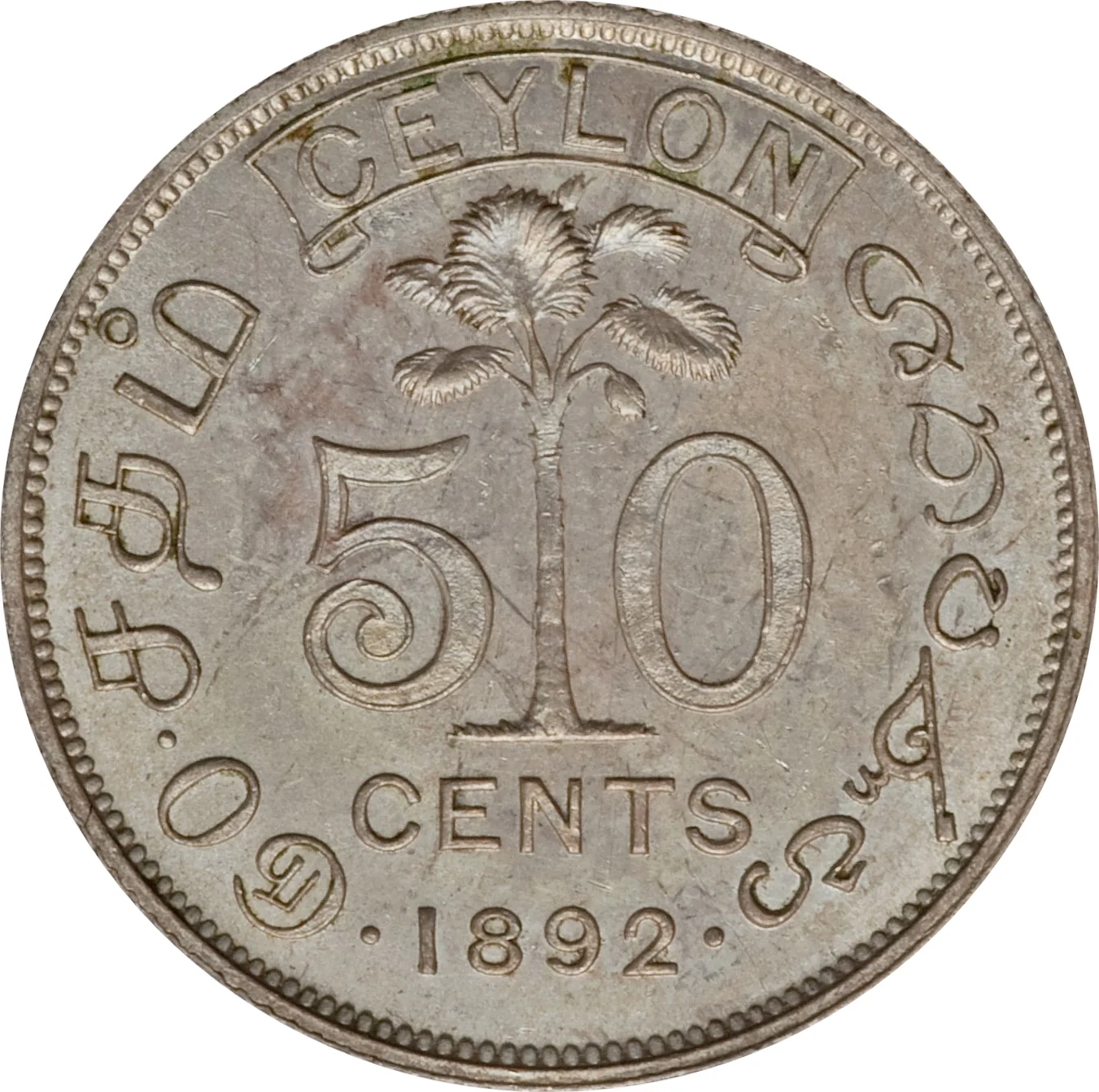
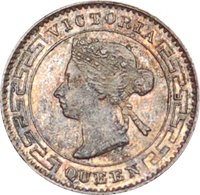
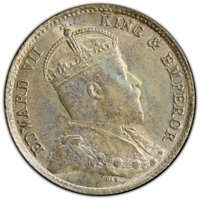
Obverse
Description:
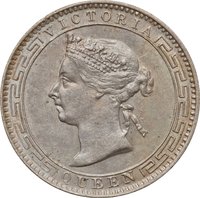
Queen Victoria left-facing crowned bust.
Inscription:
VICTORIA
QUEEN
QUEEN
Script: Latin
Engraver: Leonard Charles Wyon
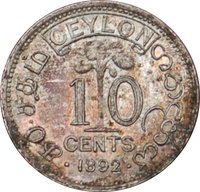
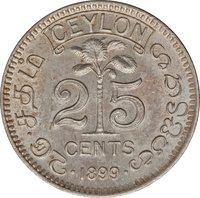
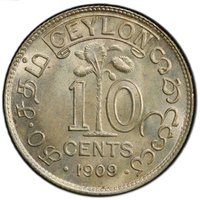
Reverse
Edge
Reeded
Mints
| Name | Mark |
|---|---|
| Royal Mint (Tower Hill) | — |
Mintings
| Year | Mint Mark | Mintage | Quality | Collection |
|---|---|---|---|---|
| 1892 | — | 250,000 | ||
| 1892 | — | — | Proof | |
| 1893 | — | 750,000 | ||
| 1893 | — | — | Proof | |
| 1895 | — | 450,000 | ||
| 1899 | — | 100,000 | ||
| 1900 | — | 200,000 |
Historical background
In 1892, Ceylon (modern Sri Lanka) operated under a complex and somewhat strained currency system, a legacy of its position within the British Empire. The official currency was the Ceylonese rupee, a silver coin, but its value was not fixed to the British gold sovereign. Instead, it fluctuated with the volatile global price of silver, leading to frequent and disruptive exchange rate variations against sterling. This instability created significant administrative headaches for the colonial government, which had to manage revenues and expenditures in rupees while remitting funds to London in gold-based sterling, often incurring exchange losses.
The situation was further complicated by the circulation of multiple foreign coins. Alongside the Ceylon rupee, British gold sovereigns and half-sovereigns were legal tender, as were Indian silver rupees and subsidiary coins, due to extensive trade links with India. This multiplicity led to confusion in everyday transactions and facilitated arbitrage, where traders would exploit differences in the intrinsic metal value of the coins. The colonial authorities viewed this as inefficient and detrimental to both commerce and state finance, creating a pressing need for a unified and stable monetary standard.
Consequently, 1892 fell within a period of active debate and transition. The falling global price of silver had made the silver standard increasingly problematic, pushing the government toward the gold standard adopted by Britain and much of the world. The key reform would come just a year later, in 1893, when Ceylon officially abandoned the silver standard and effectively pegged the rupee to sterling at a fixed rate of 1 rupee = 1 shilling 6 pence. Thus, the currency situation in 1892 was one of the final years of a precarious silver-based system, immediately preceding a decisive shift to a gold-exchange standard that would provide stability for decades.
The situation was further complicated by the circulation of multiple foreign coins. Alongside the Ceylon rupee, British gold sovereigns and half-sovereigns were legal tender, as were Indian silver rupees and subsidiary coins, due to extensive trade links with India. This multiplicity led to confusion in everyday transactions and facilitated arbitrage, where traders would exploit differences in the intrinsic metal value of the coins. The colonial authorities viewed this as inefficient and detrimental to both commerce and state finance, creating a pressing need for a unified and stable monetary standard.
Consequently, 1892 fell within a period of active debate and transition. The falling global price of silver had made the silver standard increasingly problematic, pushing the government toward the gold standard adopted by Britain and much of the world. The key reform would come just a year later, in 1893, when Ceylon officially abandoned the silver standard and effectively pegged the rupee to sterling at a fixed rate of 1 rupee = 1 shilling 6 pence. Thus, the currency situation in 1892 was one of the final years of a precarious silver-based system, immediately preceding a decisive shift to a gold-exchange standard that would provide stability for decades.
🌱 Fairly Common