

1 Falus – Morocco
Morocco
Context
References
KM: #Click to copy to clipboard95.4
Numista: #157224
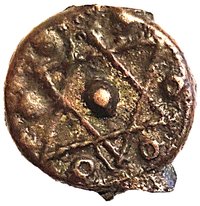
Obverse
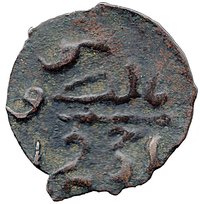
Reverse
Edge
Mintings
| Year | Mint Mark | Mintage | Quality | Collection |
|---|---|---|---|---|
| 1813 | — | — | ||
| 1814 | — | — | ||
| 1815 | — | — | ||
| 1816 | — | — | ||
| 1818 | — | — | ||
| 1819 | — | — |
Historical background
In 1813, Morocco's currency situation was characterized by a complex and fragmented system, heavily influenced by both internal dynastic policies and intense European commercial pressure. The Alawite Sultanate, under Sultan Moulay Slimane, officially maintained a bimetallic system based on the silver dirham and the gold benduqi. However, the reality in the ports and trading centers was one of monetary chaos. A plethora of foreign coins—especially Spanish piastres (reales), Austrian thalers, and Portuguese crusados—circulated freely alongside local issues, their values fluctuating based on weight, metal purity, and the volatile demands of trade.
This fragmentation was exacerbated by the Sultan's relative political and economic isolationism. While European powers, embroiled in the Napoleonic Wars, sought Moroccan grain and sought to dominate its trade, Moulay Slimane pursued policies that restricted foreign commerce and internal markets. This stifled the formal economy and limited the Sultanate's ability to impose a unified monetary authority. Consequently, currency exchange and valuation were often left to the discretion of local merchants and money changers (sarrāf), leading to inconsistencies and fraud that hindered both domestic administration and international trade.
The period also saw a critical drain of silver from the Moroccan economy. The demand for Moroccan agricultural products, particularly grain exported to a war-torn Europe, was paid for primarily in silver coin. However, much of this silver was then used to purchase luxury goods and manufactured imports from Europe, preventing the accumulation of bullion reserves needed to stabilize and standardize the currency. Thus, in 1813, Morocco's monetary system was not truly sovereign but a dependent, reactive component of a Mediterranean trade network, lacking central control and vulnerable to external economic forces.
This fragmentation was exacerbated by the Sultan's relative political and economic isolationism. While European powers, embroiled in the Napoleonic Wars, sought Moroccan grain and sought to dominate its trade, Moulay Slimane pursued policies that restricted foreign commerce and internal markets. This stifled the formal economy and limited the Sultanate's ability to impose a unified monetary authority. Consequently, currency exchange and valuation were often left to the discretion of local merchants and money changers (sarrāf), leading to inconsistencies and fraud that hindered both domestic administration and international trade.
The period also saw a critical drain of silver from the Moroccan economy. The demand for Moroccan agricultural products, particularly grain exported to a war-torn Europe, was paid for primarily in silver coin. However, much of this silver was then used to purchase luxury goods and manufactured imports from Europe, preventing the accumulation of bullion reserves needed to stabilize and standardize the currency. Thus, in 1813, Morocco's monetary system was not truly sovereign but a dependent, reactive component of a Mediterranean trade network, lacking central control and vulnerable to external economic forces.

✨ Legendary