

½ falus – Morocco
Add to wishlist
Morocco
Context
Year: 1815
Islamic (Hijri) Year:: 1230
Issuer: Morocco
Ruler: Moulay Sulayman
Currency:
(1659—1882)
Demonetized: Yes
References
KM: #
Numista: #157216
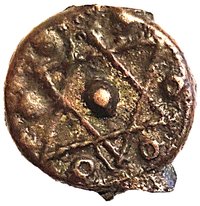
Obverse
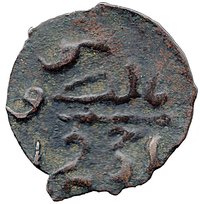
Reverse
Edge
Mintings
| Year | Mint Mark | Mintage | Quality | Collection |
|---|---|---|---|---|
| 1815 | — | — |
Historical background
In 1815, Morocco's currency system was a complex and fragmented reflection of its political and economic state. The country was under the rule of the Alaouite Sultan Moulay Slimane, whose authority was increasingly challenged by regional rebellions and the weakening of central power. The monetary landscape was not unified, operating on a bimetallic system of gold (benduqi) and silver (dirham), but with a critical lack of standardized, nationally minted coinage. This vacuum was filled by a bewildering variety of coins in circulation: older, often clipped Moroccan issues, a plethora of European currencies (especially Spanish silver pesos and Portuguese gold moidores), and Ottoman coins from the East, all valued by weight and metal purity rather than a fixed face value.
This monetary heterogeneity created significant challenges for trade and governance. Exchange rates between gold and silver, and between the various foreign coins, fluctuated constantly, leading to uncertainty and friction in both domestic markets and foreign commerce. The Sultanate's limited minting capacity meant it struggled to provide a reliable, abundant national currency, which in turn eroded a key symbol of sovereign authority and economic control. Merchants and money changers (sarrafs) held considerable power in determining actual values, making the system opaque and susceptible to local manipulation.
The situation was further strained by Morocco's changing place in the world economy. While the Atlantic slave trade was in decline, other exports like wheat, wool, and hides remained important. However, European industrial and financial power was growing, and Morocco's fragmented currency system left it at a disadvantage in structuring stable long-term trade. Thus, in 1815, Morocco's currency was not merely a financial issue but a symptom of a pre-modern state grappling with internal fragmentation and increasing pressure from a rapidly modernizing Europe, setting the stage for the monetary reforms and greater European economic influence that would characterize the rest of the 19th century.
This monetary heterogeneity created significant challenges for trade and governance. Exchange rates between gold and silver, and between the various foreign coins, fluctuated constantly, leading to uncertainty and friction in both domestic markets and foreign commerce. The Sultanate's limited minting capacity meant it struggled to provide a reliable, abundant national currency, which in turn eroded a key symbol of sovereign authority and economic control. Merchants and money changers (sarrafs) held considerable power in determining actual values, making the system opaque and susceptible to local manipulation.
The situation was further strained by Morocco's changing place in the world economy. While the Atlantic slave trade was in decline, other exports like wheat, wool, and hides remained important. However, European industrial and financial power was growing, and Morocco's fragmented currency system left it at a disadvantage in structuring stable long-term trade. Thus, in 1815, Morocco's currency was not merely a financial issue but a symptom of a pre-modern state grappling with internal fragmentation and increasing pressure from a rapidly modernizing Europe, setting the stage for the monetary reforms and greater European economic influence that would characterize the rest of the 19th century.

✨ Legendary