

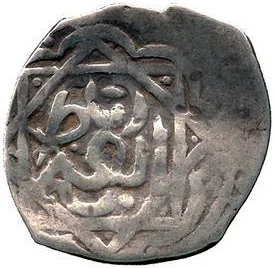
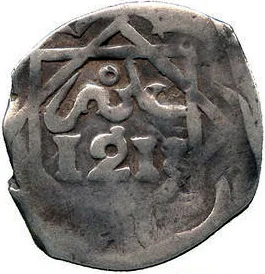
1 Dirham – Morocco
Morocco
Context
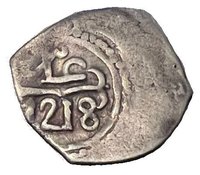
Year: 1804
Islamic (Hijri) Year: 1218
Issuer: Morocco 
Ruler: Moulay Sulayman
Currency:
(1659—1882)
Demonetized: Yes
Material
Weight: 2.93 g
Silver weight: 2.93 g
Shape: Irregular round
Composition: Silver
Magnetic: No
Technique: Hammered
References
KM: #Click to copy to clipboard108e.3
Numista: #157190
Value
Bullion value: $8.47
Mintings
| Year | Mint Mark | Mintage | Quality | Collection |
|---|---|---|---|---|
| 1804 | — | — |
Historical background
In 1804, Morocco's currency situation was characterized by a complex and fragmented system, reflecting the country's political decentralization and varied economic engagements. The primary unit was the silver dirham, but its weight and purity were not standardized across the Sultanate, leading to significant regional variations and frequent counterfeiting. Concurrently, the gold benduqi (or mithqal) was used for larger transactions and foreign trade, while a plethora of low-value copper fulus facilitated everyday local commerce. This multiplicity of coins, often minted in cities like Fes, Marrakech, and Mogador (Essaouira), created a cumbersome environment for trade and taxation.
The monetary landscape was further complicated by a heavy reliance on foreign coinage, a legacy of Morocco's strategic position and active international commerce. Spanish piastres (pieces of eight), Portuguese crusados, and other European silver coins circulated widely, especially in port cities, often preferred for their reliable silver content. This influx of foreign currency, while lubricating trade, undermined the authority of the Alawite Sultan Moulay Slimane (r. 1792–1822), who struggled to assert central control over the monetary system and stem the outflow of precious metals.
Economically, this period was one of strain. Sultan Moulay Slimane's policies, including restrictions on European trade and internal tribal rebellions, hampered economic stability. The lack of a uniform, trusted currency exacerbated inflation and hindered efficient revenue collection for the Makhzen (central government). Thus, in 1804, Morocco's currency was not a unified national instrument but a patchwork of local and foreign coins, symptomatic of the broader challenges of centralization and economic integration facing the Sultanate in the early 19th century.
The monetary landscape was further complicated by a heavy reliance on foreign coinage, a legacy of Morocco's strategic position and active international commerce. Spanish piastres (pieces of eight), Portuguese crusados, and other European silver coins circulated widely, especially in port cities, often preferred for their reliable silver content. This influx of foreign currency, while lubricating trade, undermined the authority of the Alawite Sultan Moulay Slimane (r. 1792–1822), who struggled to assert central control over the monetary system and stem the outflow of precious metals.
Economically, this period was one of strain. Sultan Moulay Slimane's policies, including restrictions on European trade and internal tribal rebellions, hampered economic stability. The lack of a uniform, trusted currency exacerbated inflation and hindered efficient revenue collection for the Makhzen (central government). Thus, in 1804, Morocco's currency was not a unified national instrument but a patchwork of local and foreign coins, symptomatic of the broader challenges of centralization and economic integration facing the Sultanate in the early 19th century.

✨ Legendary