

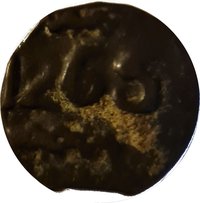
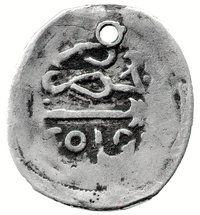
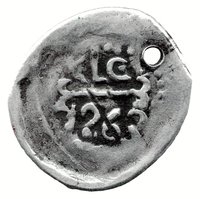
¼ falus – Morocco
Add to wishlist
Morocco
Context
Year: 1844
Islamic (Hijri) Year:: 1260
Issuer: Morocco
Ruler: Moulay ‘Abd al-Rahman
Currency:
(1659—1882)
Demonetized: Yes
References
Numista: #157165
Obverse
Reverse
Edge
Mintings
| Year | Mint Mark | Mintage | Quality | Collection |
|---|---|---|---|---|
| 1844 | — | — |
Historical background
In 1844, Morocco's currency situation was characterized by a complex and fragmented system, reflecting the country's political decentralization and economic pressures. The primary unit was the silver dirham, but its value and purity varied significantly across different regions and cities, as local authorities and tribes often minted their own coins. Alongside these, a multitude of foreign currencies circulated widely, including Spanish dollars (reales), French francs, and British sterling, a testament to Morocco's active trade with Europe. This lack of a standardized national currency created confusion in commerce and hindered the Sultanate's ability to control its monetary policy.
The system was under severe strain due to the financial aftermath of the Franco-Moroccan War of 1844, triggered by Sultan Abd al-Rahman's support for the Algerian resistance leader Abd al-Qadir. Morocco's decisive defeat at the Battle of Isly and the subsequent bombardment of Tangier and Essaouira by the French navy forced the Sultan to sign the Treaty of Tangier in September 1844. A key condition was a large war indemnity of 10 million francs, a crushing sum that drained the Makhzen (central government) treasury. To meet this obligation, the Sultan was compelled to levy heavy taxes and borrow extensively from foreign merchants and domestic notables, further destabilizing the economy.
Consequently, the year 1844 marked a pivotal point of financial crisis and foreign encroachment. The urgent need to pay the indemnity accelerated a cycle of debt and devaluation, as the government likely resorted to debasing its coinage to raise funds. This period laid bare the vulnerabilities of Morocco's traditional monetary system and underscored the growing influence of European powers. The financial humiliation of 1844 set a precedent for future European economic demands and was an early step toward the deeper fiscal crises and foreign financial control that would characterize the latter half of the 19th century in Morocco.
The system was under severe strain due to the financial aftermath of the Franco-Moroccan War of 1844, triggered by Sultan Abd al-Rahman's support for the Algerian resistance leader Abd al-Qadir. Morocco's decisive defeat at the Battle of Isly and the subsequent bombardment of Tangier and Essaouira by the French navy forced the Sultan to sign the Treaty of Tangier in September 1844. A key condition was a large war indemnity of 10 million francs, a crushing sum that drained the Makhzen (central government) treasury. To meet this obligation, the Sultan was compelled to levy heavy taxes and borrow extensively from foreign merchants and domestic notables, further destabilizing the economy.
Consequently, the year 1844 marked a pivotal point of financial crisis and foreign encroachment. The urgent need to pay the indemnity accelerated a cycle of debt and devaluation, as the government likely resorted to debasing its coinage to raise funds. This period laid bare the vulnerabilities of Morocco's traditional monetary system and underscored the growing influence of European powers. The financial humiliation of 1844 set a precedent for future European economic demands and was an early step toward the deeper fiscal crises and foreign financial control that would characterize the latter half of the 19th century in Morocco.

✨ Legendary